

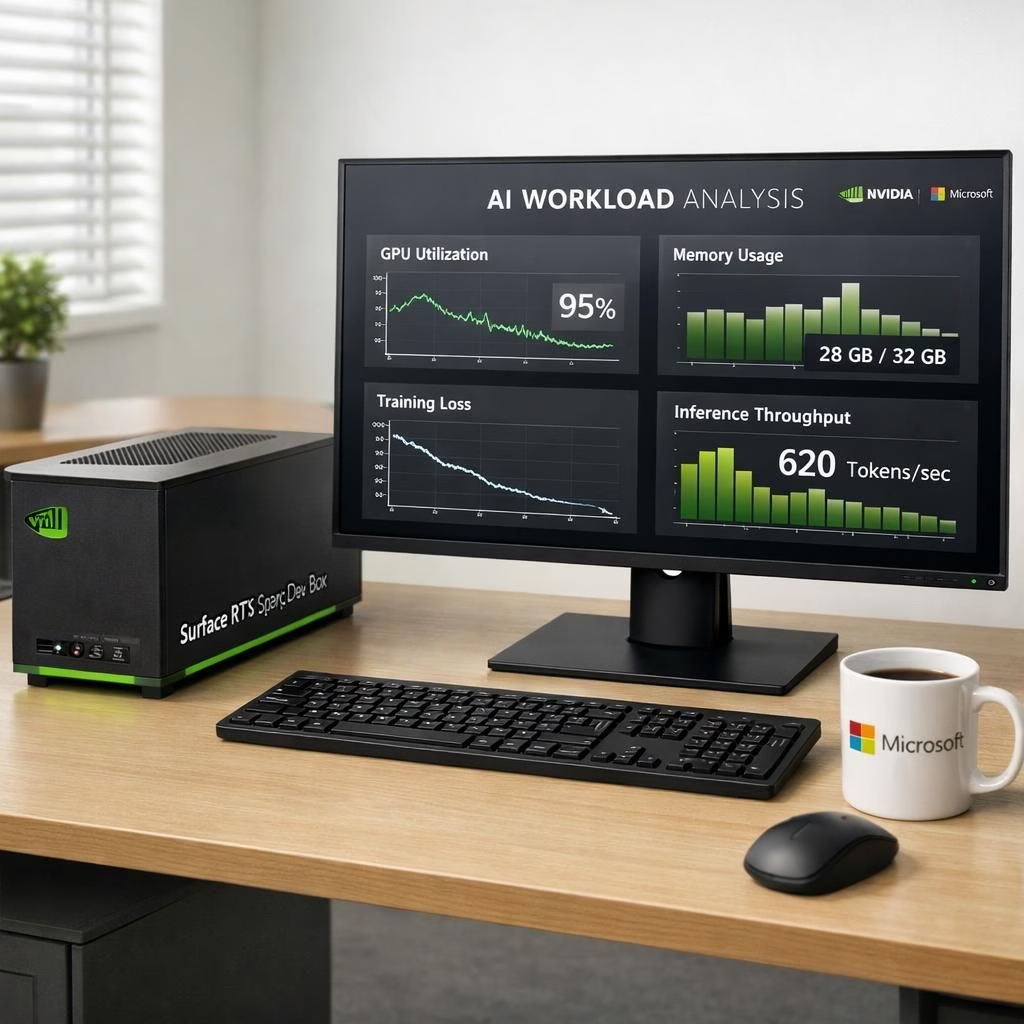
Meet the Surface RTX Spark Dev Box, Microsoft’s desk-friendly AI workstation — built for developers who want real compute without turning their office into a wind tunnel. Powered by NVIDIA’s RTX Spark chip, it offers a tangible glimpse at petaflop-scale compute without inviting a chorus of fans. It arrives with a 100W thermal envelope and ARM CPUs that prioritize efficiency over spectacle. This is a device built for developers who want serious punch in a compact form, with a design that doesn’t demand a data-center mindset.
AI-powered performance meets Surface design
Under the hood, the Dev Box scales to 128GB of unified memory and delivers a petaflop-scale compute ceiling. The Spark chip drives the core compute, while an NVIDIA Blackwell GPU sits alongside for gaming-class frame pacing on GPU-accelerated tasks. The 100W envelope keeps temperatures predictable, and ARM CPUs push energy efficiency. Practically, you get long-running training, on-device fine-tuning, and smooth pipelines that don’t crash when data spikes occur. This isn’t a whimsical gadget; it’s a workstation crafted for developers who want reliability, room to grow, and a desk that remains comfortable after hours of use.
Spark-driven graphics and Surface ecosystem
When you peek at the memory and compute numbers, you’ll notice up to 128GB of unified memory and a petaflop-scale compute ceiling, with the RTX Spark chip at the core and Blackwell handling the graphics side. The device uses a 100W thermal envelope and ARM CPUs to stay balanced, so you can run longer sessions without scalding your environment. For developers, that translates into practical benefits: locally training models, testing agentic pipelines, and iterating on ideas while keeping the workspace calm and organized. It’s not about showroom glamour; it’s about delivering dependable, repeatable results for real projects. Spark-powered orchestration helps manage workloads, but you’ll still need a steady hand and a large mug of coffee.
Compared to similar premium desktop options, the Dev Box distinguishes itself with a generous memory ceiling and a focus on sustained workloads rather than quick, flashy bursts. It’s positioned against AMD’s Ryzen AI Halo PC and NVIDIA’s DGX mini PC, offering a desk-friendly route to serious compute without the full data-center footprint. Microsoft hasn’t published pricing yet, and the company confirms delivery will come in 2026 via Microsoft.com. Don’t expect to catch this one on a showroom shelf; the online path aligns with developers who want a direct route to power and predictable delivery timelines.
In practice, the setup balances a large memory budget with robust compute and a sensible power envelope, designed to support long experiments, model training, and iterative development. The aim is practical, repeatable results for real projects—not hype and not a one-off demonstration. The outcome is a high-end desk fixture that respects workflow, equipment budgets, and the rhythm of a productive workday.
Original article: Engadget coverage — Thank you for the source material.
Have thoughts on this desktop AI workhorse? Share your perspective in the comments below.
Practical use cases
- Local training of models on the Spark chip, for privacy-conscious experimentation.
- Agentic AI pipelines run locally for faster iteration without sending data to the cloud.
- Iterative model fine-tuning on a calm desk setup that stays cool under load.
FAQ
- When will the Surface RTX Spark Dev Box be available? Microsoft says delivery will arrive later in 2026 via Microsoft.com.
- How much memory and compute does it offer? Up to 128GB of unified memory and a petaflop-scale compute ceiling, powered by the Spark chip.
- Is this for gaming? The primary purpose is sustained AI development and on-device workloads; the Blackwell GPU provides gaming-like graphics capability as a complement, not a focus.
- Will pricing be announced? Pricing has not been published yet; Microsoft will share details closer to the launch window.
References
Conclusion: The Surface RTX Spark Dev Box targets developers who want sustained, desk-based AI compute without the overhead of a data center. It promises reliable performance, scalable memory, and a predictable delivery path—features that matter for real-world workflows. If you’re evaluating on-device training or local AI pipelines, this is a device to watch as pricing and availability become clearer.