

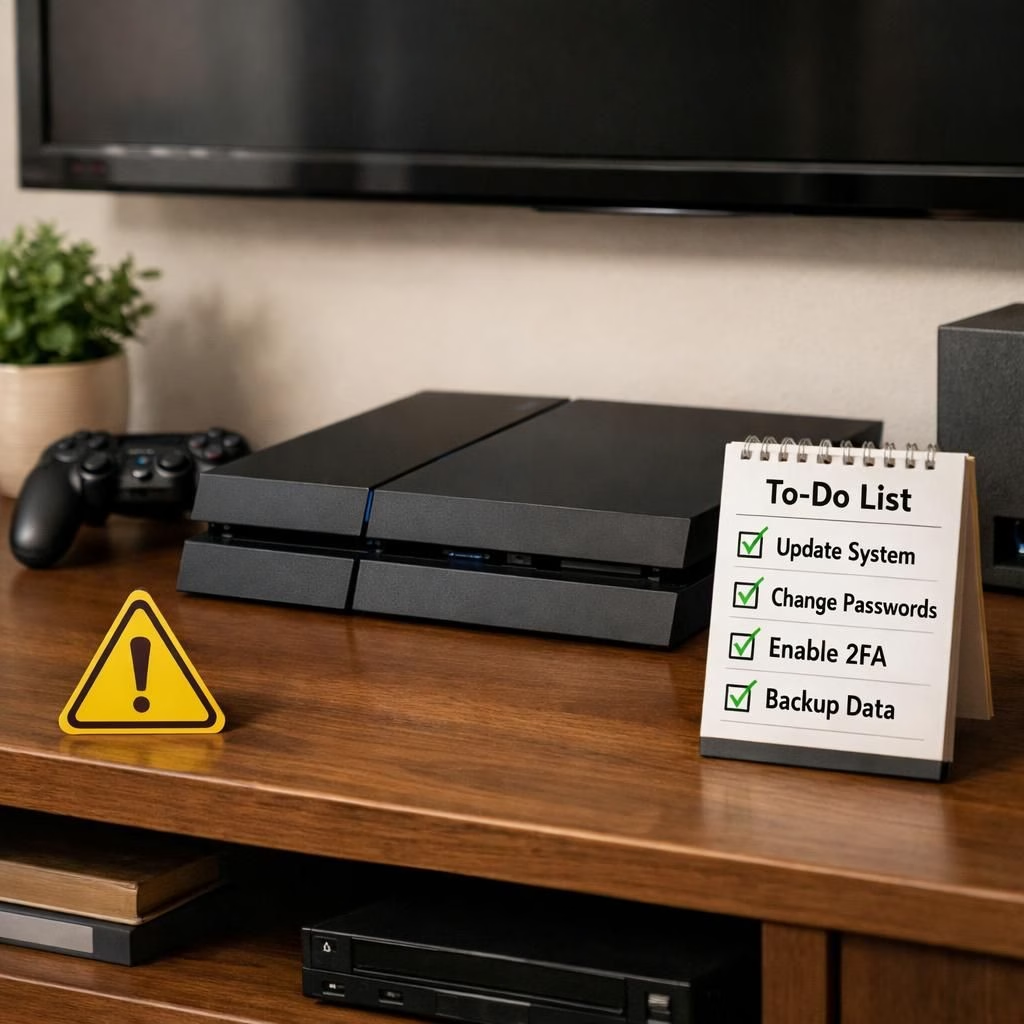
Welcome to a practical look at the 2026 PlayStation chaos, where PlayStation reliability meets Security awareness. The big PSN outage this year left thousands of consoles unplayable for longer than most of us admit we can tolerate. Yes, it was dramatic in the memes department, but the real story is about resilience, habits, and how to bounce back without breaking your living room routine. This piece keeps the core facts intact while adding a dash of humor and a few usable takeaways for players, builders, and couch analysts alike.
PlayStation Security: What broke and how to read the outage in 2026
Headlines screamed that a catastrophic PlayStation Network error upended normal play, and they were not kidding. Services went partially down, restarts loops, store pages stalled, and friends lists froze. The official line from Sony acknowledged issues but emphasized that this was not a simple outage; it was a multi-layer problem spanning networking, authentication, and a few stubborn caching quirks. In plain terms, Security tokens stopped syncing, leaving many players in a limbo where you can watch the dashboard but not start a game. If you are wondering how this translates to Security, the incident reminded us that a single fault in a login flow can ripple into access concerns and user trust. The takeaway: stronger account monitoring and simpler recovery paths matter as much as fancy graphics.
The core takeaway here is simple: outages reveal where you actually rely on digital resilience. A robust login flow, clear error messaging, and accessible recovery options matter as much as performance. In practice, this means prioritizing dependable sign-in, token handling, and a straightforward path back to game progress when things go wrong.
PlayStation Security: Practical tips to stay sane and safer in outages
First, keep calm and back up what matters. If you use a two-factor authenticator, make sure the backup codes are accessible offline. If not, the outage can feel like your own personal CAPTCHA crisis. Second, switch devices to offline mode when possible and keep a small, local game library ready for moments of connectivity chaos. Third, review your linked accounts and ensure you have a recovery email that you actually monitor. The playful reality is that the same people who insist on cloud saves become surprisingly nostalgic for cartridge-era reliability when the servers blink. The seriousness is real, though: outages invite phishing and social-engineering tricks that try to mimic official notices. Stay calm, verify links, and report suspicious prompts to your own Security routines. The overarching idea is simple: more predictable login flows and better offline resilience reduce the damage when the network stumbles.
Another angle from the coverage underscores how quickly a carelessly surfaced Security message can become a teaching moment. The Sony status pages sometimes glow with hopeful updates while back-end logs wrestle with a backlog of authentication tokens. In practice, users who scrub their privacy settings and reset suspicious sessions often find their accounts behaving more reliably once the outage passes. This is not a miracle fix; it is about building a small, sane routine for resilience when the network stumbles.
PlayStation Security: Curious incidents and what they teach us about trust
Industry outlets noted some unusual and, frankly, unsettling quirks. For example, some PS5 users reported unreleased adult games appearing in their recently played lists. It sounds absurd, but it is the kind of oddity that prompts a Security-minded recheck of parental controls and account sharing settings. Other reports described random games showing up on profiles or in recommendations, as if a rogue algorithm wandered into a data closet and pressed randomize. While the visibility of these issues varied, the common thread is a reminder that data integrity and Security deserve ongoing attention, not a one-time patch-note apology.
Meanwhile, other headlines highlighted that services were only partially down, which ironically made it easier for some players to pretend nothing was wrong while their friends were stuck in menus. The practical takeaway is straightforward: assume outages will happen, and design your routines to cope—offline play, local saves, and a steady grip on account credentials can all be part of your personal PSN survival kit.
- Keep offline backups of important saves and a small library of offline games ready for outages.
- Enable Security-minded two-factor authentication and store codes securely outside the cloud where possible.
- Regularly review connected apps and trusted devices to spot unauthorized access.
- When in doubt, reach out to official support with a clear description and time stamps.
For readers who want more context, these links capture the breadth of the reports: Catastrophic PlayStation Network Error Makes Thousands Of Consoles Unplayable, PlayStation Network Services Partially Down, Sony Confirms, PlayStation Users Are Finding Random Games On Their Profiles – Is It A Security Issue? – WGB, Some PS5 Users Are Having Unreleased Adult Games Randomly Appear In Their Recently Played List
We will keep an eye on developments, but the core advice remains usable: treat outages as a routine event, not a disaster, and maintain a calm, Security-forward approach to your accounts.
As always, we invite you to share your experiences, questions, and tips in the comments. Let us know how you handled the outage, what worked, and what surprised you about your own Security habits.
Attribution and thanks: Special thanks to the original reporting sources for providing the context that informed this piece. Original articles: Catastrophic PlayStation Network Error Makes Thousands Of Consoles Unplayable; PlayStation Network Services Partially Down, Sony Confirms; PlayStation Users Are Finding Random Games On Their Profiles – Is It A Security Issue? – WGB; Some PS5 Users Are Having Unreleased Adult Games Randomly Appear In Their Recently Played List.