

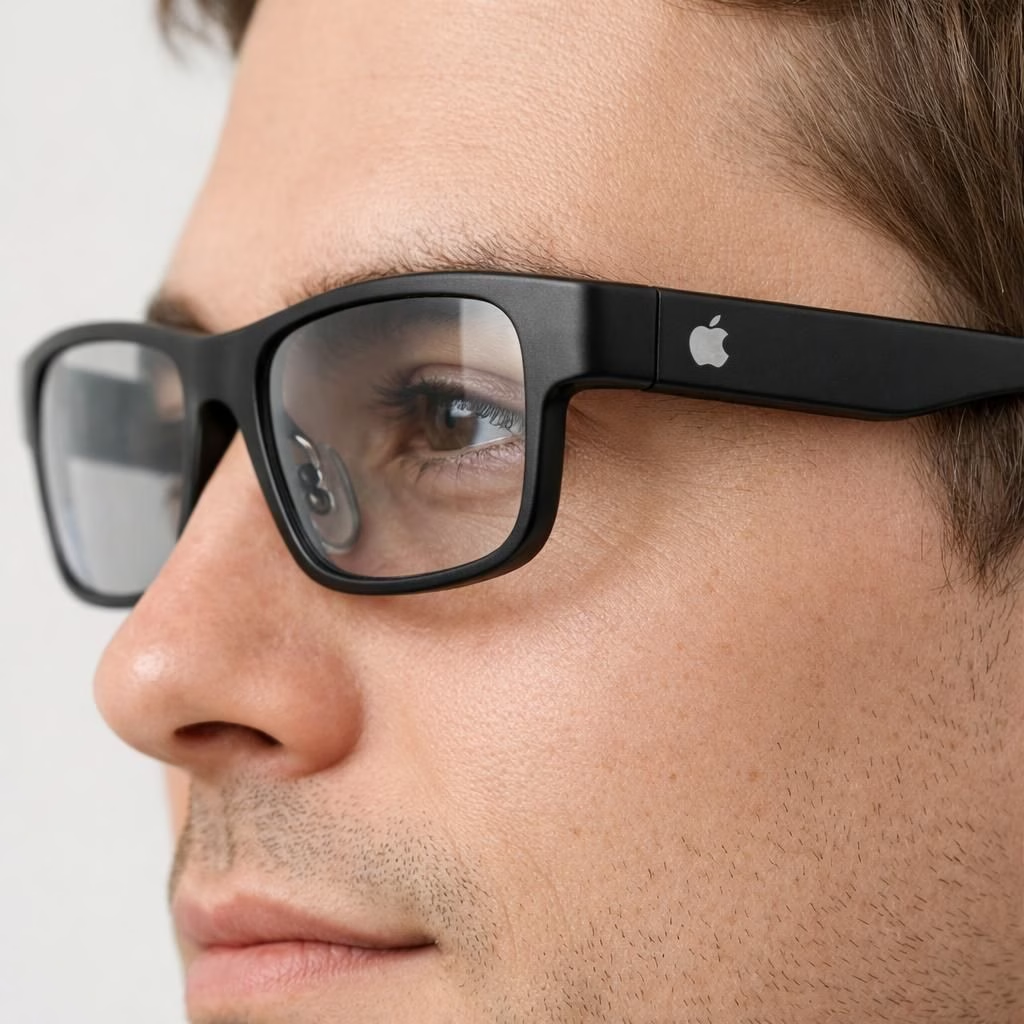
Apple Smart Glasses and Augmented Reality are inching toward everyday reality in 2026, with cameras, frames, and health-aware ambitions in the mix. Bloomberg’s Mark Gurman points to a late-2027 release window, while earlier rumors of early 2027 shipping have wobbled but still persist. The key takeaway: this device aims to do more than tell time and snap photos; it aspires to be a wearable assistant people actually choose to wear daily.
When we talk about the Apple Smart Glasses, we talk about a design that leans playful while staying practical. Gurman reports that Apple is crafting oval-shaped cameras, a few distinct frame styles, and a palette that leans toward accessible elegance. The aim is not just fashion but function—a device that feels comfortable for a long walk and smart enough to justify a place in your daily carry. In an era where wearables must justify every gram, Apple sounds serious about balance. The product roadmap also hints at future Augmented Reality features in time, but the debut focuses on everyday utility.
Apple Smart Glasses: A late-2027 Bet with Crafty Details
The late-2027 target rests on a mix of supply-chain realities and product readiness. Tim Cook reportedly sees the glasses as a top priority, even as the leadership transition toward John Ternus looms in the background. In practical terms, Apple wants to ship a polished product that demonstrates real value from day one, not a glamorous demo. Gurman’s sources place the glasses in a price corridor similar to mainstream eyewear—roughly $200 to $500 in the U.S.—an accessible range signaling broad adoption rather than a niche, premium binge.
In the box, the glasses are described as camera-forward in a way that invites sharing, not creeping. Built-in cameras enable photos and videos much like Meta’s Ray-Bans, but with Apple’s software smarts behind the curtain. Expect speakers and microphones for music, calls, and Siri-powered tasks. The strategy is to create a hands-free companion that nudges you with turn-by-turn directions and context-aware help, rather than overwhelming you with tech for tech’s sake.
On the physical side, Apple is designing its own plastic frames and testing multiple designs—at least four—as the team experiments with shape, weight, and durability. Color options include black, ocean blue, and light brown, offering a spectrum that should appeal to a broad audience. The cameras, positioned in vertically oriented lenses, are intended to be discreet for everyday use while still delivering the photo and video capture customers expect from modern wearables. The team also signals that Augmented Reality features could mature later, but the current emphasis remains on comfort, privacy, and battery life.
Augmented Reality: A Long Horizon Ahead for These Glasses
Despite the chatter around AR front-runners, Gurman cautions that this first Apple Glasses generation is unlikely to include in-lens Augmented Reality. Think more wearable camera and audio companion than a transparent AR display that overlays the street. The debut prioritizes practical use and seamless integration, letting the AR dream bloom in later iterations rather than in the initial launch.
Health-oriented potential is part of the long-term vision. Apple sees opportunities for the glasses to evolve into a health device, gathering ambient data while you move through your day. This follows Apple’s pattern: test practical features first, then layer in ambitious capabilities while protecting privacy, battery life, and user control. In short, the AR horizon remains bright, but progress is likely to be gradual rather than sudden.
Camera placement, frame design, and a focus on reliability all play into a narrative: these glasses should feel like a natural extension of your eyes, not an awkward gadget perched on your brow. The vertically oriented cameras support discreet capture while aligning with Apple’s ecosystem, including iOS and health apps. Expect a clean set of developer tools that encourages privacy-respecting experiences and thoughtful, user-first software.
What Apple Smart Glasses Mean for Daily Life
In practice, think of these glasses as a subtle all-day assistant. You wake up, glance at a street map as you walk, and receive directions in a non-distracting way. You snap a quick photo or video of a moment you want to save, then share it with a tap, aided by Siri and your phone’s context awareness. The first generation isn’t about heavy-lens AR; it’s about a platform that can support future layers of Augmented Reality without forcing you to adopt a new habit.
- Built-in camera and sharing: capture moments quickly and securely, with privacy controls baked in.
- Hands-free helpers: turn-by-turn directions, reminders, and voice-driven tasks via Siri.
- Seamless device integration: tight coupling with iPhone, health apps, and the broader Apple ecosystem.
- Style and comfort: a lightweight, durable frame range designed for daily wear.
From a price perspective, the mid-tier positioning aims to attract a broad audience without premium-only constraints. The real-world value will depend on how well the software keeps pace with hardware and how privacy remains a constant priority.
Apple Smart Glasses in Daily Tasks
Practical use cases emerge quickly: navigation without glancing at a phone, hands-free messaging, and context-aware alerts that respect your attention. This early approach favors reliability, battery life, and a consistent user experience across devices.
Getting Ready for Early Access
Prospective buyers should track official updates and prepare their current devices. Expect iPhone compatibility requirements, a gradual developer ecosystem, and regular software updates that extend battery life and privacy protections.
Frequently Asked Questions
- When will Apple Smart Glasses ship?
Timelines point to late 2027, with delays possible depending on supply chains and certification processes. - Will there be an in-lens AR display in the first generation?
No. Early versions focus on camera-based utility and health integration, with full AR hardware likely in later generations. - How will Apple handle privacy and data?
Apple emphasizes on-device processing, clear controls, and strict privacy policies to minimize data sharing. - Will it work with Android devices?
The initial focus is on deep integration with Apple’s iPhone and ecosystem, with cross-platform considerations for future software.
Original article: Bloomberg via Mark Gurman. Thank you for the source material. Bloomberg article.
Would you try Apple Smart Glasses when they arrive, or would you wait for more AR breakthroughs? Please share your thoughts in the comments below!