

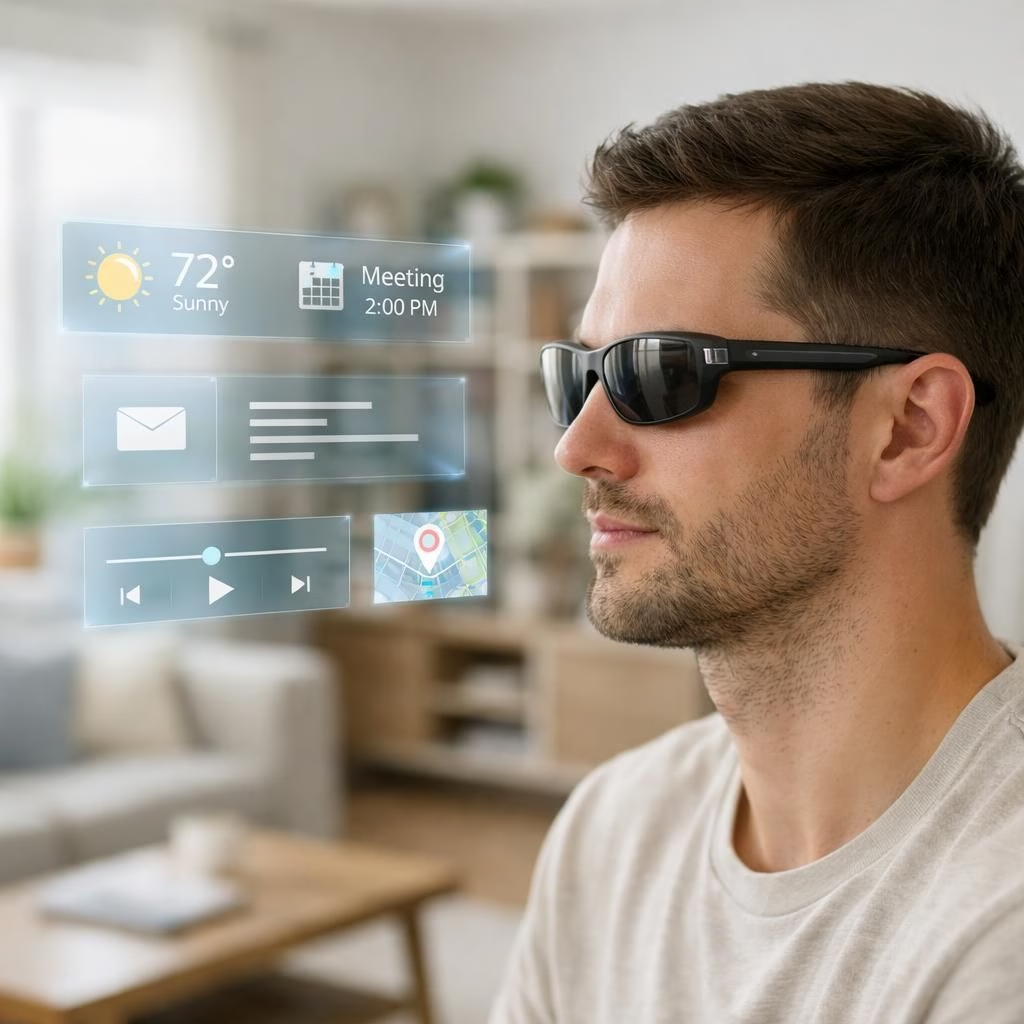
In 2026, AR glasses start to feel less sci-fi and more essential, while Snap quietly tests how we live with a tiny screen on our faces. The $2,195 AR glasses price tag is not just a sticker; it’s a signal that the post-smartphone future is inching closer, with Snap as a willing partner in crime.
Consider the optics of this move: a wearable device that sits near your eyes and promises overlays on the real world, not just on a phone. The price tag is bold, and yes, it invites satire, but it also nudges the industry toward serious wearables. For AR glasses, this pricing is part of the conversation about affordability, ecosystem growth, and the kind of content that can justify the hardware. Meanwhile, the company behind the concept has to answer a second question: can this lure keep pace with consumer expectations, and can it scale beyond a niche crowd? Snap will be involved in this larger story, testing how social features translate when the screen sits on your temple rather than in your hand.
AR glasses in daily life: a pragmatic forecast
The vision is practical if not picturesque. AR glasses could provide hands-free navigation when you’re walking through a busy city, offer real-time translation during conversations, and layer reminders directly into your field of view without pulling out a device. In classrooms, they could animate 3D models and annotate experiments in real time. In the workplace, you might glimpse contextual notes hovering near your workstation, guiding tasks without demanding your full attention. The core idea is simple: information should be accessible where you need it, not buried in a pocket or on a pocket-sized screen. If the software ecosystem grows, AR glasses become useful assistants rather than mere curiosities, helping people stay oriented, informed, and less glued to a phone screen. The year 2026 could be remembered as the moment when wearables started to feel like partners in daily rhythm rather than rare gadgets reserved for tech enthusiasts.
- Hands-free navigation in crowded environments
- Real-time translation during conversations
- Contextual reminders overlaid in the user’s line of sight
- Educational overlays that animate complex concepts without pulling focus
Snap and the social layer of wearable tech
On the social side, Snap pushes a different kind of optimism. The company leans into the idea that wearables should feel natural, with overlays and experiences that feel like extensions of everyday life. The brand remains coached by the pace of snapping photos, sharing moments, and building a community around lightweight, expressive tools. The challenge is not novelty but consistency: make the experience fast, private, and delightful enough that people want to wear the device beyond a tech demo. Critics worry about privacy, user friction, and the potential for social fatigue when a camera sits within easy reach. Those concerns are fair, and they deserve serious attention. Still, the early momentum hints at a future where social interaction isn’t tethered to a phone in your hand but can drift into your line of sight, ready to capture a moment, offer a quick clip, or project a helpful hint onto the real world. If this balance lands, Snap could become a trusted companion for people who want to augment perception without turning life into a perpetual open mic.
AR glasses in education and work: practical use cases
In education, AR glasses could guide students through labs with step-by-step overlays, show safety cues, and deliver immediate feedback. In professional settings, teams might share spatial notes that appear near desks, turning a routine walkthrough into a collaborative, less disruptive scene. The beauty of this approach is not heroic spectacle but incremental usefulness: reduce the cognitive load of switching between apps, menus, and screens. AR glasses aren’t about replacing screens so much as about placing critical information closer to the action, so people can stay focused on what matters. If the platform matures, the gains are less about flash and more about reliability, accuracy, and a smoother flow from idea to action.
Snap UX challenges: privacy, filters, and friction
Every successful foray into wearables demands careful user experience design. For Snap, that means balancing the thrill of augmented expression with robust privacy controls and a frictionless onboarding flow. Early adopters love playful filters and social stickers, but mainstream users demand clear prompts, transparent data handling, and predictable battery life. The design team will need to reduce calibration hassles, improve comfort, and make energy use sensible. If those conditions click, Snap can become a trusted everyday tool rather than a gadget novelty, quietly helping people express themselves without feeling like they are performing for a camera in every moment of the day.
Looking ahead to 2026 and beyond, the landscape for AR glasses and Snap is less about science fiction and more about thoughtful design, approachable price points, and a thriving ecosystem. The best outcomes blend bold experimentation with disciplined execution. Wearables will not erase the phone, but they will extend its reach—quietly and efficiently—so you can focus on people, places, and tasks that matter. The tension between novelty and utility remains healthy; the most successful products lean toward usefulness with a touch of personality, turning the wearer into a confident organizer rather than a walking inbox.
Have thoughts on how AR glasses or Snap could fit into your daily routine? Share your thoughts in the comments below. Your ideas help shape a practical, optimistic view of wearables in 2026 and beyond.
Special thanks to CNBC for the original coverage and insights.
Read the original CNBC article in the references below.