

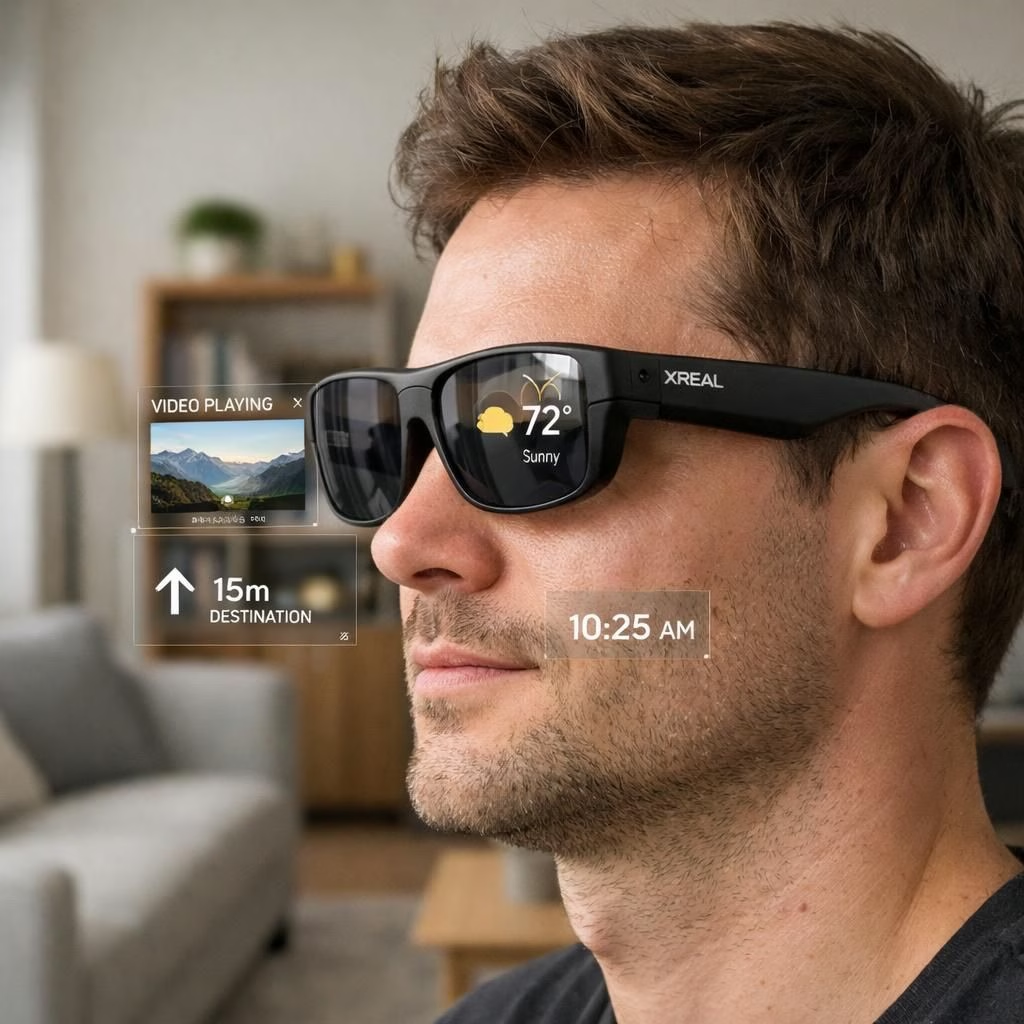
Welcome to a world where your spectacles are not just for seeing the future, but for glimpsing it. The Aura project from Xreal fuses Android XR with a bold Smartglasses design, pairing platform power with a form factor that invites you to pick a lane and then drive on both. The result is a pair of intelligent eyewear that aims to be bold, practical, and a little extra—without losing everyday usefulness.
Android XR and Smartglasses: Aura’s bold debut
From first glance, Aura looks like a statement piece. Imagine hardware that wears confidence on its frame, with a display stack and a sensor array that could rival a sci‑fi toaster. The pitch is simple: bring Android XR capabilities to a wearable form factor that doesn’t pretend to vanish. The glasses overlay digital information onto real environments, without requiring you to peek through a portal or squint at a tiny screen. In short, the tech is practical enough to be useful and loud enough to spark dialogue at coffee shops and investor meetings alike.
On the software side, Aura leans into Android XR’s open approach to AR and mixed reality. The experience blends practical features with a touch of maximalism: thoughtful audio, pass‑through visuals, and a curated set of apps that aim to feel more than novelty. The result invites developers to dream big while keeping everyday tasks—check email, navigate a campus, or pull up a quick recipe—within reach. The balance is bold, but Aura leans into it with a confident grin.
The competitive landscape isn’t shy about ambition either. Google’s AI eyewear efforts hint at a future where glasses do more than frame your face; they frame your day. The chatter suggests smartglasses will bridge personal computing and ambient awareness, not serve as niche gadgets. Aura’s maximalist stance aligns with that trend: more sensors, denser displays, more capability—without turning daily wear into a costume. The challenge remains: stay genuinely useful while delivering wow. Aura seems determined to test that boundary.
What Aura promises for Android XR
Practically, Aura aims for a blend of on‑device processing and cloud assistance to keep latency low while enabling rich, contextual experiences. Expect on‑device AI tasks alongside cloud help for complex queries. The headset is designed for voice input, gesture control, and a pass‑through video mode that anchors overlays in the real world without isolating you from your surroundings. Audio is intended to be intimate, preserving privacy in public spaces rather than broadcasting your conversations to strangers on transit.
As the Android XR platform evolves, Aura’s architecture is designed to scale with new releases, enabling richer overlays and more accurate spatial mapping. Developers building for Android XR will find Aura an attractive canvas for experimenting with contexts, surfaces, and ambient interactions. The moment is about hosting intelligent assistants, surfacing information on demand, and integrating with an expanding services ecosystem. Aura’s maximalist approach positions Smartglasses as a daily companion rather than a rare gadget—an idea that could redefine how we interact with digital content in the real world.
Still, several questions shape how Aura will be judged in the wild. How secure is the AI layer on such devices? Can a pair of glasses protect privacy while still offering helpful features? How will developers monetize the platform without turning the glasses into a constant ad surface? Aura tackles these questions with bold design while staying user‑centric—focusing on autonomy, clarity, and a cohesive experience instead of feature overload. In short, Aura embodies the tension in modern tech: push the envelope, yet keep the wearer in control of what’s happening on their face.
Design, comfort, and everyday usability with Smartglasses
Beyond the thrill of new capability, Aura emphasizes comfort and real‑world practicality. Weight, balance, and fit matter, especially if you’ll be wearing these most of the day. Engineers have explored thermal management and breathable materials to reduce fatigue, while the battery strategy aims to balance performance with all‑day endurance. The audio system is designed to stay private and unobtrusive, so conversations around you remain discreet rather than overheard.
In daily life, these Smartglasses could support hands‑free navigation, quick notes, and contextual suggestions as you move through tasks. The real win would be apps that feel native to wearables, not just phone companions worn on the face. Aura’s approach signals a future where the glasses themselves act as a subtle, always‑on assistant—without demanding attention or becoming a distraction.
Practical checkpoints for evaluating Aura
- Try on for comfort: weight, balance, and nose bridge comfort matter more than hype.
- Assess battery life in real use: streaming video and navigation drain power quickly.
- Test privacy features: how well does the device keep audio private and data local?
- Check audio quality: is the experience immersive without shouting to those nearby?
- Explore apps thoughtfully: do they feel native to wearables, or do they mimic a phone screen?
Frequently asked questions
- What is Android XR exactly, and how do Aura glasses use it? It’s Google’s approach to augmented reality running on wearable hardware. Aura leverages the platform to blend digital content with your surroundings, using on‑device sensors and cloud features where helpful.
- Will these glasses protect my privacy? Aura’s design focuses on privacy by default, with private audio handling and on‑device processing for sensitive tasks where possible.
- When will Aura ship and how much will it cost? The fall window is targeted for release, with pricing yet to be confirmed; early hands‑on impressions will help shape expectations.
Original source: Engadget: Xreal’s Project Aura hands-on preview. Thank you to Engadget for sharing this coverage and helping readers explore the evolving world of Android XR and Smartglasses.
We’d love to hear what you think about Aura and the Android XR + Smartglasses wave. Please share your thoughts in the comments below so we can all learn together—and if you found this helpful, consider sharing with friends who are curious about the future on their faces.