

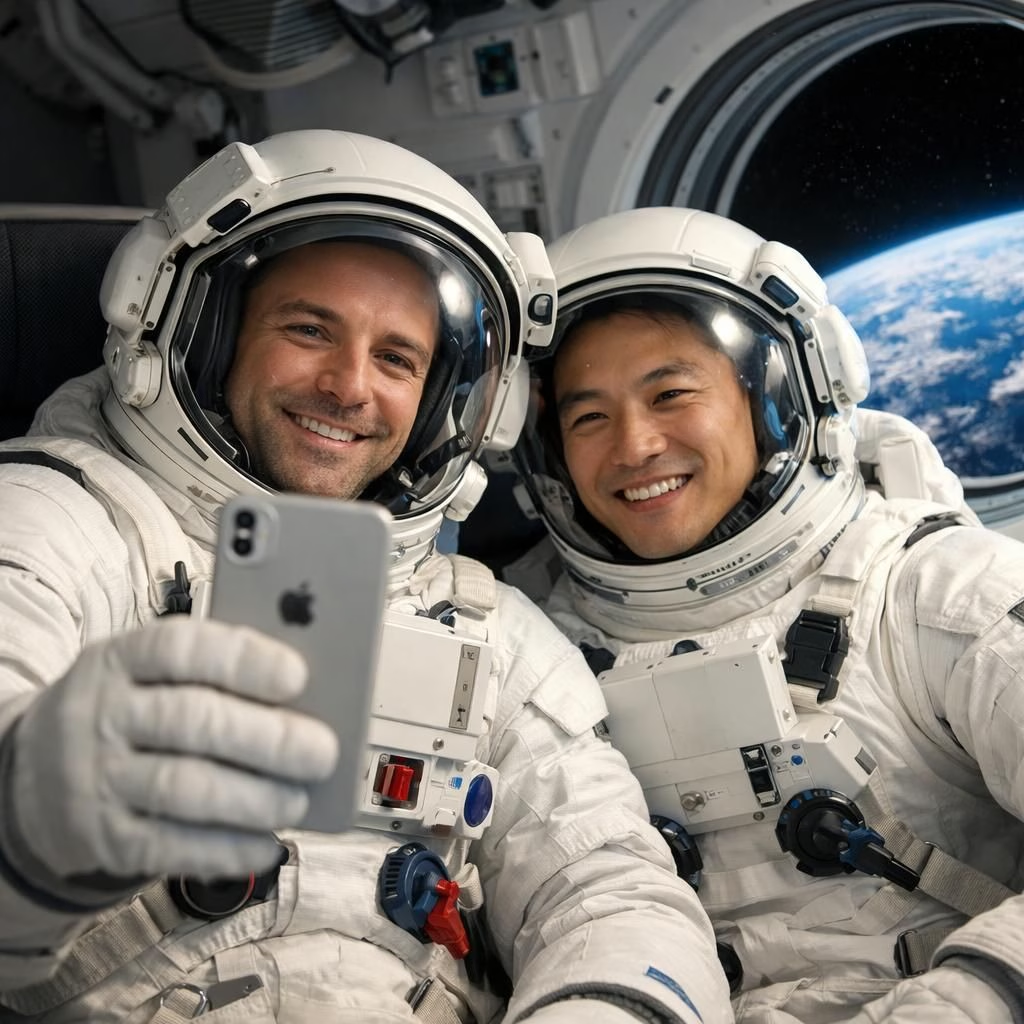
In 2026, Space Selfies took a starring role in Artemis II as the crew tested how consumer tech holds up in orbit. The iPhone in Space, specifically the iPhone 17 Pro Max, wasn’t just about vanity; it was a functional tool that produced usable self-portraits against the blue marble of Earth.
Artemis II turned a lofty mission into a relatable tech demo with real stakes. The crew balanced heritage engineering with modern pocket devices. They proved that a smartphone can thrive when paired with careful engineering and a little orbital common sense.
Space Selfies in Orbit: The iPhone in Space Test
The iPhone in Space rode the Orion mission like a curious tourist with a purpose. Crew members used the front-facing camera to capture Earth over the capsule’s windows, turning a technical milestone into a gallery of human moments. It wasn’t just about pretty pictures; the images offered documentary-grade context for readers at home who would rather see a face than a spec sheet. The device endured with some radiation-hardened tweaks, staying functional in a harsh environment while still delivering.
Apple responded with a polished message. Tim Cook congratulated the Artemis II crew on X, praising how they captured the wonders of space and our planet beautifully, and inviting everyone to celebrate the moment. Greg Joswiak framed it as a milestone in consumer tech—one small step for iPhone, one giant leap for space selfies. The tone celebrated the moment, but the message stays clear: consumer devices can endure in space when properly prepared, enough to document a mission from a human perspective.
Space Selfies and iPhone in Space: Hybrid Imaging in Orbit
Space is an extreme test environment. Radiation, pressure differentials, and thermal swings can fry electronics. In Artemis II, the iPhone in Space joined the mission with their radios off to minimize interference, a practical reminder that a smartphone isn’t a satellite; it’s a pocket camera with a calculator inside. The hardware wore light armor, but the core logic remained: capture, store, and share when possible, without compromising critical systems.
The comparison with dedicated cameras remains unavoidable. The mission’s most detailed, data-heavy images relied on professional gear, notably Nikon bodies that thrive on control and optics. The Nikon D5 and Nikon Z 9 joined the workflow as the workhorses of documentation. This isn’t a knock on the iPhone in Space; it’s a reminder that high-end optics still lead in flexibility and quality for tough scenes. In a pinch, the iPhone in Space serves as a rapid capture tool that documents human presence and mood, not a full replacement for a mission camera system.
What this twist teaches us is practical optimism. Consumer tech has a role in space storytelling, offering immediacy and a sense of connection for audiences. It shows that non-traditional tools can contribute to mission culture without undermining safety or design. The Artemis II crew balanced official telemetry and human moments with poise, and their iPhone in Space selfies helped humanize a program that can feel distant to the public. The iPhone in Space isn’t a revolution in rocketry; it’s a shift in storytelling and engagement.
From a product perspective, the episode shines a light on resilience design. If a standard smartphone can survive in orbit with modest tweaks, what does that say about broader use of consumer gear in space? It hints at a future where astronauts bring more personal devices on missions, pairing them with protective wrappers and mission-safe settings to capture life in microgravity and share it in real time when connectivity allows. The iPhone in Space reveals that the line between consumer gear and professional equipment is more porous than many imagine, especially for imaging, social sharing, and personal reflection.
In optics and engineering terms, the gap remains meaningful. The leap in light gathering, focus speed, and lens versatility that professional cameras provide is still clear. Yet the experiment confirms an incremental improvement path: we can augment high-end cameras with dependable iPhone in Space devices for quick, human-scale documentation. This hybrid approach strengthens both sides: it gives mission teams flexible workflows and creates authentic, relatable content for the public. Space Selfies become not just a novelty but data-rich micro-narratives that complement official imagery, advancing transparency and inspiration.
Looking ahead, expect more missions to blend consumer devices with space-grade hardware. The iPhone in Space case study could serve as a blueprint for responsible, creative field imaging that respects safety while letting astronauts share glimpses of life beyond Earth. The synergy between space-grade reliability and consumer convenience may even speed up training, outreach, and citizen science as the public grows more invested in every launch, orbit, and selfie that tells a story.
If you enjoyed this playful yet pragmatic take, tell us what you think in the comments. Share your own Space Selfies or opinions on whether smartphones belong in orbit. We want your perspective on how comfortable you are with this blend of consumer tech and hard science. Your thoughts help shape future debates about accessibility, safety, and storytelling in space missions.
Original article appreciation and attribution: This piece builds on the Artemis II coverage with gratitude to the original material. Thank you to NASA for their timely updates and thoughtful reporting.
Practical takeaways for space storytelling
- Plan a lightweight imaging workflow that pairs a space-rated camera with a modern smartphone for quick, human-scale coverage.
- Disable non-essential radios on consumer devices to minimize risk to spacecraft systems, while preserving personal documentation opportunities.
- Use phones primarily for on-the-spot storytelling and mood, while relying on professional cameras for high-detail science imagery.
FAQ: iPhone in Space and Space Selfies
- Are smartphones truly safe in space? They can be used with protective measures and mission-safe settings. Specialized shielding and controlled operation reduce risk to the spacecraft.
- Do professional cameras still lead in space imaging? Yes. Nikon D5 and Nikon Z 9 provide superior optics and flexibility for science-driven shots and long exposure work.
- What does this mean for outreach? Hybrid imaging can make missions feel more relatable without compromising safety or data quality.
- Will this change astronaut gear choices? Potentially, as missions consider personal devices for journaling and public engagement alongside traditional cameras.
Conclusion and next steps
Artemis II demonstrates that Space Selfies and the iPhone in Space can coexist with rigorous mission safety. The blend expands storytelling, invites public participation, and keeps the focus on human presence in orbit. For readers, the takeaway is simple: expect more thoughtful, mixed-media coverage from future missions as technology and curiosity travel side by side.
References
Original article reference: Times of India — Apple CEO Tim Cook congratulates NASA astronauts on Artemis II