

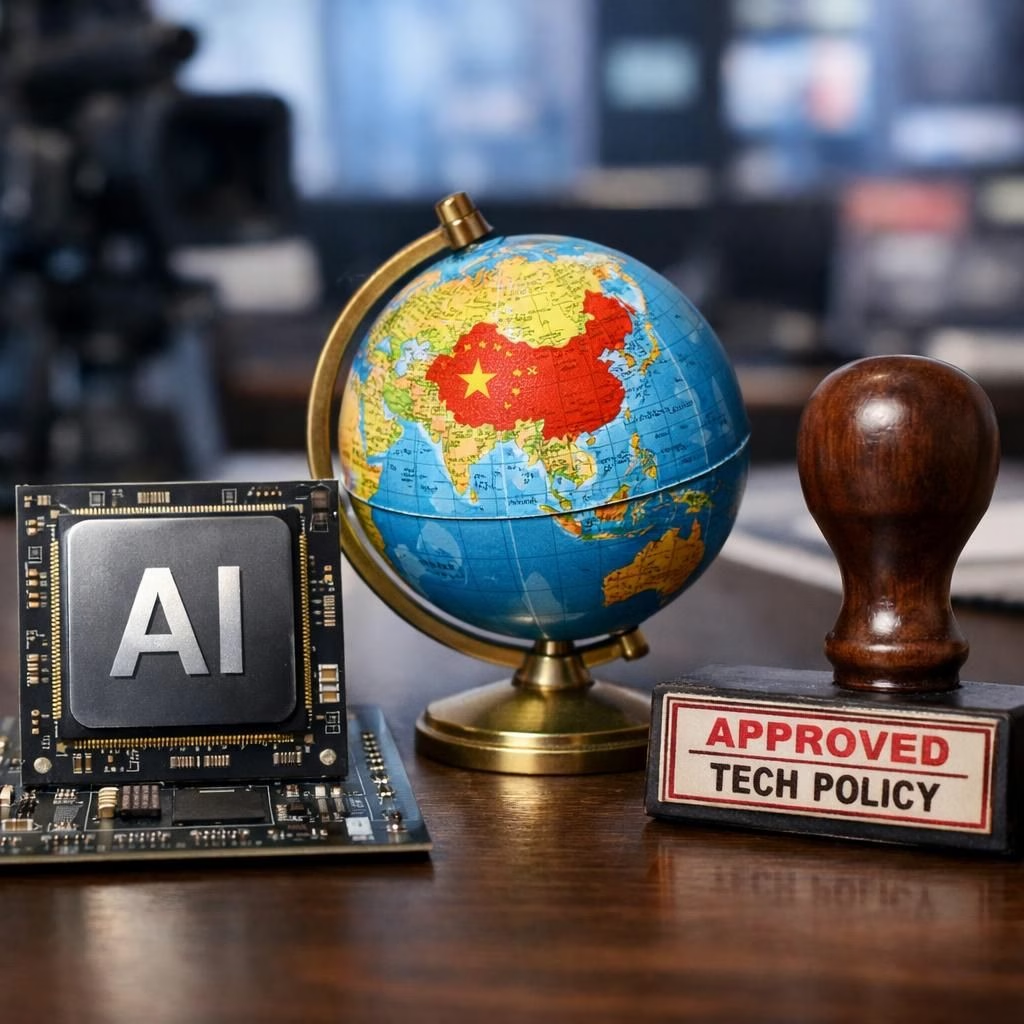
AI Safety and China Chips are front and center as the tech sector dances through a 2026 roadmap full of ambitious chips and visa quirks. The mood is upbeat, with a wink for regulators who finally show up as helpful referees rather than spoiler villains. In short, the future looks like a well-lit lab, not a bleak sci-fi sequel.
AI Safety in Practice: Safer systems, faster delivery
When we talk AI Safety, we talk about the practical disciplines that keep products safe as they scale. The Gemini growth to 650 million monthly users proves the market wants real-world utility, but safety protocols are the calm ballast. Google’s momentum in AI services shows speed, yes, but safety guidelines ensure users trust the acceleration. AI Safety isn’t a buzzword; it’s the blueprint that lets teams ship updates with fewer surprises. As policy labs and product teams align, the industry learns to pair ambition with responsible risk management.
In practice, AI Safety creates a ripple of opportunities. Engineers can design modular safety features, auditors can verify compliance, and customers gain confidence in the technology. The trend makes AI more usable, not more terrifying. And yes, the phrase AI Safety keeps echoing because it’s the hinge that allows rapid iteration without reckless outcomes.
China Chips Rising: Moore Threads to mass production in 2026
Moore Threads, the Chinese AI chipmaker riding high after its IPO, has announced mass production plans for a new generation of chips slated for 2026. This isn’t mere marketing chatter; it’s a signal that China Chips is pushing toward semiconductor independence, thriving even as Western restrictions hum in the background. The plan is ambitious, but it comes with a practical mindset: build, test, and iterate at scale, then ship with confidence.
The timing is strategic. Western nations curb access to advanced tooling, and Moore Threads shows resilience by leaning into homegrown innovation. The move doesn’t just fill a supply gap; it reshapes expectations for a China Chips future—the self-reliant supply chain that tech leaders quietly dream about.
As the world watches, the broader export narrative remains complex. Chinese tech exports are growing, and even as some observers raise ethical concerns, the push toward domestic capability accelerates. This is not a simple triumph story; it’s a nuanced transition that blends ambition with accountability, and it invites dialogue about governance, privacy, and human capital in a global supply chain. China Chips is part of that dialogue.
Beyond hardware, this Chinese chip push sets the stage for a more robust collaboration with researchers and developers worldwide. The path to independence is not isolation but a reimagined ecosystem where talent can move more freely, and where partnerships can flourish under shared safety standards—another timely nod to AI Safety in practice.
Meanwhile, Google grapples with visa-processing delays that slow onboarding of talent. The Gemini app continues to grow rapidly under Josh Woodward’s leadership, swelling to 650 million monthly active users by October. That growth proves AI helpers are becoming practical companions in everyday routines, not just lab experiments. The takeaway is clear: high growth and high compliance can share the same stage, especially when AI Safety measures are in place.
Yet progress isn’t perfectly smooth. Google announced it needs more time to upgrade Android Assistant to Gemini on many devices, a reminder that large-scale platform transitions are a marathon, not a sprint. The challenge is technical, not existential; and the outcome should be a smoother, more capable assistant that respects privacy and safety norms—key for true AI Safety adoption.
In Washington, the RAISE Act steps in with a newsroom-worthy mandate: high-revenue AI companies must publish safety protocols and disclose incidents within 72 hours. The idea is not to stifle innovation, but to give customers, partners, and developers a clearer map of safety practices. Critics worry about compliance costs; optimists see a faster, more trustworthy AI ecosystem. Either way, AI Safety gets a formal seat at the table, and that is progress.
Security incidents have become a shared wake-up call. A recent discovery of browser extensions harvesting conversations underscores the need for robust AI Safety standards. The RAISE Act’s timing aligns with broader industry discipline, reminding everyone that good governance protects the upside of AI without slowing the creative sprint to improve lives.
On the money trail, data-center deals topped 61 billion in 2025, while debt issuance soared to about 182 billion globally. The appetite for AI infrastructure is real, and investors are placing big bets on the cloud, the edge, and everything in between. This financial runway supports both Moore Threads’ ambitions and the Gemini growth machine, turning dreams of faster models into tangible, electricity-hungry hardware. The balance sheet becomes a tool for progress, not a trap.
NeurIPS has morphed from a sleepy academic meeting into a high-dollar hybrid event, with sponsorships and thousands of attendees. Some worry about the scale and commercialization eroding curiosity; others celebrate the infusion of practical know-how that accelerates useful research. The trend is clear: AI research is no longer a quiet library pursuit but a bustling factory floor where ideas meet capital and customers. AI Safety remains a running thread that helps researchers stay grounded while chasing breakthroughs.
These shifts reveal a geopolitical, regulatory, and talent-mobility inflection point. The question is not whether AI will surge ahead, but how to do it responsibly and inclusively. For industry pros, the path is to design products with safety baked in, to recruit across borders, and to navigate regulations with grace and humor. The world needs AI that is fast, fair, and safe—an ambitious trio that can coexist with innovation if we keep the lines of communication open and the coffee flowing.
In sum, the technology landscape in 2026 looks less like a cliff and more like a racetrack where AI Safety and China Chips run in tandem. The pace remains brisk, the debates constructive, and the potential enormous. With thoughtful regulation, robust talent pipelines, and a healthily competitive market, the next decade could deliver smarter tools and kinder algorithms. AI Safety keeps us honest; China Chips keeps the engine warm.
What do you think about the balance between speed and safety in AI deployment? Share your thoughts in the comments below.
Original article: Thank you for the source material and inspiration from the original article.
Practical steps for balancing AI Safety with chip development
- Build modular safety features and clear versioning for updates.
- Establish independent auditing and transparent incident reporting.
- Coordinate with global partners to align safety standards and governance.
- Invest in cross-border talent pipelines to sustain innovation while managing risk.
FAQ about AI Safety and China Chips
- What do AI Safety and China Chips have to do with each other? They shape a coordinated approach to innovation, ensuring safety while expanding semiconductor capabilities.
- What is the RAISE Act? A regulatory framework requiring large AI companies to publish safety protocols and disclose incidents, aiming to improve transparency and accountability.
- How do visa restrictions impact tech companies? They affect talent mobility and onboarding, potentially slowing product development and global collaboration.
Conclusion: Balancing speed, safety, and global collaboration
The technology industry stands at a fork in the road: accelerate innovation while building trust through safety, regulation, and inclusive talent movement. By weaving AI Safety into every product and embracing a pragmatic China Chips narrative, the sector can sustain growth and social value. Readers are encouraged to follow developments, share insights, and consider practical takeaways for their teams.
References
- NIST: AI risk management framework
- OECD AI Principles
- U.S. visa information for workers
- Original article: Sunday’s tech developments – source article