

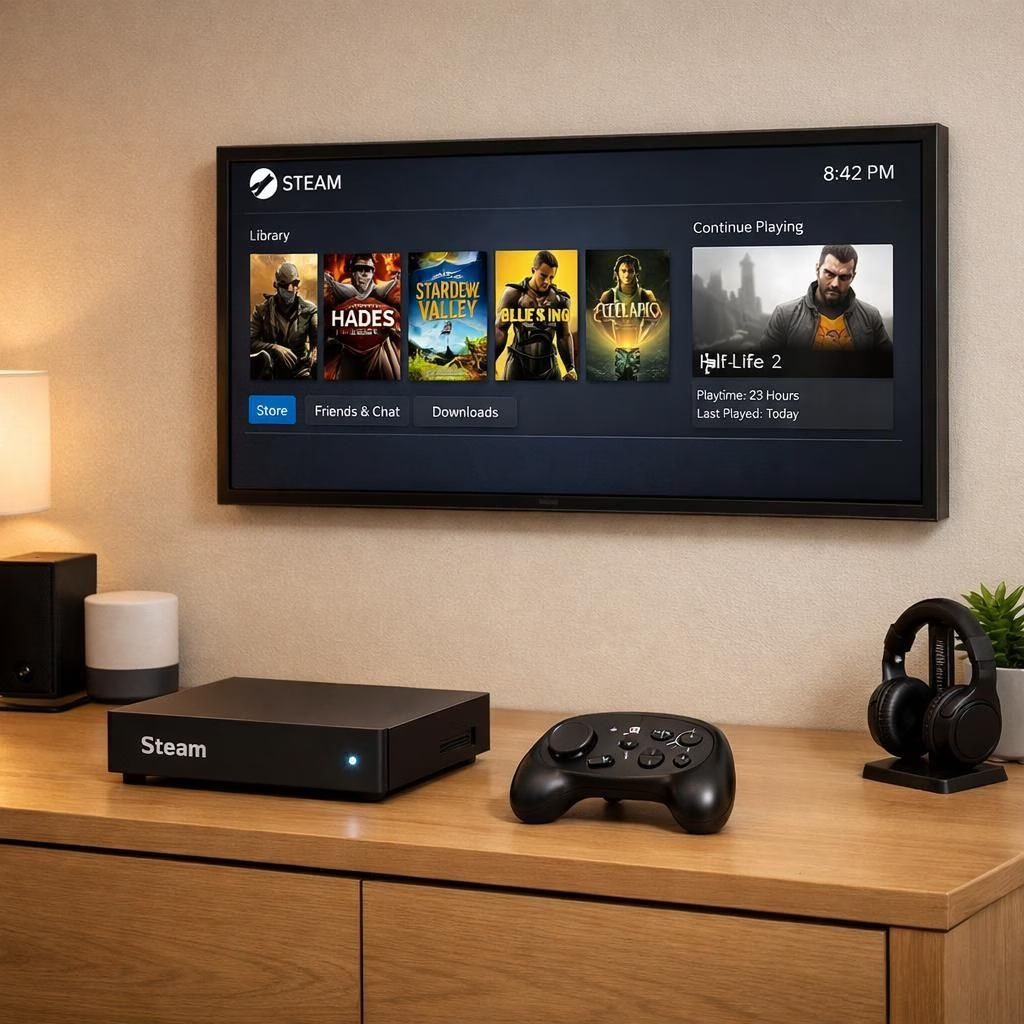
Steam and Tag B have a knack for turning big dreams into living-room reality, one rumor at a time, and this year they insist the trio will ship. Steam is the dream, memory and storage shortages are the unwelcome plot twists. The duo promises progress, but with a shrug that says: we will ship all three this year—just not with a date attached. If you’re keeping score, you’re part of the community that makes the ride feel like a marathon with a few sprints.
Steam and Valve: Lessons from a Hardware Odyssey
In early 2026, Tag B announced that all three devices would ship this year, after revising expectations from Q1 to the first half due to memory and storage shortages. The core message remains hopeful: memory is a real bottleneck and storage is a stubborn guest, but plans evolve and the team adjusts. The blog says more updates will be shared as plans finalize, and the emphasis shifts from spectacle to shipping. This is not a resignation to delay; it is a disciplined reset that keeps the three devices in sight while quality takes the front seat.
Tag B‘s long hardware arc dates back to 2013, when the company aimed to bring PC gaming into the living room. Developers wrestled with Linux compatibility, Tag B learned to build and ship physical products, and VR was a bright but distant promise. Fast forward to 2025, Proton has become a broad bridge that brings thousands of excellent games to Linux and SteamOS, with no extra cost to developers. Millions of players have helped refine the gamepad experience of shopping, playing, and chatting on Steam.
Manufacturing lessons from the original Steam Controller, the Steam Link, the Tag B Index, and the Steam Deck all poured into a clearer blueprint: a gaming-first living room experience, an open platform for users, and a wireless VR headset with its own processing power. The focus shifted from purely clever tech demos to practical, user-friendly devices that sit on a coffee table rather than in a lab corner. In other words, Steam learned to ship software-friendly hardware in a way that respects the cramped reality of living room geometry.
Steam Frame and Valve’s Vision: What 2026 Might Look Like
The tone in 2026 reads as cautious optimism. The three devices—the Steam Machine, the Steam Frame, and the Steam Controller—are framed as coordinated parts of a holistic experience rather than independent curiosities. Tag B emphasizes learnings from the past decade and a half: Linux compatibility improved, SteamOS matured, and relationships with developers grew stronger. The result is a shipping plan that doesn’t pretend to ignore the stubborn realities of memory and storage, yet still promises a meaningful upgrade for PC gaming in the living room.
If you have followed Tag B‘s hardware journey, you know momentum helps more than hype. The Proton compatibility layer stands as a quiet victory, enabling many games to run on Linux without extra charges to developers. The broader impact is more than a few headlines; it’s a trend toward an open platform where customers own their hardware and their software choices. The in-home setup is not a single gadget but a cohesive ecosystem: a console-like front end, a PC-grade library, and an approachable VR option that travels with your power brick.
Looking forward, the plan remains pragmatic: ship all three devices this year, with updates as plans finalize. The company has repeatedly framed this as a learning process—one that benefits developers, players, and retailers alike. In a market full of countdown clocks, Tag B’s approach is refreshingly human: acknowledge the bottlenecks, celebrate the progress, and keep the door open for a living room that finally feels like a genuine Steam space.
As with any ambitious hardware push, there will be questions and clarifications. Tag B invites feedback, and the community responds with humor, skepticism, and the occasional hopeful meme. The takeaway is not merely about swelling product lines but about pushing forward with real improvements: better Linux support, sharper input devices, and a more coherent, approachable platform for PC games in the home theater setting.
In the end, Steam and Tag B are betting on a future where PC gaming sits comfortably alongside consoles in the living room. They are choosing a patient, iterative path rather than a dramatic launch. If history is anything to go by, 2026 could be the year when three devices finally converge into a fluid, user-friendly experience that makes you smile every time you boot up a game.
Share your thoughts in the comments below and tell us how you imagine a Steam-powered living room might look in 2026.
Original article attribution: Special thanks to Tag B official blog for the material that inspired this piece. Original article here: Original article on Eurogamer.
Steam in the living room: a practical checklist
- Install SteamOS on a living-room computer or small-form-factor PC for a console-like experience.
- Pair the Steam Frame with a TV or monitor and a wireless input setup.
- Optimize your library with Steam Big Picture navigation and a comfortable seating arrangement.
FAQ
- Will the Steam Machine, Steam Frame, and Steam Controller ship in 2026?
- Valve-linked references indicate a goal to ship all three this year, but plans remain flexible as memory and storage considerations are addressed.
- What has Proton changed for Linux gaming?
- Proton has greatly improved compatibility, enabling thousands of games to run on Linux without additional developer costs.
- Why is memory and storage a bottleneck?
- High-end hardware requires fast, abundant memory and storage; shortages have affected supply timelines for new devices.
References
- Eurogamer: Valve still hopes to ship the Steam Machine, Steam Frame, and Steam Controller this year
- Valve official blog