

2026 opens with a practical riddle for the software world: how to keep GitHub humming as AI-driven code generation accelerates. The Cloud conversation shifts from single-vendor fantasies to pragmatic, multi-cloud habits. Microsoft, after acquiring GitHub in 2018, reportedly taps AWS to shore up capacity and soften outages that puncture developer trust. The goal is reliability for developers and the AI tooling that is rewriting how they code. This is the start of a more resilient GitHub Cloud strategy built on elasticity and redundancy. In other words, the scale challenge is real, but so is the appetite for smarter infrastructure that learns from demand patterns rather than waiting for a bad alert to wake the team up.
GitHub Cloud Strategy in 2026: Multi-cloud resilience
The narrative is simple but powerful: GitHub workloads are surging as AI copilots help engineers write more, faster. The platform has seen an unprecedented spike in activity, with AI-powered assistants turning every developer into a potential code factory. Official numbers are eye-popping—commit activity alone is trending toward billions per year. The COO has been candid about the pace: multi-cloud elasticity is no longer a luxury; it’s a necessity. The plan to migrate GitHub mostly to Azure by 2027 is still on the table, but the path is evolving. In practice, GitHub is building redundancy with AWS and other providers to prevent single-vendor choke points. The result is a Cloud-first mindset that prioritizes uptime, predictability, and smoother AI integration across the ecosystem. This shift isn’t a surrender to competition; it’s a mature, strategic pivot designed to keep GitHub as the reliable home for modern code, even as the AI era reshapes how developers work.
GitHub Cloud Partnerships: AWS, Azure, and Elastic Compute
What happens when you pair GitHub’s code-hosting with a multi-cloud backbone? You get a more robust environment that can absorb sudden spikes and unpredictable AI workloads. The conversation about AWS involvement is measured: executives confirm multi-cloud activity without detailing client-specific arrangements. In practice, AWS brings capacity and proven reliability, while Azure remains a strategic anchor for Microsoft’s broader cloud ambitions. Google’s recent high-stakes compute deals in the industry remind us that the race for scalable AI compute is global and expensive; the GitHub Cloud approach is a pragmatic countermeasure that leverages multiple trusted providers to keep the lights on. The big takeaway: the goal isn’t “win all the cloud credits” but “keep GitHub up, responsive, and affordable for developers who depend on it every day.”
AI, Code Velocity, and the Road Ahead for GitHub and the Cloud
The acceleration in AI-assisted coding pressures GitHub to optimize compute resources, storage, and queue management. The company’s leadership says the spike in agentic development has tested the infrastructure’s limits, yet they remain optimistic about a future where multi-cloud strategies translate into smoother, faster builds and fewer outages. For developers, that means fewer disruptive outages and more stable CI/CD pipelines. For teams, it means more predictable costs and better capacity planning as AI coders generate more lines of code without breaking the bank. The overarching narrative is clear: GitHub and Cloud together can become more than the sum of their parts when backed by strategic cloud partnerships and smarter orchestration across providers. This is not merely a defensive play; it’s a proactive investment in a future where code flows with fewer interruptions and more insight into performance trends.
From a practical perspective, developers should expect better tooling around reliability, better instrumentation for cross-Cloud workloads, and more transparent incident response playbooks. The multi-cloud approach also invites governance improvements: standardized security controls, unified identity management, and a shared, auditable trail for every commit and deployment across providers. In short, the GitHub Cloud strategy aims to turn a potential bottleneck into a feature: resilience as a built-in capability rather than an afterthought.
In the broader tech landscape, the trend toward AI-native code platforms is reshaping expectations. The competition among cloud providers is intensifying, and GitHub’s path demonstrates how a cautious, well-orchestrated multi-cloud approach can preserve developer trust while enabling rapid, AI-powered innovation. The takeaway for teams is simple: design for elasticity, automate what you can, and document decisions so future engineers understand why you leaned on Cloud, why you kept some workloads on Azure, and how your pipeline stayed green during peak hours.
On a lighter note, the conversation around “sh*t code” has become a reminder that even the best platforms inherit a mix of inputs from countless developers. The leadership’s response—without feeding the drama—highlights a culture that balances humor with accountability. The result is a more resilient GitHub Cloud ecosystem that embraces candid feedback, humane error handling, and a long-term roadmap that keeps pace with AI advancements while preserving the human touch that makes software development feel craft-like again.
Practical takeaways for developers and teams include: leveraging cross-cloud CI/CD strategies to maintain velocity, investing in observability to spot outages before they bite, and treating outages as learning opportunities to tighten SLAs and runbooks. Expect more robust incident communication, improved redundancy planning, and better cost awareness as teams tune their Cloud budgets against AI compute demands. The combination of GitHub, Cloud, and intelligent orchestration is set to deliver a more predictable development experience in 2026 and beyond.
Original reporting and inspiration: Business Insider coverage on Microsoft, AWS, and GitHub’s multi-cloud pivot. Thank you for the original material and for sparking this broader conversation about resilience, Cloud strategy, and the evolving role of AI in software development.
Have thoughts about how GitHub Cloud will influence your workflows? Share your insights in the comments below and join the conversation. And if you found this analysis helpful, feel free to pass it along to teammates who manage cloud budgets or run code through AI copilots.
Image attribution and credits: the prompt below is intended to guide AI-assisted visuals for this post, reflecting a realistic, simple representation of GitHub connecting to AWS and Azure in a cloud-centric data center setting.
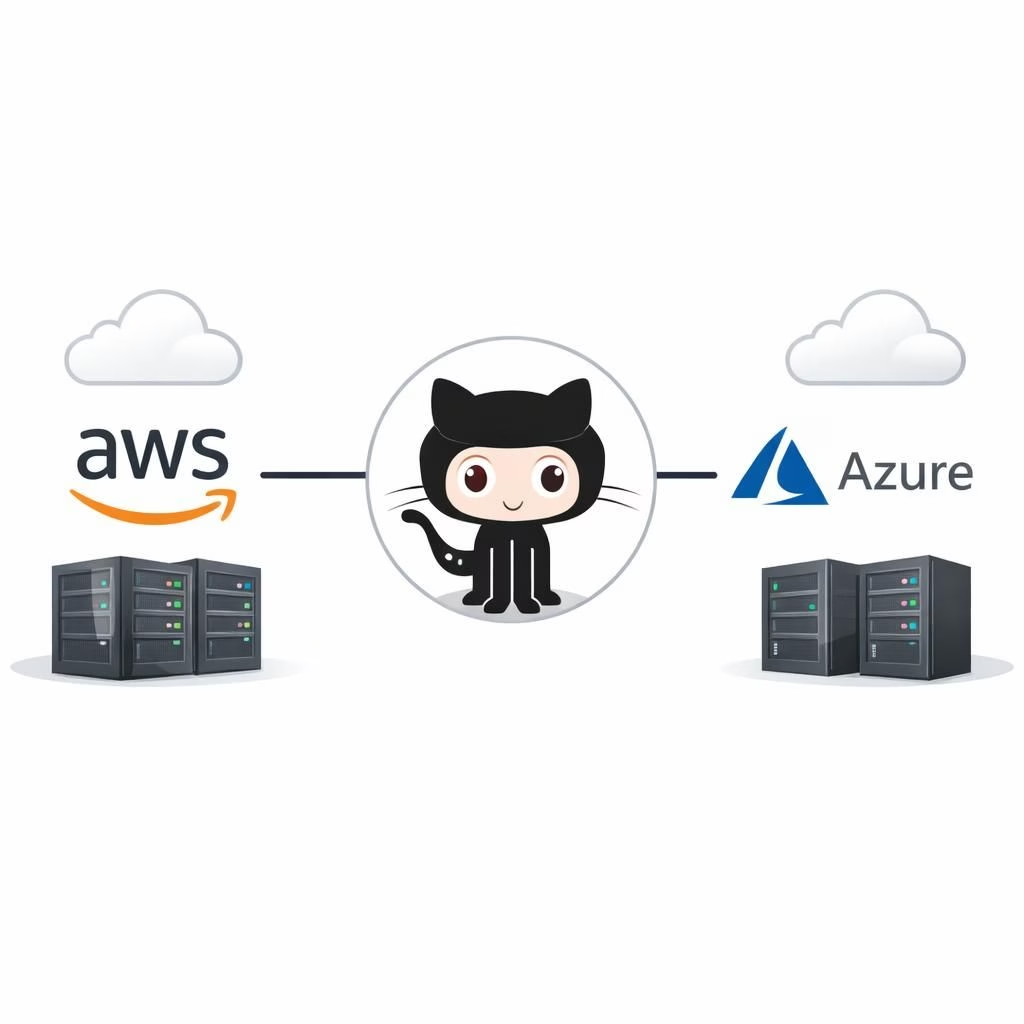
Original image concept and inspiration: a clean, modern depiction of the GitHub octocat logo linked by lighted pathways to the AWS and Azure symbols, with subtle cloud icons and server racks in the background to convey reliable, scalable compute for developers in 2026.
Thank you again to the original article for the foundation. If you’d like to explore more context, feel free to click through the link above and read the full coverage.
Practical steps for the GitHub Cloud teams
- Adopt a unified cross-cloud CI/CD workflow to keep velocity high while avoiding vendor lock-in.
- Invest in end-to-end observability across all providers: traces, metrics, and logs in one pane.
- Standardize security controls and identity management across AWS, Azure, and any other provider you use.
- Establish cross-cloud incident response playbooks with clear escalation paths and runbooks.
- Model costs for AI compute separately from general workloads to avoid surprises in monthly invoices.
- Regularly rehearse capacity planning during peak periods to keep pipelines green.
FAQ: GitHub Cloud and multi-cloud in practice
- What is a multi-cloud strategy, and why does GitHub need it? It’s a formal plan to distribute workloads across multiple cloud platforms to enhance reliability, flexibility, and resilience amid growing demand and AI workloads.
- How will GitHub’s current plan impact developers? Developers should expect fewer outages, more stable CI/CD, and clearer guidance on how workloads are split across providers.
- Is GitHub moving to Azure exclusively by 2027? Microsoft’s roadmap prioritizes Azure, but the company emphasizes elasticity and redundancy; the migration path is evolving and will likely be gradual.
- What about costs? Multi-cloud can improve cost control through better capacity planning and avoidance of single-provider bottlenecks, but it requires discipline in budgeting and governance.
References
- Times of India Tech News (original source)
- Business Insider coverage on Microsoft, AWS, and GitHub’s multi-cloud pivot
- AWS Architecture Blog: How to build a multi-cloud architecture
- Azure Blog