

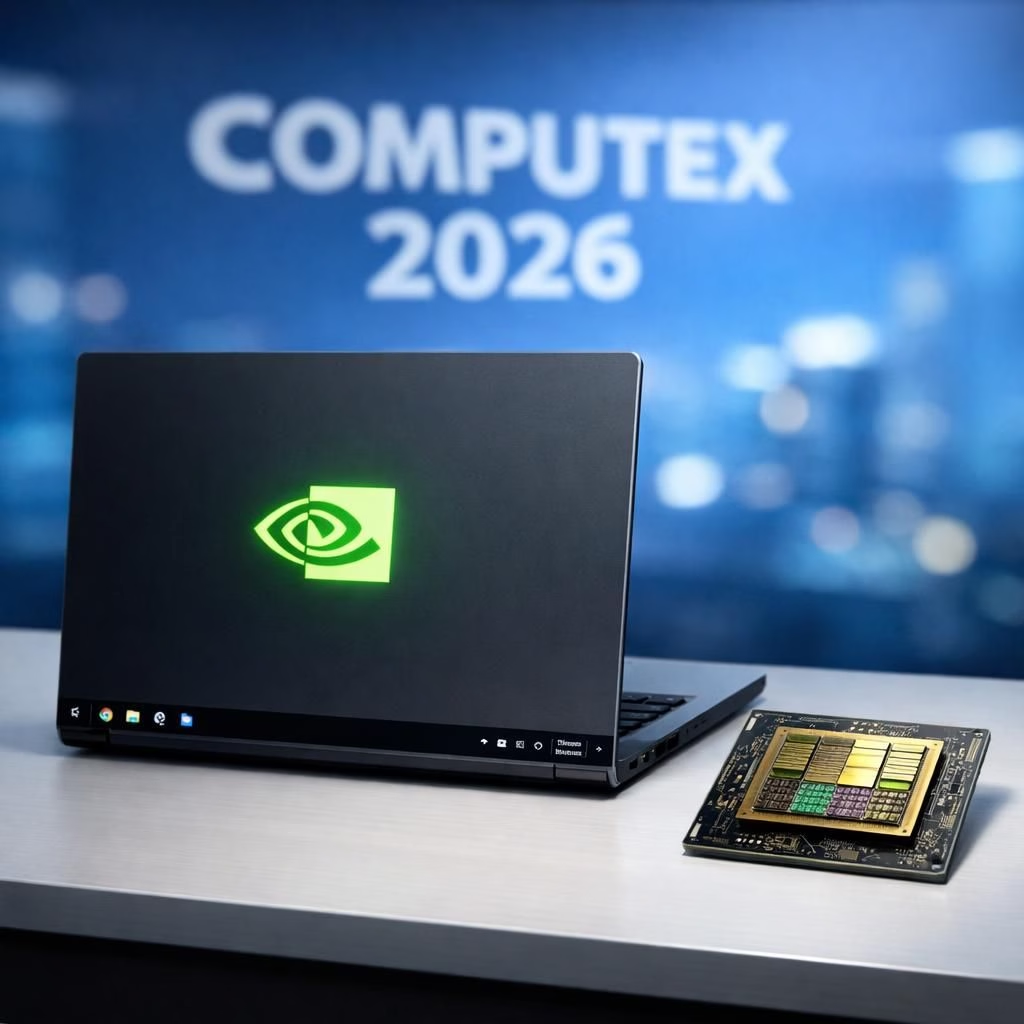
AI PCs have arrived at Computex 2026 with a confident swagger, turning the show floor into a playground for silicon and satire. The aisles buzz with talk of battery life, smarter cooling, and chips that remember your last coffee preference as you launch your 9th tab. The mood is optimistic but not naive: this isn’t another gadget dump but a staged nudge toward more capable personal computers. If you listen closely, you can hear the soft clack of keyboards as developers sketch a future where AI assistants sit inside your laptop, ready to suggest a spreadsheet tweak or a better emoji for your status update. In short, AI is not just a feature; it is a cultural shift, and PCs are happily along for the ride, wearing their productivity like a badge of honor.
AI Momentum: PC AI Chips Press the Limits
On the floor, NVIDIA begins to write the next chapter. The company teased its first PC chips designed specifically for PCs, signaling a move from GPU-accelerated experiments to chassis-level acceleration. The promise is to speed up AI tasks within the motherboard’s cozy confines, keeping data close and private. These PCs chips are pitched to power creative apps, data work, and casual gaming alike, reducing the lag that makes a deadline nervous. The rhetoric is bold, but the practical questions remain: how will heat, cost, and software support line up? For now, the vibe is hopeful and precise.
Microsoft is quietly nudging the ecosystem forward with hardware that complements this silicon leap. The Microsoft Surface Ultra, a laptop meant to be both studio and sprint champion, is being positioned as a flagship for the era of personal AI in the pocket. The new setup integrates Windows with a suite of AI-ready tools, and earlier hands-on impressions suggest a comfortable, responsive experience. The reality check is mild: it’s not magic, it’s optimization, and optimization sells when it feels effortless. Still, the surface of the future looks shiny, not just fast.
Hints of a deeper shift arrive when the conversation turns to chips designed for arm-friendly efficiency. An Arm-based approach to PC silicon is being tested with devices from a handful of big names, including Dell and HP, promising longer battery life without a heavy price in performance. The idea is to deliver Windows with a lighter touch, letting developers ship AI-first software that scales from a laptop to a conference room. The trend is clear: more work, less waiting, and a better keyboard experience for long sessions.
NVIDIA makes a second appearance with a broader strategy: the push to bring this era of PCs with built-in AI acceleration to the hands of everyday users. The company highlights partnerships that bring its chips to laptops that people actually carry around, not just the lab benches in engineering departments. The emphasis is on local inference, privacy, and smoother interactions with AI-powered apps. The message is simple: you won’t need a year-long cloud round-trip to run your favorite AI tools, and that feels like progress you can actually feel when you type.
In practice, the roadmap remains a blend of ambition and pragmatism. OEMs like Microsoft, Dell, and HP are testing forms that balance heat, weight, and battery life while promising the software experiences that modern users expect. The hardware speaks the language of Windows, but the software speaks in AI-ready dialects—an encryption-friendly, latency-conscious dialect that keeps your data in your device’s neighborhood. The big takeaway is that the PCs are no longer a passive platform; they’re becoming a collaborative partner in your daily tasks, creative work, and late-night debugging sessions.
PCs Reboot: ARM-Powered Laptops and a Windows-First Future
The ARM ripple is shaping a Windows-first future for PCs as Dell and HP roll out lighter, cooler, longer-lasting laptops. The Arm-based chips aim to balance performance and energy use, a practical win for students, professionals, and casual streamers alike. The Windows ecosystem is tightening its embrace, with more native AI tooling and better power management baked into the baseline experience. The result should be PCs that feel less like gear and more like reliable partners for work and play.
Meanwhile, the collaboration narrative is clear: hardware makers want to offer a consistent Windows experience across devices, with AI-enabled software that remembers your preferences and adapts to your workflow. If Computex has a recurring theme, it’s this: more compute in more compact builds, and more clever software that makes the hardware feel faster than it used to. The path forward includes better thermal design, smarter cooling solutions, and a shared belief that Windows can coexist with AI in a way that doesn’t require a data center in your backpack. That balance is what makes the forecast feel less like a marketing pitch and more like a plan you could actually depend on next year.
NVIDIA shows up again for a final note, reminding everyone that the PC revolution of 2026 isn’t just about a single chip or a single laptop. It’s about a broader ecosystem where GPUs, CPUs, and software teams coordinate so your device feels fast, quiet, and ready. The emphasis on local AI inference means less cloud dependency and faster response times, which is welcome for both creative professionals and curious students. In practice, this translates to smoother video editing, faster code compilation, and more responsive AI assistants waking up as soon as you type.
As Computex progresses, the mood stays upbeat. The show continues to pair playful demonstrations with substantial engineering, and the message is clean: PCs are evolving into more capable, more humane tools. The hardware side is interesting, yes, but the real magic happens when software learns your habits and the machine quietly supports you without chasing every new trend. If you’re a writer, designer, or data wrangler, there’s genuine reason to anticipate improvements that feel tangible rather than theoretical.
Original article credits and gratitude: special thanks to Yahoo Finance for the Computex stock-side coverage and to Axios, CNBC, and the NVIDIA Newsroom for the reporting angles that helped shape this piece. Source material: Yahoo Finance, Axios, CNBC, NVIDIA Newsroom. Thank you for the original material.
If you enjoyed this take, share your thoughts in the comments and join the conversation. For the curious minds who want to dive deeper, a big thank-you goes to the original sources linked above for fueling the discussion.
FAQ
- What does AI mean for PCs in 2026? AI capabilities are embedded in the hardware and software stack to speed up tasks locally and reduce cloud dependency.
- Which brands are pushing ARM-based designs? Dell and HP are among the names exploring ARM-powered laptops for Windows with longer battery life.
- Will these AI PCs be affordable? Early models target premium segments, with eventual price declines as volumes grow and manufacturing scales.
- How does Windows support AI on ARM? Microsoft continues to optimize Windows and the app ecosystem for ARM-based devices, improving power efficiency and AI tooling.
Conclusion
Longer battery life, smarter software, and local AI inference are shaping a practical path forward for PCs. Computex 2026 isn’t about hype; it’s about turning ambitious ideas into real, usable tools you can rely on for work and play.