

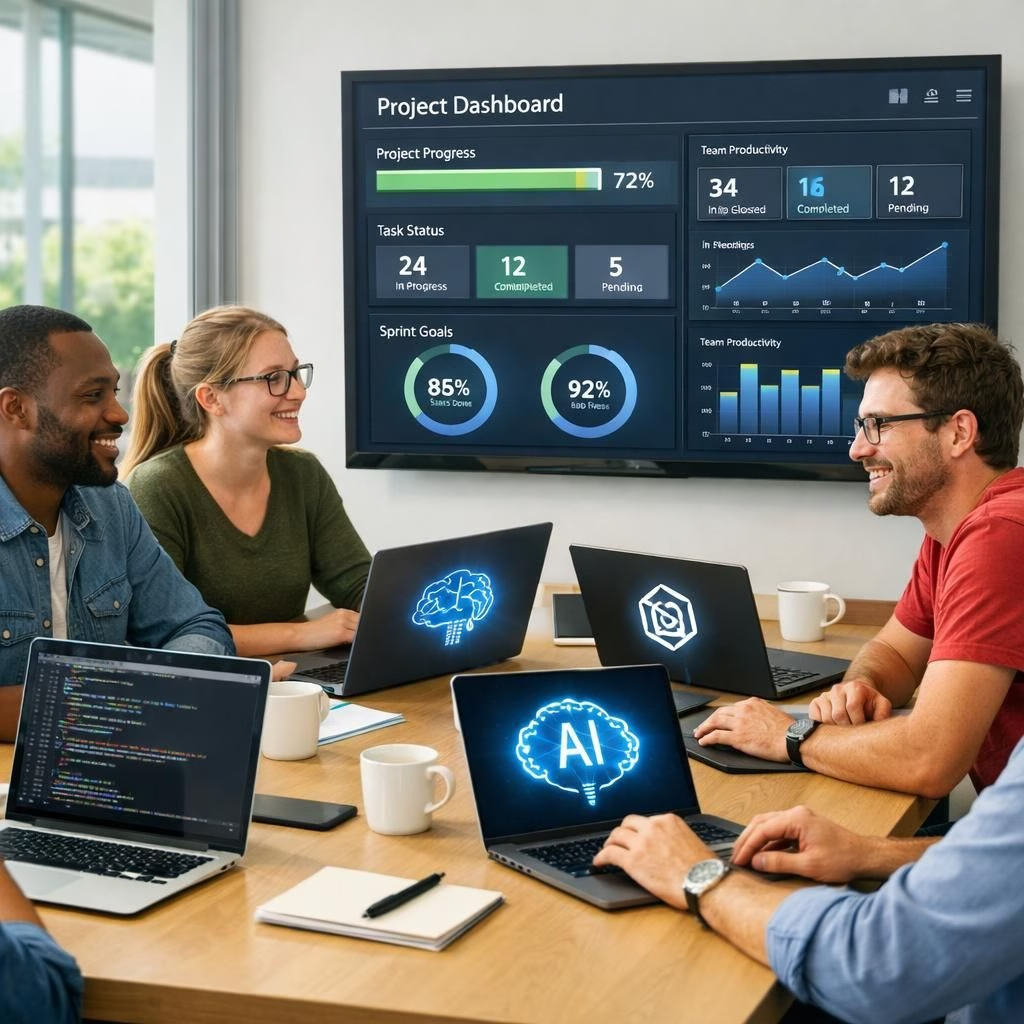
AI and JPMorgan have a new rhythm in 2026. The bank’s 65,000-strong JPMorgan Global Technology division now faces explicit performance objectives that mix software excellence with daily tool use. The tone on intranet pages is upbeat; the forecast is ambitious; the reality might be a tad sweaty. Still, the message is clear: AI driven productivity is here to stay, and JPMorgan will measure it as a part of work quality. In short, the bank wants faster code, fewer bugs, and better security, all powered by intelligent tooling.
AI at JPMorgan: The 2026 Tech Push
According to internal documents, JPMorgan is rolling out new benchmarks across the global developer workforce. The updates require engineers to drive excellence by adopting AI tools and demonstrating measurable gains in code quality, speed, and productivity. Changes will be reflected in official goals by the end of March. The pilot includes Anthropic’s Claude Code and existing large language models from OpenAI and Anthropic; managers are asking for visible adoption metrics and usage patterns. The emphasis is not just on fancy tech; it’s about practical improvements to the software lifecycle.
Industry watchers and engineers report that AI adoption has become a recurring theme in manager conversations, intranet posts, and internal dashboards. The dashboards can show whether a colleague installed Copilot and how often it is used. The focus isn’t punishment, but performance clarity. The bank is tracking usage with a fairness lens, ensuring teams share knowledge and help each other through the learning curve. The plan also says a noticeable increase in quarterly output is the target, not a dream. Copilot is part of the mix, alongside Claude Code and other models.
Executive statements emphasize a large-scale bet on technology. JPMorgan plans to spend roughly $20 billion on technology in 2026, a figure that dwarfs peers and creates momentum. That investment comes with direct expectations for its workforce: to integrate AI into daily routines and demonstrate tangible improvements in velocity and reliability. The goal is to convert a vast budget into real value through disciplined experimentation, measurable results, and shared accountability.
JPMorgan’s AI Journey: Measuring What Matters
JPMorgan is overhauling how it grades employees. The new system centers on two core dimensions: what you achieve and how you achieve it. Workers will be sorted into buckets labeled stand out, achiever, and needs improvement. For developers sitting on the AI sidelines, that last category becomes a cautionary signal, a gentle prod toward better adoption rather than a career ending verdict. The shift aims to balance speed with security, code quality with governance, and innovation with risk controls.
For developers eager to embrace the AI tools, the changes promise clearer feedback loops and better recognition for concrete results. The combination of faster delivery and safer, more maintainable code aligns incentives with real value. It is a careful, deliberate move toward a modern software culture, one where AI is treated as a collaborator rather than a threat. The transformation is not instantaneous, but it is designed to compound over time, producing an upward spiral of capability and confidence.
Security engineers and software engineers alike take note: AI is not a substitute for skills; it is a force multiplier. The tools promise to reduce toil, accelerate testing, and provide auditable trails for compliance. The nuance matters: governance and guardrails ensure that automation remains controlled, repeatable, and transparent. In practice, this means better incident response, faster remediation, and a stronger ability to scale reliable systems across the enterprise.
With a budget this large, the industry will watch how efficiently the team converts investment into outcomes. 2026 looks like a year of experiments with measurable milestones, not a single grand slam. Still, the trajectory suggests a future in which AI enabled workflows become normal, not novel, parts of JPMorgan‘s software factory. The result could be happier engineers, better customer experiences, and healthier security postures across the firm.
As with any large change, there will be conversations, resistance, and victories. The heart of this shift is practical: give teams clear objectives, provide the right AI tools, and measure what actually matters. The interplay of what you achieve and how you achieve it will reveal who thrives in this environment and who needs a different kind of support. In the end, AI adoption at JPMorgan is about elevating craft, not erasing it. The bank’s ambition is to turn a massive technology budget into real, lasting improvements for both developers and clients.
We invite you to share your thoughts in the comments. For context and gratitude, a note of thanks to Business Insider for reporting on Business Insider coverage and the broader industry context. As part of this discussion, see also Anthropic Claude and OpenAI for related AI tooling context.
Original article: Business Insider coverage. Thank you for the original reporting.
AI-driven steps for JPMorgan teams
- Conduct a quick readiness audit: map current tooling, identify gaps, and align with measurable goals.
- Launch a 90-day pilot using Copilot and Claude Code to test real-world impact on build velocity and defect rates.
- Define clear KPIs: cycle time, defect leakage, test coverage, and security compliance metrics.
- Create a knowledge-share cadence: weekly show-and-tell sessions, code-review enhancements, and documented best practices.
How to approach this change today
- Prioritize governance: establish guardrails, logging, and auditable trails for all automated actions.
- Blend human and machine: use AI as a collaborator, not a replacement for critical thinking and expertise.
- Balance speed with quality: target meaningful improvements in code quality and security alongside faster delivery.
- Measure what matters: tie incentives to concrete outcomes, not just tool usage.
FAQ: AI and JPMorgan
- What does the AI push mean for developers? It signals clearer goals, faster feedback, and recognition tied to measurable results while maintaining governance and risk controls.
- Will AI tool adoption affect performance ratings? Yes. The new system emphasizes what you achieve and how you achieve it, with explicit expectations around AI-enabled workflows.
- Are there guardrails for AI use? Absolutely. The program stresses governance, auditable trails, and responsible automation across teams.
- How will success be measured? Through concrete metrics like delivery velocity, defect rates, security posture, and maintainability over time.
Conclusion: Practical, not theoretical
The move toward AI–driven software development is about raising craft, not replacing it. A disciplined, measured approach helps JPMorgan convert budget into real value, benefiting both developers and clients. The focus is on meaningful improvements that compound over time, producing better outcomes and a stronger security posture across the firm.