

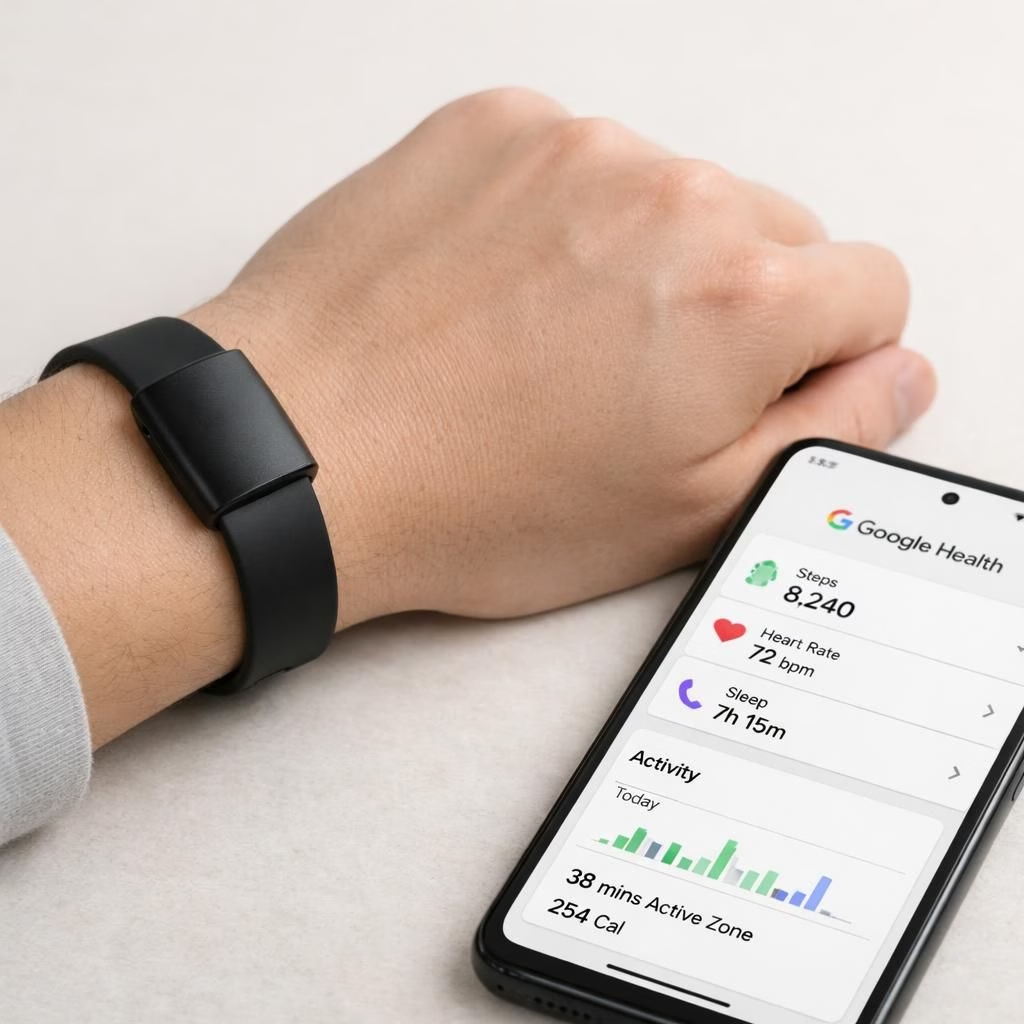
The Fitbit Air is a light, screenless wearable, pairing with Google Health for AI-driven insights. In 2026, the duo looks like a minimalist future of wellness tracking—Fitbit Air provides the hardware, Google Health brings the AI coach and data management.
Fitbit Air x Google Health in 2026: Minimalist tech meets AI coaching
The core appeal is back to basics. A central sensor array sits in a small module, slipped into a fabric Performance Loop Band. It weighs just 11 grams and disappears on the wrist, free from notifications. The goal is a wear-and-forget approach that still captures steps, sleep, and basic health signals. The starter kit includes the Performance Loop Band in four colors—Obsidian, Lavender, Berry, Fog—and optional bands for $35 or a premium Elevated Modern Band for $50. The device is designed to be understated yet capable, a nod to early fitness trackers with modern AI luggage.
Battery life is advertised as seven days per charge, which matches real-world use. A magnetic charging puck attaches to the back, allowing a 90-minute top-up. Lose the charger and you’ll buy a replacement for $25, which smacks of a minor inconvenience. In daily life, the screenless design makes life simpler: less distraction, more focus on data captured by Google Health.
Google Health sits alongside Fitbit Air as a pair. The hardware is the quiet type, and the data comes alive in the app. The Google Health AI Coach is where the action happens. The subscription costs $10 per month or $100 per year, with an optional Google Health Premium tier that boosts storage and tools. The AI Coach offers plan suggestions, rest day reminders, and feedback on workouts. It learns your routines and nudges you in a friendly, talkative way—sometimes over-chatty, but never boring.
Why Fitbit Air and Google Health fit for everyday life
Setup connects quickly, and I found the Google Health app modern and clean, even if it hides a few data nooks. The first day you log workouts, track sleep, and see the coach generate a plan. The coach speaks in plain language and uses Gemini’s natural language chops to answer questions. It even helps with meal timing and hydration notes when you prompt it. The result is a personal AI helper that encourages consistency without yelling at you.
The trade-off is the limited display and reliance on the phone app. With no built-in GPS, you’ll need to pull route data from your phone. Data sometimes updates slowly, so you can wait a few minutes for sleep or workout stats to sync. The upside is a low-profile device that never nags you with screens or buzzes. For casual users, the combination feels like a simple, reliable coach. For serious athletes, the lack of depth and occasional data gaps may feel insufficient.
On accuracy, the Google Health-based metrics align with rivals on heart-rate trends during workouts, though resting heart rate and calorie estimates can drift. The Oura Ring and Whoop show similar patterns, but the Air tends to overstate calories a touch during heavy activity. Sleep metrics trend harsher than the Oura Ring in the same night, though the gaps shrink as you wear the device longer. Treat the numbers as guidance rather than gospel, especially for intense training plans.
How the AI Coach reshapes daily routines
The AI Coach is the star feature. It analyzes sleep, activity, and common patterns, then crafts a plan. It accepts natural language queries, so you can ask for a rest day or a specific workout with a casual chat. If you want to understand a stubborn data point, the coach provides a concise summary with charts. The approach is friendly and efficient, though at times verbose. You learn to edit plans by chatting, which saves time compared with manual tweaks.
In practice, the AI Coach works best when you bring a real goal. Tell it to maintain your current routine, and it will propose achievable tweaks. If you aim to improve resting heart rate, it recommends targeted exercise blocks and better sleep routines. The coach’s personality is a plus for many users, creating a sense of daily accountability without pressure.
Be aware that the AI coach reflects the Gemini platform’s strengths and quirks. It is eager and sometimes over-ambitious about suggesting a workout cadence or rep range. It often ends up asking follow-up questions, which can feel slow in a fast-paced day. Still, the value of a responsive, conversational coach remains high for casual users who want a personal touch in wellness tracking.
From a usability standpoint, Google Health emphasizes ease of data access. You tap through tabs labeled Health, Sleep, and Fitness, with Health holding the Vitals view: breathing rate, blood oxygen, resting heart rate, HRV, and temperature variation. You still must learn where to find historical data, and the learning curve matters. But the layout remains modern and clean, a strong sign that Google wants to simplify health data rather than overwhelm you with graphs.
Battery life, charging, and wearability are standout positives. The 11-gram device is comfortable enough to forget it’s there after a day. The proprietary charger is slightly annoying if lost, but the magnetic hold is dependable, and charging completes in under two hours. The absence of a screen keeps the device cost and weight down, which helps the overall battery longevity. Most importantly, you can wear Fitbit Air all day and into sleep without it feeling intrusive.
The real-world value comes from the balance: a light hardware core, simple bands, and AI-driven coaching. For those who want a privacy-conscious, screen-free experience that still rewards consistent activity with meaningful feedback, Fitbit Air paired with Google Health presents a compelling option in 2026.
Who should consider this pairing? If you’re not chasing elite athletic metrics, and you enjoy light tracking with an effective AI coach, Fitbit Air with Google Health could be a strong fit. It suits people who want a wearable that blends with daily life rather than dominating it. If you prefer more data depth, or if you rely on a big ecosystem of third-party integrations, you may want to look at other devices. The price remains accessible, especially when balanced against premium rivals. It’s a practical, modern trade-off that many non-enthusiasts will appreciate.
In the end, the Fitbit Air and Google Health duo feels like a breath of fresh air in wearable tech—simple, helpful, and surprisingly capable for a screenless tracker. It’s not a one-size-fits-all solution, but it has a real chance to redefine casual wellness tracking in 2026. For curious readers, I recommend a free trial of Google Health Premium to test-drive the AI Coach before making a decision.
If you’re curious about the long-term value, this pairing deserves a closer look as you evaluate your daily routines and health data. It may not convert every skeptic, but it could become a trusted companion for many. The overall experience is approachable, and the AI Coach adds a personal touch that makes routine workouts easier to sustain.
That said, those who crave hardcore metrics or advanced customization should proceed with tempered expectations. The lack of a display, occasional data refresh delays, and the emphasis on lifestyle tracking over sport-specific features mean this isn’t for everyone. Still, the core idea—a light, wearable, AI-assisted coach linked to a clean health dashboard—has real appeal for a wide audience.
As I wrap up this review, I found the combo of Fitbit Air and Google Health surprisingly natural. It’s a rare blend of light hardware, practical software, and an AI coach that feels approachable rather than intrusive. If you value wearability that fits into daily life while still offering thoughtful feedback, this pairing deserves a closer look in 2026.
Original article: Android Police — Fitbit Air review.
Ready to share your thoughts? Tell us in the comments below and join the conversation.
FAQ: Fitbit Air + Google Health
- Is the Fitbit Air comfortable to wear all day? Yes. It weighs 11 grams and stays unobtrusive on the wrist.
- Do I need the app to use it? Yes. It requires the Google Health app and, optionally, the Premium features for AI coaching.
- Can I track workouts without a phone? The Air lacks GPS and a screen, so a phone is needed for route data and deeper analysis.
- How long does the battery last? About seven days per charge in typical use.
Conclusion
In short, the Fitbit Air and Google Health pairing is a practical, wear-and-forget solution for casual wellness tracking. It’s not a sport-first device, but it offers a friendly AI coach and simple data insights that can help sustain daily activity.