

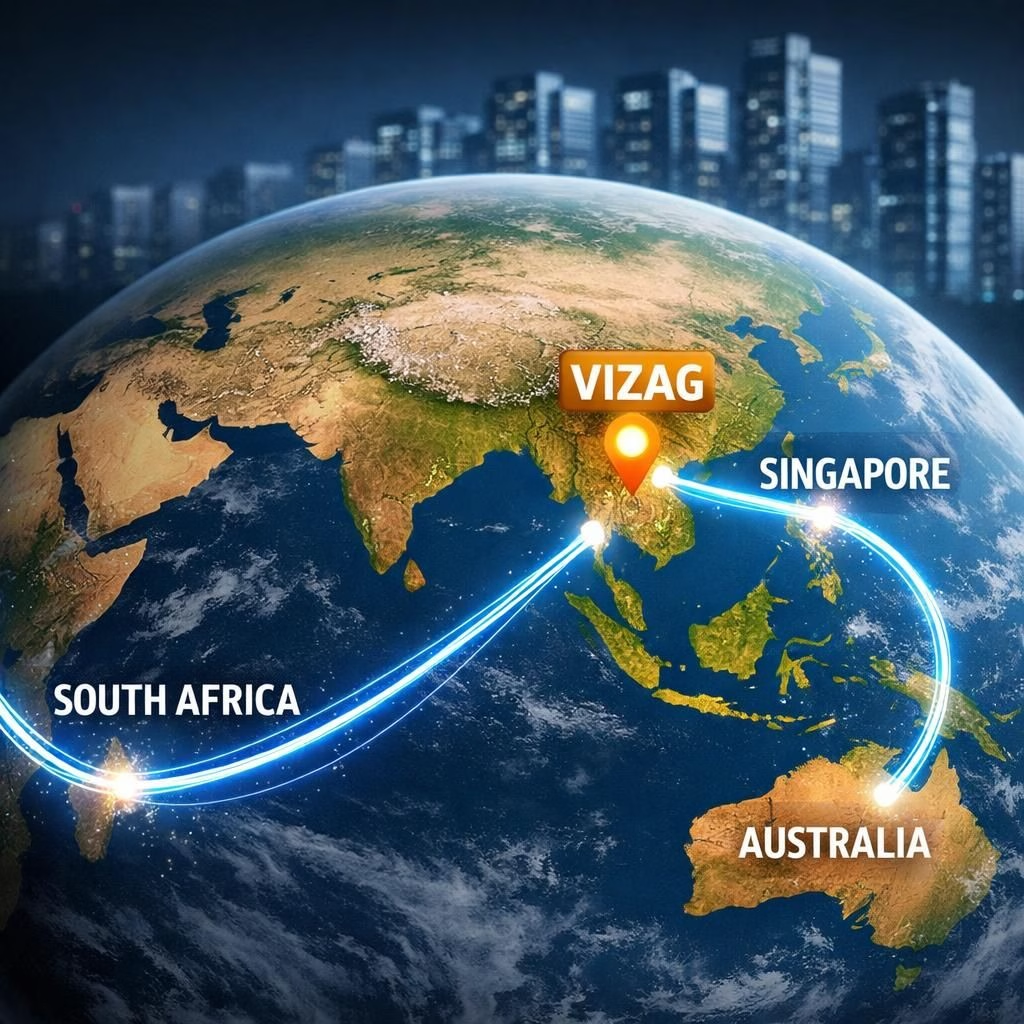
AI infrastructure in India is getting a major upgrade. Google has unveiled a plan to build new fiber routes that connect India with the United States and several Southern Hemisphere nodes. This initiative sits atop Google’s broader, five-year AI infrastructure investment in India, totaling $15 billion. In practical terms, faster and cheaper internet powers smarter apps, better education tools, and more reliable cloud services for startups and students alike.
AI infrastructure: Global links to India
Three new undersea paths will form the backbone: to Singapore, South Africa, and Australia. On top, four new fiber routes will connect the US to India and beyond. Vizag (Visakhapatnam) is the standout: Google plans direct links from Vizag to Singapore and to South Africa, turning Visakhapatnam into a genuine international subsea gateway.
The existing cable landings are clustered around Mumbai and Chennai. The India-focused addition adds geographic diversity to the country’s internet backbone and makes nearby cities more attractive data hubs. On the west coast, a new Mumbai-to-Western Australia cable will slot in alongside existing Pacific routes, expanding capacity and resilience.
Why does Google say better cables matter? The logic is simple and practical: reliable AI infrastructure helps close the AI divide. More subsea capacity tends to lower latency and costs, improving productivity and enabling scalable growth for businesses of all sizes. In other words, better cables accelerate AI adoption, not just bragging rights.
Alongside the cable announcements, Google.org pledged $30 million to improve public services with AI and another $30 million for scientific research. Google DeepMind is also launching a new partnership with the government of India to deploy its frontier AI for Science models locally, a step in AI infrastructure planning that keeps talent and solutions close to home and aligned with local needs.
India becomes a bigger piece of Google’s global spending spree. Google said its capital expenditures could hit $185 billion this year alone, with recent commitments in Belgium, the UK, and South Carolina. For Google, India is clearly more than a growth market; it hosts its largest global campus in Bangalore and a fast-expanding roster of local partnerships that anchor the long-term strategy.
The Vizag gateway story isn’t just about cables. It signals that India can serve as a premier internet hub for the region. The emphasis on onshore landings and diverse routes reduces single points of failure and makes AI-enabled services more robust for schools, hospitals, and small businesses across the country.
India leads a new era of AI infrastructure
With new routes, the country’s connectivity is more than a telecom upgrade. It is a catalyst for localized AI applications, smarter public services, and a welcoming climate for international tech partners. Bangalore’s campus expansion reflects a maturing ecosystem that blends research, product development, and local collaboration in a synergy that benefits developers and users alike.
As 2026 continues, the focus remains on closing the digital divide and boosting productivity. The combination of international cables, strong national talent pools, and targeted investments positions India as a pivotal hub for global AI infrastructure. If you’ve followed this story, you’ve seen the arc from a national upgrade to a continental gateway. This AI infrastructure push could shape India‘s digital future.
Original article: Thank you to the authors at Original Source Material for the excellent foundation that inspired this rewrite.
What are your thoughts on this AI infrastructure push? Share your thoughts in the comments below.
Practical steps for stakeholders in AI infrastructure
- Startups can design AI services that leverage lower latency to reach customers faster and reduce cloud operating costs.
- Educators can explore AI-powered learning platforms and remote labs to broaden access to quality material.
- Public agencies can pilot AI-assisted data portals to improve service delivery and transparency.
FAQ
- What is America-India Connect? It is a multi-path connectivity project connecting India with the United States and other regions via subsea cables and fiber routes.
- What role does Vizag play? Vizag will host direct links to Singapore and South Africa, turning the city into a regional international gateway.
- Will this affect costs or speeds? In general, more capacity lowers latency and can reduce prices for AI-enabled services.