

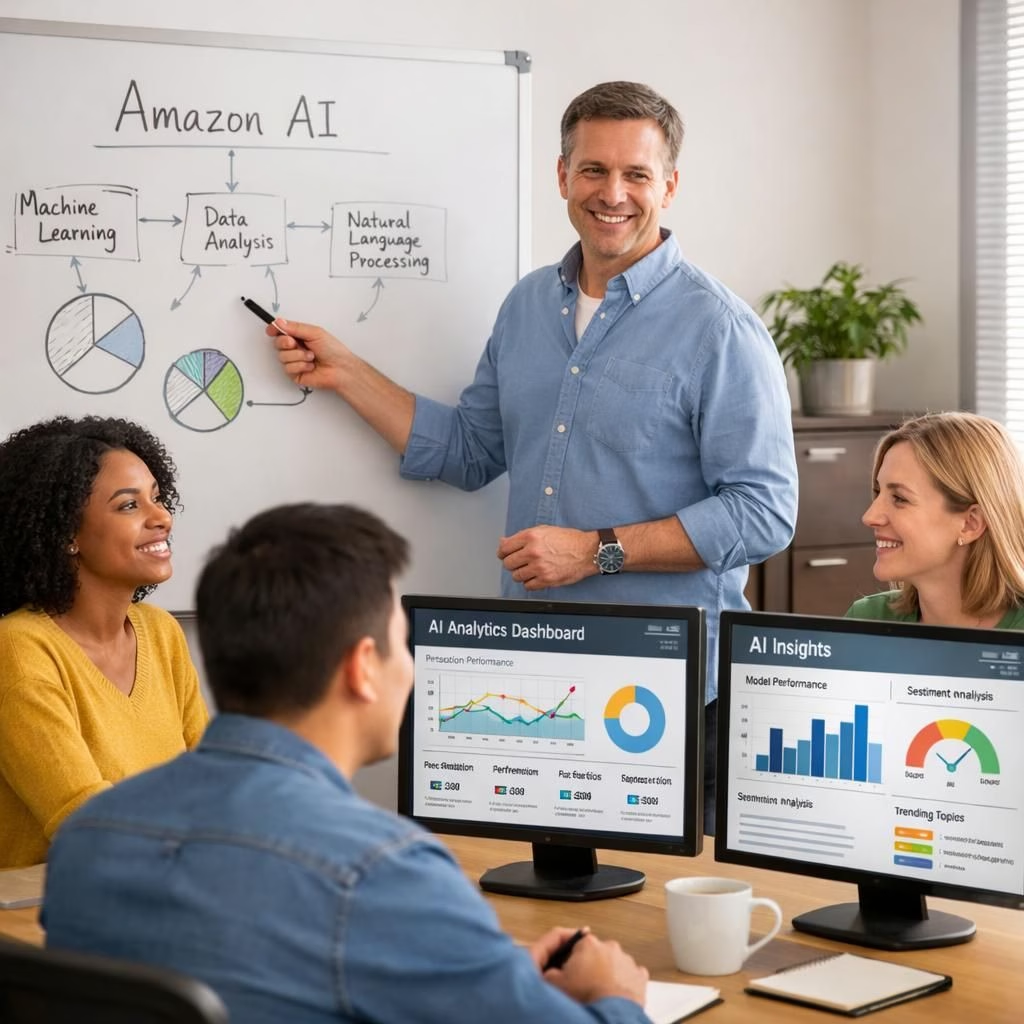
In 2026, AI in the workplace is buzzing loudly at big players, with Amazon AI at the center. Employees describe a push toward speed that sometimes feels like a sprint with a faulty map, but there’s cautious optimism under the noise. This piece preserves the core truths of the shift: AI tools roll out, people adapt, and workplace culture flexes under pressure.
AI in the workplace: Amazon AI in practice
Take Dina, a software developer in New York. When she joined two years ago, her job was to write code, but now it’s largely fixing what Amazon AI breaks. The internal tool she uses, called Kiro, frequently hallucinates and generates flawed code, so she has to fix or revert changes. She says it feels like it’s ‘trying to AI my way out of a problem that AI caused.’ This snapshot is a reminder that AI in the workplace still requires human judgment and careful oversight.
She asked whether this actually speeds things up. She shrugs with a smile: many colleagues don’t feel faster, but management keeps messaging that speed is the priority. The timing of Dina’s layoff days after the Guardian interview underscores the tension between optimism and risk at a company this large. This moment is also a clear example of AI in the workplace dynamics at scale.
Lisa, a supply chain engineer with more than a decade at Amazon, says AI tools work in about one out of three attempts. When they help, there are still issues to verify, so she often loops in colleagues to confirm results, which adds time rather than saves it. She doesn’t blame the tools, but questions the daily push to use Amazon AI across tasks. The experience underscores AI in the workplace as a balancing act between speed and accuracy.
Across the spectrum, more than a half dozen current and former Amazon corporate employees say the company is pushing Amazon AI across departments, often with a haphazard rollout and ongoing tracking. They worry workers are being used to train the bots that might replace them, and morale drags when goals shift even as leadership insists the tools add value. This is a concrete example of how AI in the workplace can reshape expectations and workflows.
Amazon AI: surveillance, training, and the new work culture
Spokesperson Montana MacLachlan emphasizes that hundreds of thousands of corporate roles use AI in different ways, and that many teams report value from daily tools. The message is not universal, but the intent is to scale learning and adoption. Meanwhile, Amazon has laid off about 30,000 workers in the last four months. The cuts are part of a broader AI-connected trend across tech, but the company says they are not purely AI-driven. The numbers pull in both caution and curiosity: if AI can boost output, who should ride the wave and who should ride out the next wave?
At the executive level, AI is framed as a driver of efficiency. CEO Andy Jassy has encouraged learning and experimentation with AI across teams. Yet the day-to-day experience of staffers shows a mix of training and sometimes mandatory use, even when content is optional. A recurring theme is the tension between learning and performing under pressure, and the result is a culture that favors quick adoption at times at the expense of long-tail quality. The AI shift in the workplace is not just a tech move; it’s a change in daily expectations and evaluation.
Observers and researchers weigh in. Ifeoma Ajunwa of Emory argues that forcing rapid adoption can backfire. People are typically better at choosing the tools that help their work. The once-clear line between tool and task blurs when managers demand constant AI usage. In practice, workers report a mix of learning, experimentation, and the nagging sense that many tools are half-baked from hackathon fever. This is a vivid portrait of how AI in the workplace can outpace readiness if guardrails aren’t in place.
Training remains a mixed bag. Will, a user experience researcher, notes that AI training commonly emphasizes speed and checklist-driven workflows. He says you can learn a lot by watching peers who are proficient AI users, yet you still need to verify outputs with human judgment. The recurring message is clear: AI can help, but human review remains essential, especially for complex decisions. The balance of automation and human insight matters for practical outcomes, and AI in the workplace training often underlines this tension.
On the practical front, dashboards and performance metrics surface in every team. Managers sometimes track AI adoption as a proxy for productivity, which can feel intrusive. The idea is simple: better tools equal better outcomes. The reality is messier. A senior engineer explains that when AI is expected to speed up development, it can inadvertently create more QA work. The end result is not instant magic but a cycle of testing, correction, and learning that persists beyond a single sprint. AI in the workplace this cycle shows how speed and quality must be cultivated together.
The discussion includes real-world glitches. The Financial Times reported outages tied to internal AI tools, including a 13-hour disruption to a customer-facing system caused by an AI-related change. Amazon said that an employee, not AI, caused the outage, but the incident underscores how fragile the stack can be when AI is deeply integrated. The takeaway is pragmatic: deployment without guardrails invites mistakes, even with good intentions. This is a practical reflection on how to manage AI risk in the workplace.
At the ground level, workers describe a climate where performance reviews increasingly include questions about AI use. Promotions can hinge on visible enthusiasm for the AI push, which some see as a signal that personal risk tolerance and adaptation power career progression. In short, the AI agenda travels with the usual corporate incentives, and workers negotiate their own comfort with the tools while staying focused on customer outcomes. The human element remains central in the AI in the workplace conversation.
In parallel, some teams seek practical paths forward. Training and structured adoption are framed as learn-as-you-work opportunities rather than passive compliance. The core idea is to equip people to decide when AI helps and when human judgment should lead. A meta-question remains: how do we keep quality high while embracing automation? The pragmatic answer involves guardrails, peer reviews, and a constant feedback loop between teams and leadership.
Despite the challenges, there is a thread of optimism. The broader tech ecosystem watches Amazon AI‘s experiment with AI as a bellwether for white-collar adoption. The idea is that AI can automate repetitive tasks, expand capacity for more creative or strategic work, and accelerate learning. If done thoughtfully, AI in the workplace need not erode skills; it can push workers to cultivate new competencies and collaborate more effectively with smart tooling.
For readers who want to dig deeper, the Guardian’s reporting provides a thorough backdrop for these changes and the human stories behind them. Original reporting highlights both the potential upsides and the real concerns that come with rapid AI integration across corporate life. You can read the Guardian article here: Guardian article on Amazon AI and the workplace. Thank you to the Guardian for the original material that inspired this synthesis.
So what does this mean for workers, managers, and teams? It means a blend of opportunity and risk. It means clear communication about what AI can do, strong checks on output, and a culture that values continuous learning. It means acknowledging that AI is a tool, not a replacement for judgment. And it means inviting you to weigh in: do you see AI in the workplace as a force for good, a source of friction, or something in between? Share your thoughts in the comments below.
What this means for teams: practical guardrails
- Establish guardrails that specify when AI should be used and when human review is required.
- Prioritize peer reviews and code walkthroughs to catch issues the AI might miss.
- Provide structured, optional training that encourages experimentation without pressuring everyone to adopt at once.
- Document clear expectations about output quality and customer impact to keep the focus on value over speed.
FAQ
- How widespread is the AI push in corporate workplaces?
In large tech companies, deployment tends to vary by department. Teams often report rapid experimentation alongside concerns about quality and workload.
- Should workers fear job loss from AI tools?
Uncertainty exists, but most voices emphasize evolving roles rather than immediate elimination. Ongoing training and adaptability are key.
- What can employees do to stay ahead?
Seek formal training, advocate for peer reviews, and set personal boundaries on AI usage to protect learning and skills development.
Guardian coverage provides deeper context and human stories behind the shift. A sense remains that AI in the workplace can be a tool for growth if guided by guardrails, clear expectations, and ongoing dialogue between workers and leadership.
References
- Guardian article: Amazon AI and the workplace
- NIST AI Risk Management Framework
- McKinsey on AI in the workplace
Original source linkback: https://www.theguardian.com/technology/ng-interactive/2026/mar/11/amazon-artificial-intelligence