

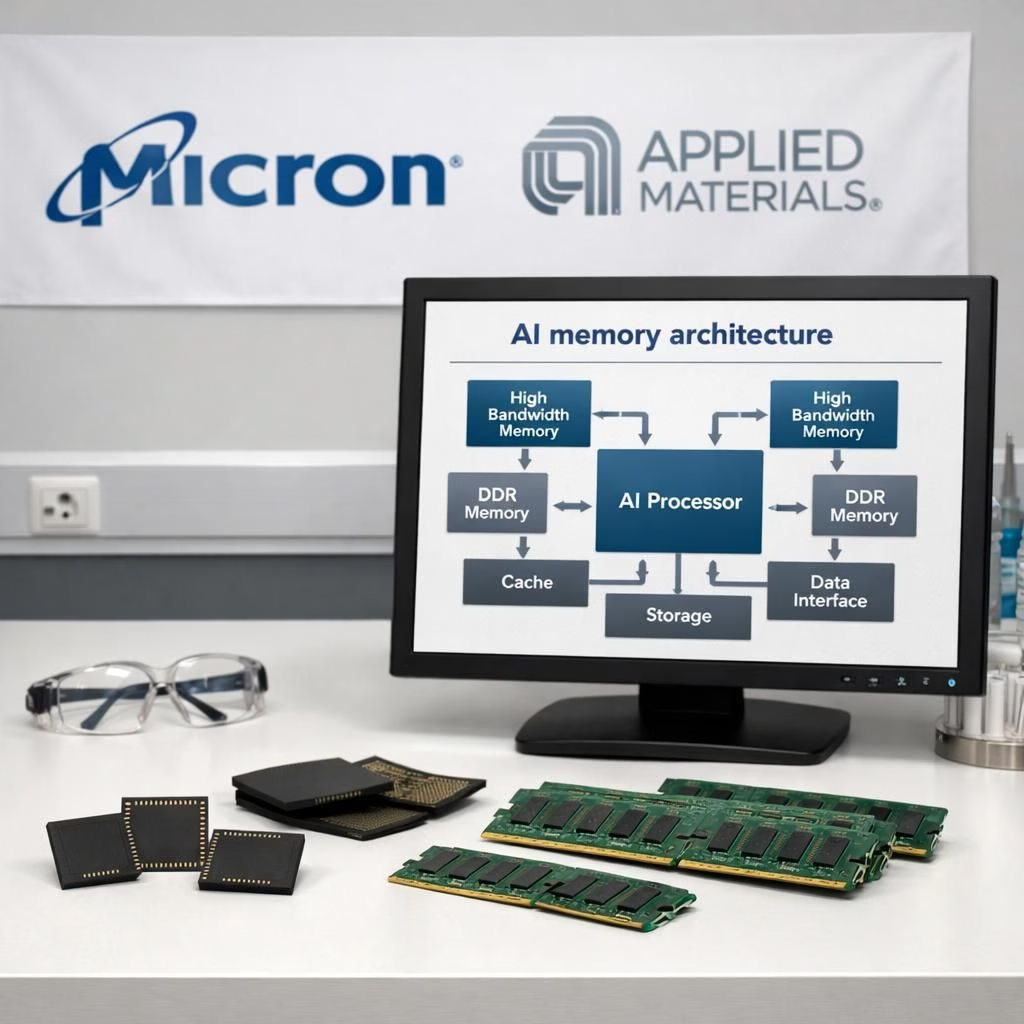
AI memory meets Micron in 2026 as Micron teams with Applied Materials’ EPIC Center to fuse memory tech and process equipment.
What looks like a flashy headline is actually a practical alliance. The AI memory focus of the EPIC Center aims to turn ambitious ideas into repeatable experiments. The goal is to build a durable R&D engine that can adapt as AI workloads demand more memory, more efficiency, and more reliable performance in the years ahead.
For investors following AI infrastructure, this move matters because it links Micron‘s manufacturing know-how with Applied Materials’ precision process equipment in a single U.S. hub. As AI workloads grow more memory hungry, refining DRAM, HBM, and NAND in a shared research environment could accelerate the path from concept to scalable memory architectures. The collaboration isn’t about a single product cadence; it’s about a method for memory design that scales with demand.
Two big ideas live inside the EPIC Center. First is throughput: fewer handoffs and more rapid iteration across memory types. Second is adaptability: the ability to test novel memory stacks against real AI workloads in a controlled setting. If these ideas pay off, the center could shorten development cycles and deliver more dependable components for AI accelerators, data centers, and edge devices alike. The practical upside is a tighter memory ecosystem that helps AI systems run faster with less power and less waste.
From an investor’s lens, the value isn’t a single press release but a sustained capability. The EPIC Center promises a faster feedback loop between memory design and manufacturing, translating into more informed risk management and a clearer view of how memory platforms can scale with AI. It’s a bet on collaboration as a competitive advantage, not a bet on any one product line.
AI memory momentum: Micron-Applied Materials EPIC Center
This collaboration signals a shift away from isolated product wins toward integrated memory ecosystems. By combining Micron’s fabrication discipline with Applied Materials’ state-of-the-art equipment, teams can run DRAM, HBM, and NAND experiments side by side while measuring impact on AI workloads. In practice, the EPIC Center could shave months or even years off testing cycles, accelerating pilots to production and reducing the risk of late-stage surprises in memory projects tied to AI workloads.
Micron’s broader strategy appears to be aligning its memory platforms with AI-ready performance targets. The company’s path involves not only improving chip-level specs but also tightening the loops that connect design, fabrication, and deployment. The EPIC Center creates a living testbed where process control, materials science, and memory architecture converge. The result should be more practical, scalable memory architectures that support evolving AI needs without going over budget or over time.
Micron’s AI memory roadmap for future architectures
The partnership isn’t about chasing novelty; it’s about durability and real-world impact. If the EPIC Center delivers, we may see more resilient memory stacks, better integration with AI accelerators, and a clearer bridge from prototype to production. The long-term aim is clear: build memory platforms that scale with AI models, while maintaining reliability and cost efficiency. In short, this is a plan for memory architectures designed to ride the AI wave rather than vanish beneath it.
Of course, any strategic move carries risk. The memory market is intensely competitive, and supply chains can shake. Yet the EPIC Center’s strength is its practical, collaborative structure — a place to test, refine, and validate memory technologies alongside fabrication tools. If execution stays disciplined, the result could be a more versatile memory platform capable of delivering higher performance at lower power across a wide spectrum of AI-enabled products and services.
In the near term, observers will look for milestone updates, pilot outcomes, and early benchmarks. In the longer term, the focus shifts to whether this integrated approach translates into tangible accelerations for AI memory architectures and the economics that drive them. The EPIC Center has the potential to shift the pace of innovation from rumor to revenue, provided momentum stays steady and leadership remains curious.
We extend sincere thanks to Simply Wall St for the original article that sparked this exploration. You can read the source material at https://www.simplywallst.com/ for further context, including the fair value discussions and risk assessments associated with Micron Technology.
We invite readers to share their thoughts in the comments about how you think the Micron-Applied Materials collaboration could shape AI memory in 2026 and beyond.
If you have feedback or questions, feel free to reach out. And a final note of gratitude to Simply Wall St for the thoughtful groundwork that inspired this update.
Practical implications for AI memory
- Faster iteration across DRAM, HBM, and NAND stacks when tested against real AI workloads.
- Potential improvements in efficiency and performance for AI accelerators and data centers.
- Emphasis on a collaborative R&D model to shorten time-to-market for memory architectures.
Frequently asked questions
- What is the EPIC Center? A collaboration blending Micron’s manufacturing discipline with Applied Materials’ equipment to test memory stacks against AI workloads.
- What does this mean for investors? It signals a durable, scalable approach to memory platforms and faster feedback between design and manufacturing, which could improve risk management for AI hardware projects.
- Will this lead to immediate product launches? The focus is on long-term memory architectures; near-term outcomes will likely be milestones and pilots rather than quick product releases.
Conclusion and next steps
In sum, the Micron–Applied Materials collaboration aims to turn ambitious ideas into practical, scalable AI memory platforms. As the EPIC Center matures, watch for milestones that show progress in throughput, adaptability, and real AI workloads. For now, stay tuned to official updates from Micron and Applied Materials for the next chapters in this evolving story.
References
Original source: https://simplywall.st/stocks/us/semiconductors/nasdaq-mu/micron-technology/news/micron-applied-materials-tie-up-puts-ai-memory-growth-and-va