

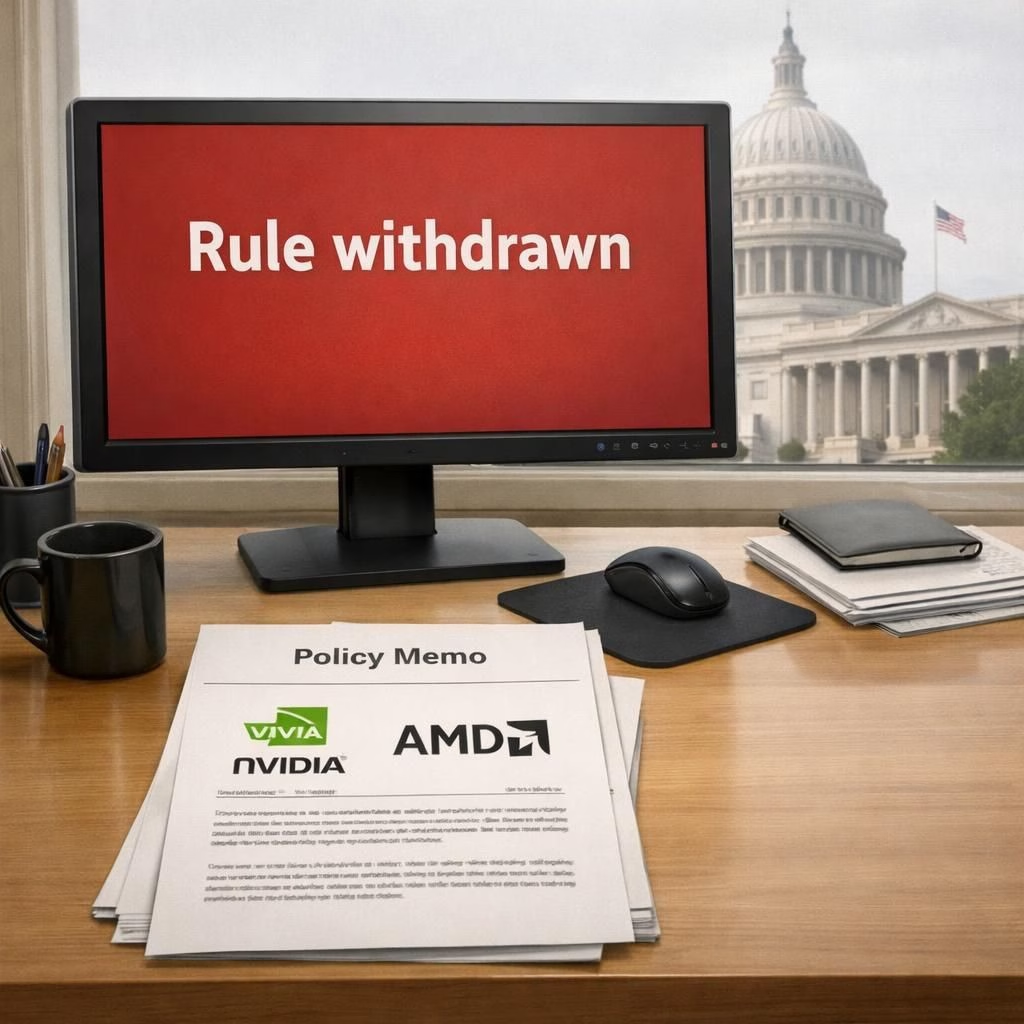
Welcome, readers, to a briefing on AI chips and export controls. In 2026, the U.S. Commerce Department signaled relief by withdrawing a Trump-era proposal that would have required licenses for exporting advanced AI chips to foreign buyers. The interagency review concluded the measure would not move forward, quietly tossing a plan that read more like a bureaucratic speed bump than a spark for innovation. If you enjoy tech policy with less drama and more predictability, today feels a little like a win lap.
The draft imagined a tiered licensing system. Compute power would decide who gets chips, and governments would weigh commitments to U.S. AI capacity. Critics called the scheme burdensome and brittle, while supporters warned of a strategic gap. In practice, the administration would have assigned a licensing gate to shipments from Nvidia, AMD, and other chipmakers. The withdrawal shifts attention back to calmer waters and away from a diffusion framework that officials say was heavy-handed. The decision signals that AI chips policy in 2026 remains more about steady hands than dramatic overhauls.
AI chips retreat: why this matters
For AI chips, the withdrawal means less friction at the border and fewer license hurdles. export controls would not block every sale, Nvidia and AMD can plan with more confidence, and startups can keep exploring without a federal eye on every upgrade. The idea of a tiered approval system based on compute power would have tied sales to government-to-government agreements. That approach might have dampened investment cycles and slowed innovation for AI chips. By stepping back, regulators avoid turning every sale into a political negotiation and let market forces hum a little louder.
Beyond the big names, the ripple effects touch mid-sized firms and researchers who worry about whether new rules would surface again in a future administration. The key takeaway is that the 2026 landscape favors predictability over sudden sprints. Companies can align product roadmaps with customer demand instead of regulatory timetables. In turn, the risk premium on AI chips begins to feel a bit lighter, and a few anxious procurement teams may finally breathe a sigh of relief. The practical upshot is less downtime and more continuity for product launches and field tests.
export controls and calm in 2026
export controls are policy language designed to safeguard strategic assets, and the withdrawal preserves that intent without the heavy-handed machinery some feared would slow everything from AI data centers to edge devices. The focus shifts from licensing roulette to more measured governance—one that emphasizes cooperation with trusted partners rather than perpetual paperwork. In concrete terms, companies can move forward with existing commitments while governments refine how they monitor and verify AI ecosystem growth. The result is a steadier cadence for hardware shipments, research collaboration, and international partnerships.
Officials have suggested other tweaks to export controls for advanced AI chips, including how foreign governments invest in U.S. AI infrastructure. The idea is to balance national security with global competitiveness. Critics warned that blanket restrictions could chase innovation away; supporters argued that targeted controls still keep sensitive capabilities in view. In 2026, the middle ground seems to be the preferred lane: guardrails that protect critical tech without stifling legitimate trade. The net effect should be fewer bottlenecks for customers and fewer false alarms for manufacturers.
The Reuters and Bloomberg buzz around the withdrawn rule included discussions of a broader shift away from a diffusion framework that many described as burdensome, overreaching, and disastrous. The Commerce Department framed its stance as a return to a more practical posture. Nvidia and AMD, for their part, welcomed the cooling-off period, seeing it as a chance to focus on capacity, reliability, and the maturation of AI hardware ecosystems rather than chasing every new export posture. The underlying message is clear: 2026 is about steady collaboration, not anxiety-driven policy storms.
In the broader tech-policy landscape, trade realities and supply chain considerations receive renewed attention. The episode underscores that chipmakers operate best when policy is predictable, contract terms are stable, and international partners can commit to shared AI chips objectives. The balance remains delicate: protect strategic interests without chilling legitimate AI chips innovation or deterring private investment. The current stance suggests a preference for informed dialogue over rapid rulemaking, a trend that many industry observers hope continues through 2026 and beyond.
For Nvidia and AMD, the practical impact is relief on budgeting, procurement planning, and capital allocation. For startups building on AI chips, the path forward feels less tangled in the regulatory vines. For researchers and institutions enabling AI, the change translates into fewer licensing cliff edges and more room to experiment with new architectures and data center configurations. The policy climate, while not risk-free, becomes a bit more navigable, helping the entire AI chips ecosystem move with confidence rather than fear.
As with any regulatory pivot, questions remain. How will the administration monitor export controls activity without the previous heavy-handed approach? Will countries push back with alternate measures, or will they welcome a more collaborative framework that emphasizes mutual growth? In 2026, the dialogue is ongoing, but the immediate headline reads like a release note: a soft reboot rather than a hard reset for AI chips and export controls.
If you have thoughts about how this withdrawal affects your work or your investment plans, share them below. Your perspective helps illuminate what policy shifts mean on the ground and keeps the conversation lively about AI chips and export controls in 2026.
Original reporting attribution: Bloomberg News. Thank you to Bloomberg for the original reporting and the initial coverage that helped shape this update. For the complete perspective, you can explore their coverage here: Bloomberg.
Practical steps for teams navigating AI chips and export controls
- Review your product roadmap to ensure timelines align with potential export controls updates.
- Assess suppliers and customer geographies for compliance readiness, focusing on export controls.
- Plan buffer budgets for license-related delays, if any, and communicate with procurement teams accordingly.
- Engage policy specialists early to stay ahead of any future rule changes affecting AI chips.
FAQ
- What does the withdrawal mean for Nvidia and AMD?
- It reduces licensing friction and supports steadier planning and investment in hardware.
- Will export controls tighten again?
- The current stance favors ongoing dialogue and measured governance rather than rapid, sweeping rules.
- How does this affect researchers?
- Researchers gain more room to experiment without frequent licensing hurdles, enabling exploration of new architectures and data-center configurations.
Conclusion
The 2026 pause on a hard-edged export rule signals a preference for stable collaboration over policy storms. While safeguards remain, the ecosystem gains predictability—helping chipmakers, users, and researchers move forward with greater confidence.