

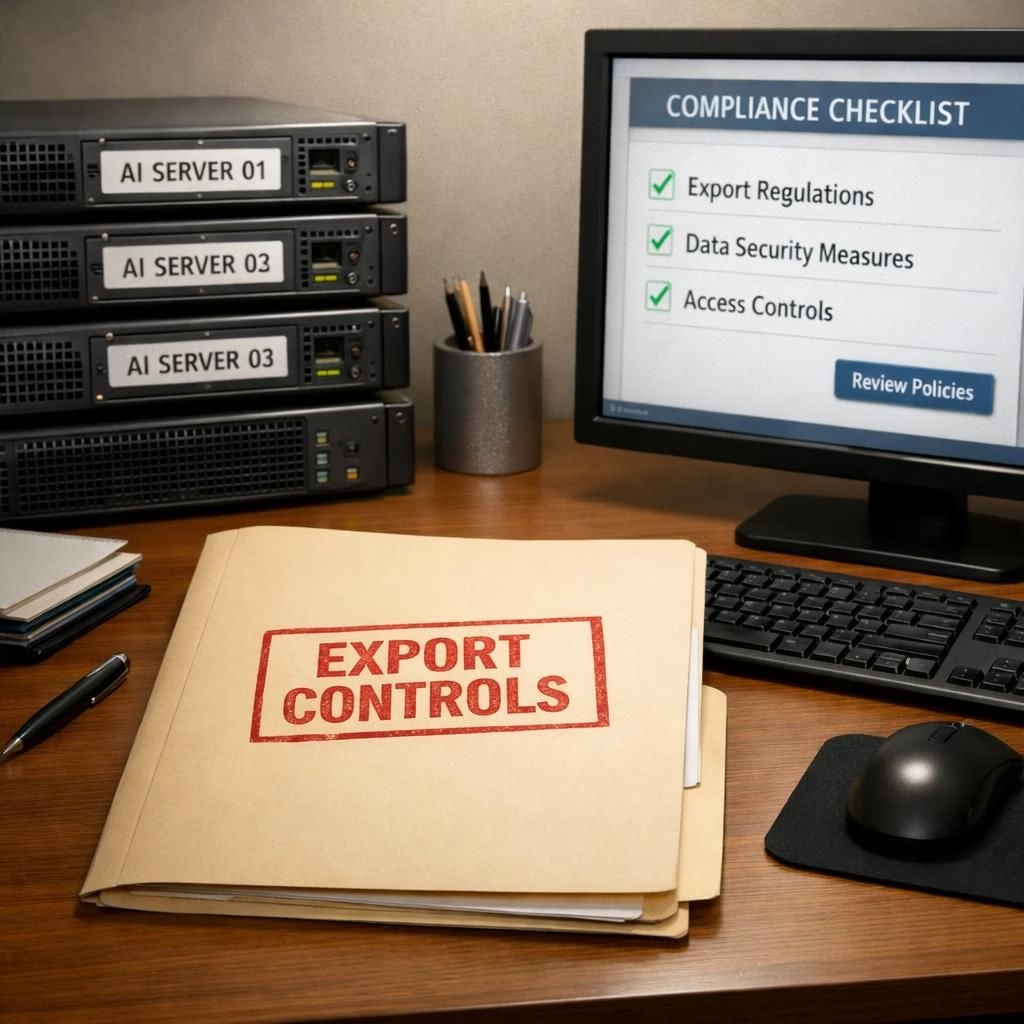
The year is 2026, and the world of AI hardware intersects with real-world paperwork in a public drama. AI headlines arrive with fanfare, but this tale rests on a sober bedrock: Export Controls and who handles the hardware that might power tomorrow. AI is the star, and Export Controls is the tag-team partner, because when chips ship, the rules ship right behind them.
AI Signals and Export Controls in the Spotlight
Three individuals—Yih-Shyan Liaw, Ruei-Tsang Chang, and Ting-Wei Sun—are accused of participating in a complex scheme to export US-made servers used for AI. The indictment was unsealed in federal court in Manhattan on March 19, and it centers on an alleged path that moved servers through Southeast Asia, then onward to China. The servers are reported to have included AI-ready components, and the operation reportedly involved swapping real machines into unmarked boxes. In plain terms, this is about shipping devices that could run advanced AI software while trying to obscure the chain of custody from both US manufacturers and Export Controls officials. The focus is not just on the hardware but on the process: the alleged intention to thwart labeling and traceability, a practice that sits squarely in conflict with Export Controls rules. The case underscores a fundamental tension in 2026: the tension between rapid innovation and careful compliance. It’s a reminder that speed can be a risky friend when regulators are watching—and regulators are watching closely for the AI hardware that travels the globe.
How the Alleged Scheme Worked and Why It Matters
According to the indictment, the trio took extensive steps to conceal activity from the makers of the hardware in the United States and from export-control officials. The charges allege that the operation included stripping labels and serial numbers from the actual machines and placing them in unmarked or dummy packaging before shipment. The path reportedly passed through Taiwan before reaching China, a detail that makes the case feel textbook on supply chain opacity—one that compliance officers do not want as a recurring chapter. Nvidia chips figure prominently in media coverage of the broader Export Controls landscape, and Nvidia publicly reaffirmed its commitment to strict compliance with export laws. The company stated that unlawful diversion of controlled US computers to China is a losing proposition, and that Nvidia does not offer services or support for such systems. For anyone building AI gear in 2026, this is a blunt reminder: chipmakers are serious about keeping their products aligned with Export Controls, and enforcement assets are not shy about casting a wide net when necessary.
On the protection side, US export restrictions on advanced AI chips have been tightening since 2022, and the DoJ’s case against these Super Micro-related individuals highlights that the law favors clear traceability and documented sales channels. The indictment does not name Super Micro Computer itself, but the company has publicly stated that it placed the employees on leave and ended its relationship with the contractor involved. In a measured tone, the company emphasized: the conduct alleged in the indictment contravenes its policies and compliance controls, and the organization remains committed to full adherence to all Export Controls and re-export laws. The contrast between the seriousness of charges and the company’s public stance may feel like a tightrope walk, but it is a necessary one in an era where compliance is a feature of brand trust as much as performance is a feature of price tags. The overarching message here is clear: even in the high-velocity world of AI hardware, governance and due diligence must travel in lockstep with innovation.
Implications for AI Hardware, Vendors, and Regulators
The broader story is not just about a courtroom drama. It’s about what 2026 looks like for AI hardware supply chains. The allegations push vendors and contractors to reexamine labeling, serial-number integrity, and the adequacy of internal controls. They remind buyers that “where the box comes from” carries more risk than a simple shipping time. The case also spotlights how regulators pursue complex, cross-border schemes that involve multiple jurisdictions. Taiwan’s role, as described in the indictment, is a reminder that geography matters in Export Controls: routes and hubs can create governance questions, especially when boxes are unmarked and tail networks extend beyond local borders. For users of AI servers and developers who rely on AI accelerators, the case reinforces the importance of transparent supply chains, verified distributors, and auditable documentation. The net effect is a push toward stronger governance in every link of the chain, from supplier to end user.
From a policy vantage point, the case underscores that Export Controls regimes around AI hardware will remain dynamic. The industry must stay alert to evolving lists, more stringent screening processes, and the potential for stricter cross-border collaboration between law enforcement and regulators. In practice, this means more rigorous supplier due diligence, more robust verification steps at the point of shipment, and clearer communication channels within corporations about what can and cannot be shipped. For technologists, it’s a call to balance ambition with accountability, recognizing that compliance is not a roadblock but a guardrail that helps sustain long-term innovation and trust in AI hardware ecosystems.
On the human side, the defendants’ backgrounds—Liaw as a co-founder and board member, Chang as a sales manager, and Sun as a contractor—illustrate how complex roles within a tech company intersect with regulatory risk. The tale is not about a lone rogue actor; it’s a reminder that governance must scale with organizational complexity. It’s also a nudge to leadership teams to ensure that robust compliance programs are active, visible, and enforceable, not just on paper. Super Micro’s public statement signals that the company intends to abide by US export rules, which is essential in maintaining credibility in a field where missteps can ripple through partnerships and customer trust. The case thus blends a sharp legal lens with a practical call for stronger internal controls across AI hardware supply chains.
Finally, a note for readers: this is not just about who did what and when; it’s about how we navigate the intersection of AI capability, global commerce, and the laws that govern them. If you want an innovation economy that continues to push boundaries without skipping the guardrails, the core takeaway is straightforward: clear compliance, transparent packaging, and responsible collaboration are indispensable in 2026 and beyond.
We invite you to share your thoughts in the comments below as we continue to unpack what this case means for Export Controls, and the future of hardware governance.
Original reporting and context: Reuters coverage — thanks to the original article for the material that informed this post.
Practical takeaways for AI hardware buyers
- Demand transparent labeling and serial-number integrity from suppliers.
- Maintain auditable packaging and documented shipping paths.
- Regularly review Export Controls compliance with counsel and compliance teams.
FAQ
- What is Export Controls in this context?
- Export Controls refers to laws and regulations that govern cross-border shipments of sensitive tech, including AI hardware and chips.
- How could this case affect AI hardware vendors?
- It underscores the need for rigorous supply-chain controls, clear documentation, and proactive compliance programs to prevent unlawful diversions.
- What should buyers look for in a compliant supply chain?
- Transparent labeling, verifiable distributors, auditable records, and a demonstrated commitment to regulatory adherence.