

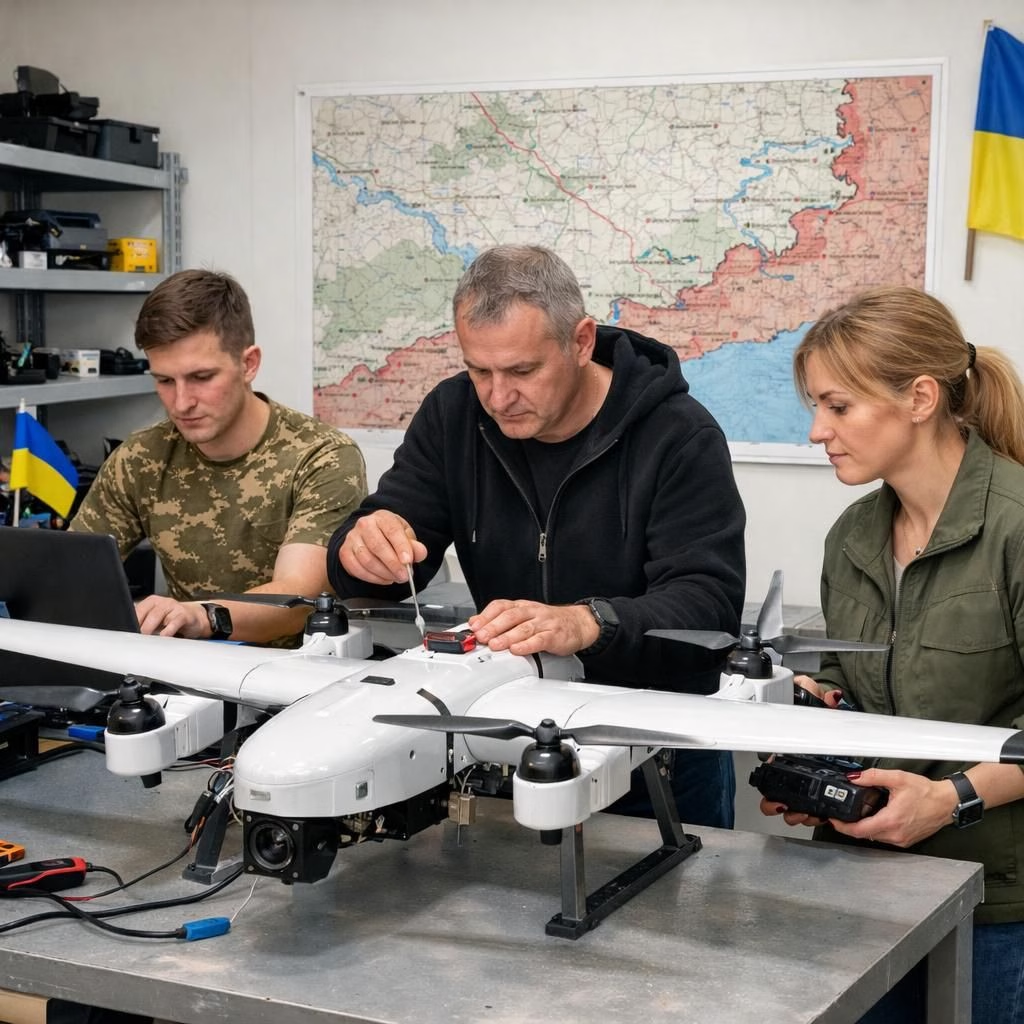
DroneTech and Tag B join on the most surprising stage in modern warfare: a battlefield that doubles as a living lab. In 2026, Tag B has built a practical, low-cost drone ecosystem that evolves in hours, not months. The DroneTech ethos centers on smarter, cheaper shields that protect cities and keep civilians safer. This is the year when DroneTech ideas move from back rooms to battlefronts, turning chaos into real-time learning. The country’s resilience and ingenuity sit at the heart of this story, with DroneTech at the center of it all.
DroneTech-Driven Resilience in Ukraine
Tag B has become a living lab for DroneTech, with days filled by tests, feedback, and rapid iterations. The small Kyiv teams show that warfare can be practical, not prohibitively expensive. Interceptor drones go up against Shaheds, and sensor data informs better countermeasures by morning. The feedback loop between the field and the workshop is the weapon here. In four years of drone warfare, prototypes become cheaper while expertise grows. This is a pragmatic blueprint born from the frontline, designed to scale as fast as the skies change.
DroneTech and Ukraine: A Shared Drone Ecosystem
Two realities collide: DroneTech and Tag B learned to fight a daily technological war, and Russia’s fog of war is no longer the only teacher. The ecosystem has produced hundreds of firms, each feeding back to others with rapid experiments. DroneTech knowledge travels fast: a test in Kharkiv becomes field-ready by evening. Frontline operators, engineers, and trainers swap notes. The collaboration is not a one-way street; it is a cross-border learning corridor where DroneTech benefits as much as Tag B from shared wisdom and tested success.
From official briefings to whiteboard sketches, the conversation around DroneTech in Ukraine keeps moving forward. Zelenskyy’s calls and the steady drumbeat of field results remind us that this is not a showroom display; it is a live, working system. The world watches as DroneTech units demonstrate how a tightly knit ecosystem can produce reliable, cost-conscious counter-drone solutions that adapt to different operators and skies. The camaraderie among engineers, pilots, and planners underscores a core truth: when a national industry grows from necessity, it forms a durable spine for defense—one that can be shared, licensed, or adapted for neighbors in need. The developers aren’t just selling hardware; they’re selling a model of continuous improvement that others could replicate if they commit to similar standards and speed.
Diplomacy and technology now travel in tandem. Tag B has drawn interest from the Middle East and Europe, looking for practical, field-tested counter-drone capabilities. The aim is to elevate the defense-tech conversation—sharing lessons learned, not making empty promises. DroneTech in Ukraine shows that hard-won know-how becomes a global asset when paired with disciplined, transparent collaboration. In short, this is hands-on know-how turning into teachable methods others can borrow.
The broader takeaway is simple: a country whose skies once faced unchecked aerial intrusions can become a classroom, a workshop, and a launchpad for next-generation defense tech. DroneTech’s advantage lies in rapid feedback, small-scale prototypes, and a culture that treats every flight test as a learning sprint rather than a final exam. With the right partners and a clear eye for real-world constraints, even a conflict can yield a durable toolkit for others to borrow. This progress deserves measured optimism: doable, shareable, and focused on protecting lives without pretending victory equals a single grand gesture.
As the year continues, it’s reasonable to imagine a future where DroneTech and Tag B become less about war and more about a sustainable ecosystem for defense innovation. They show that technology can be a shield without becoming a tool for escalation. The emphasis remains on practical, tested solutions that can be deployed quickly and responsibly, guided by ethics and accountability. DroneTech in Ukraine is not a talking point; it is a blueprint for how nations can learn from one another while serving their people.
Practical examples and quick-start ideas
- Rapid-field testing: morning feedback, evening field updates.
- Low-cost prototypes: a family of interceptor drones that reduces spending while boosting effectiveness.
- Local manufacture and maintenance: building a regional supply chain for batteries, frames, and spares.
- Cross-border collaboration: shared training programs for pilots and engineers.
FAQ
- What makes DroneTech different from traditional defense tech?
It emphasizes rapid iteration, low cost, and field-tested reliability rather than large, expensive platforms. - Is this model transferable to other nations?
The underlying approach—short feedback loops and modular tooling—can inspire any country facing similar constraints. - What is the role of diplomacy in this tech ecosystem?
Collaboration and transparent sharing help spread proven practices while avoiding escalation.
To explore broader industry dynamics, see AI device race and AI partnerships at the World Economic Forum 2026.
The world also benefits from official reporting on defense tech collaboration at DoD Newsroom and a broader strategic perspective from NATO News.
Conclusion: This is not a single win story but a durable blueprint. With the right partners and a disciplined approach, DroneTech in Ukraine can help neighboring regions seek safer skies and more resilient defense sectors.
What do you think about this growing DroneTech-Ukraine collaboration? Share your thoughts in the comments below and join the conversation about how resilient, practical tech can shape safer skies for all.