

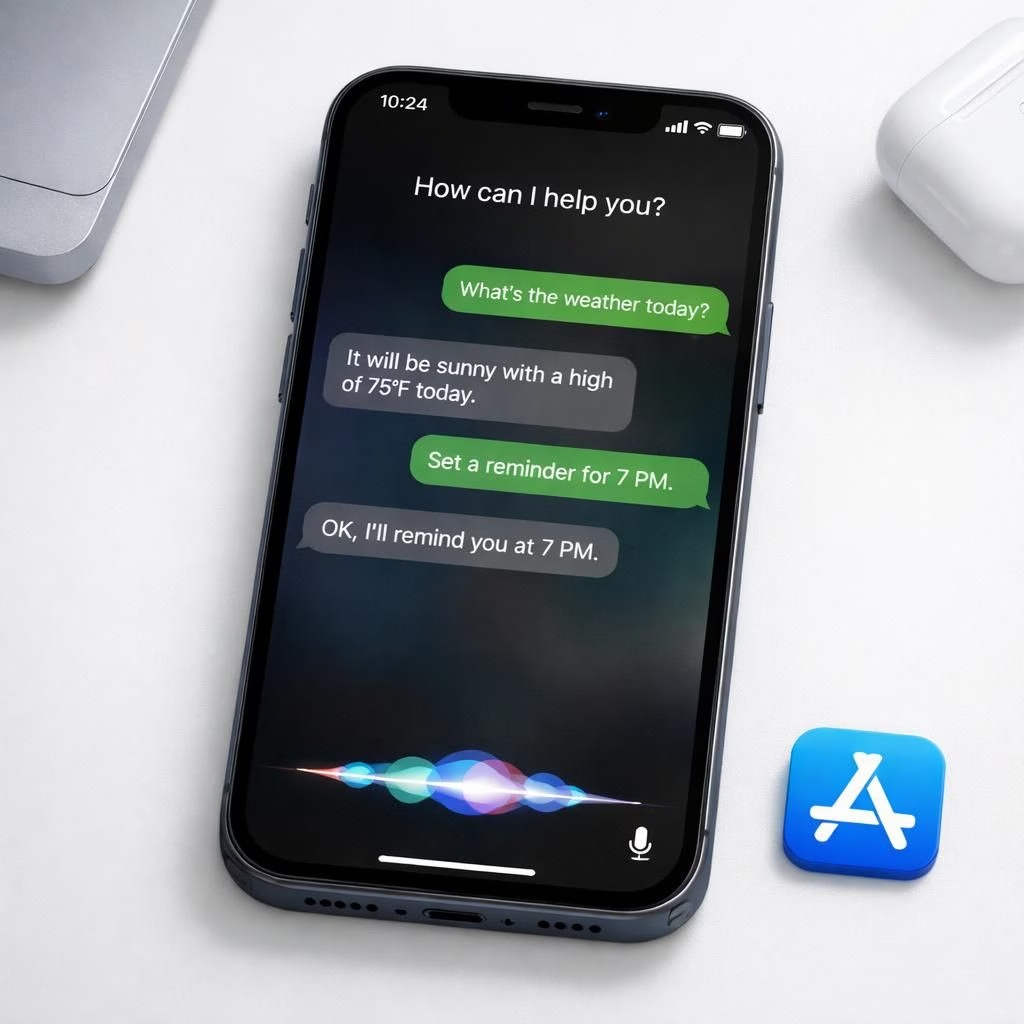
In 2026, AI and App Store converge as Apple readies iOS 27 with Siri Extensions. The move signals a calm, calculated pivot rather than a rash dash into the latest AI arms race. Apple isn’t ditching its hardware-first creed; instead, it layers a subtle AI polish on top of a rock-solid ecosystem. Siri, historically a guardian of built-in convenience, gains a fresh toolkit that invites third-party partners to join the conversation. The result reads like a well-timed remix: familiar Apple hardware, a friendlier AI interface, and a cautious but curious embrace of an expanding software marketplace.
To be clear, this is not a headline that promises a rival-destroying AI army out of the box. Instead, Apple leans into what it does best: reliable devices, a curated software store, and a model that rewards developers who ship useful, safe experiences. The plan centers on a redesigned Siri app with an opportunistic twist—Introducing Siri Extensions that let third-party chatbots live inside Siri itself. Think of it as Siri hosting a mini AI conference right on your iPhone, with each attendee vetted (to a degree) by Apple’s security and design bar. The practical upshot is a more capable voice assistant that can nudge you toward helpful tasks, apps, and information without requiring you to leave your iPhone home base.
Bloomberg’s reporting frames this as more than a cosmetic refresh. Siri Extensions would come with a dedicated App Store section, effectively creating an AI marketplace within Apple’s own storefront. It’s a familiar move for Apple, who has long profited by curating experiences and taking a share of revenue through the App Store. The 30% cut is not a new secret weapon; it’s part of a long-running strategy: build a core platform, invite partners to innovate on top, and share in the value if the customer chooses to stay within the ecosystem. With Extensions, Apple appears to be betting that users will discover practical third-party AI helpers that feel native, not like add-ons slapped onto a busy menu.
Siri Extensions: An AI App Store
What exactly could this look like in day-to-day use? The core idea is simple and elegant: you can install third-party AI chatbots that integrate with Siri, then run chats, get answers, or summon specialized assistants without leaving your voice assistant. The Extension framework promises a streamlined onboarding path for developers, a safer environment for users, and a consistent design language that keeps the experience recognizable. In practice, you might tap Siri to summon a travel bot that books flights, a finance bot that interprets spending trends, or a home automation bot that coordinates scenes across your smart devices. The key is that these bots aren’t separate apps fighting for attention; they are integrated services that feel like natural extensions of Siri’s capabilities.
The App Store would host a dedicated section for these AI integrations, making discovery part of the usual app-treasure-hunt rather than a separate hunt for niche tools. Apple’s approach preserves the critical revenue model developers rely on while expanding the AI options available to users. It’s a cautious but hopeful stance: monetize the platform through well-regulated, useful AI experiences rather than through a single, monolithic model. The emphasis remains on user delight, predictable performance, and a sense that the ecosystem rewards quality, not just novelty.
AI-First Strategy, App Store Marketplace
Behind the scenes, Apple continues to emphasize hardware strength as the backbone of AI workloads. The silicon, from chips to thermal design, is optimized to run intelligent tasks efficiently. This is not a distraction from product—it’s a deliberate alignment: powerful AI features need capable hardware, and Apple’s chips are already tuned for on-device processing and privacy-conscious assistive experiences. The company’s future product categories—ranging from higher-end audio wearables to smart glasses and smart-home devices—will lean on Siri’s evolution to maintain a seamless user experience across a broad device family. Analysts describe this as a hardware-first identity that doesn’t fear AI, but rather uses AI to amplify what Apple does best: make complex tech feel simple.
Meanwhile, competition remains lively in the AI space, but Apple appears willing to let others innovate while it secures user loyalty. The strategy contrasts with rivals who monetize subscriptions or push aggressive AI arms races. Apple seems comfortable letting third-party developers push the envelope, as long as the extensions remain tightly integrated with the platform’s safety, performance, and privacy standards. The goal is not to out-pace every model on the planet but to out-pace the day-to-day friction of using AI on a consumer device. It’s a pragmatic, ecosystem-friendly approach that could pay dividends if users value convenience and reliability over constant novelty.
John Ternus, Apple’s hardware chief, is frequently cited as a potential natural successor in the company’s leadership narrative, given the ongoing emphasis on hardware engineering and integrated design. The Siri Extensions plan reinforces a familiar pattern: a strong hardware base, a curated software marketplace, and a mechanism for third parties to contribute without destabilizing the core experience. In practice, this means an iPhone that feels smarter without becoming a labyrinth of separate services. The challenge will be balancing open collaboration with the control Apple needs to maintain privacy, security, and performance across an evolving AI-assisted ecosystem.
So, is Apple ceding the AI race to others? Not exactly. The company appears to be sidestepping a head-on AI subscription sprint, choosing instead to fortify its own platform and let developers innovate within a trusted framework. If Siri Extensions succeed, the iPhone could become a more capable hub for AI-powered tasks—without surrendering the user’s sense of confidence that their data remains private, that apps behave, and that the experience feels consistent across devices. It’s the classic Apple playbook: keep the platform stable, invite clever minds to build on top, and ensure the user never feels like they are wrestling with technology to get things done.
In short, the iOS 27 strategy speaks to a future where AI is not a single product but a collaborative ecosystem. It’s a future where App Store can call on trusted third-party skills, where the App Store becomes a curated AI marketplace, and where Apple’s hardware remains the reliable engine powering every clever bot, every smart routine, and every effortless action you take with your iPhone. If the outcome matches the plan, we could see a more capable Siri that feels both familiarly Apple and surprisingly capable—an assistant that earns a place in daily routines not by shouting louder, but by helping more quietly and effectively.
Original article: Bloomberg’s coverage of iOS 27 and Siri Extensions by Mark Gurman. Thank you for the thoughtful reporting that informed this rewrite: Bloomberg.
What do you think about Siri Extensions and the idea of an App Store AI marketplace? Share your thoughts below—I’m curious how you’d use AI inside Siri on your iPhone in 2026.
Practical examples for AI inside Siri
- Travel planning: a trusted travel bot could compare flights and reserve seats without leaving Siri.
- Finance insights: a financial assistant could summarize spending trends and offer simple tips.
- Smart home routines: a home-automation bot could coordinate lighting, climate, and scenes across devices.
FAQ
- What is Siri Extensions? A framework that lets third-party AI chatbots run inside Siri, enabling quick tasks without switching apps.
- Will Apple monetize these extensions? Yes. Apple aims to preserve the App Store revenue model while expanding useful AI experiences.
- Are my data private? Apple emphasizes on-device processing and privacy controls as core design principles of the Extensions model.
- How will discovery work? A dedicated AI integrations section within the App Store would make it easier to find capable assistants and services.
Conclusion
Apple’s iOS 27 approach centers on a stable platform that invites clever developers to extend Siri’s reach. By combining an evolving AI toolkit with a trusted hardware backbone and an App Store-backed marketplace, Apple hopes to keep iPhone users engaged without sacrificing privacy or consistency. If successful, Siri could become a more capable, more reliable helper that quietly augments daily routines across devices rather than competing in a loud, race-to-the-top AI arms race.
External sources
Bloomberg provides coverage of the Siri Extensions plan by Mark Gurman.
Apple – Siri official overview of Siri capabilities and on-device AI commitments.