

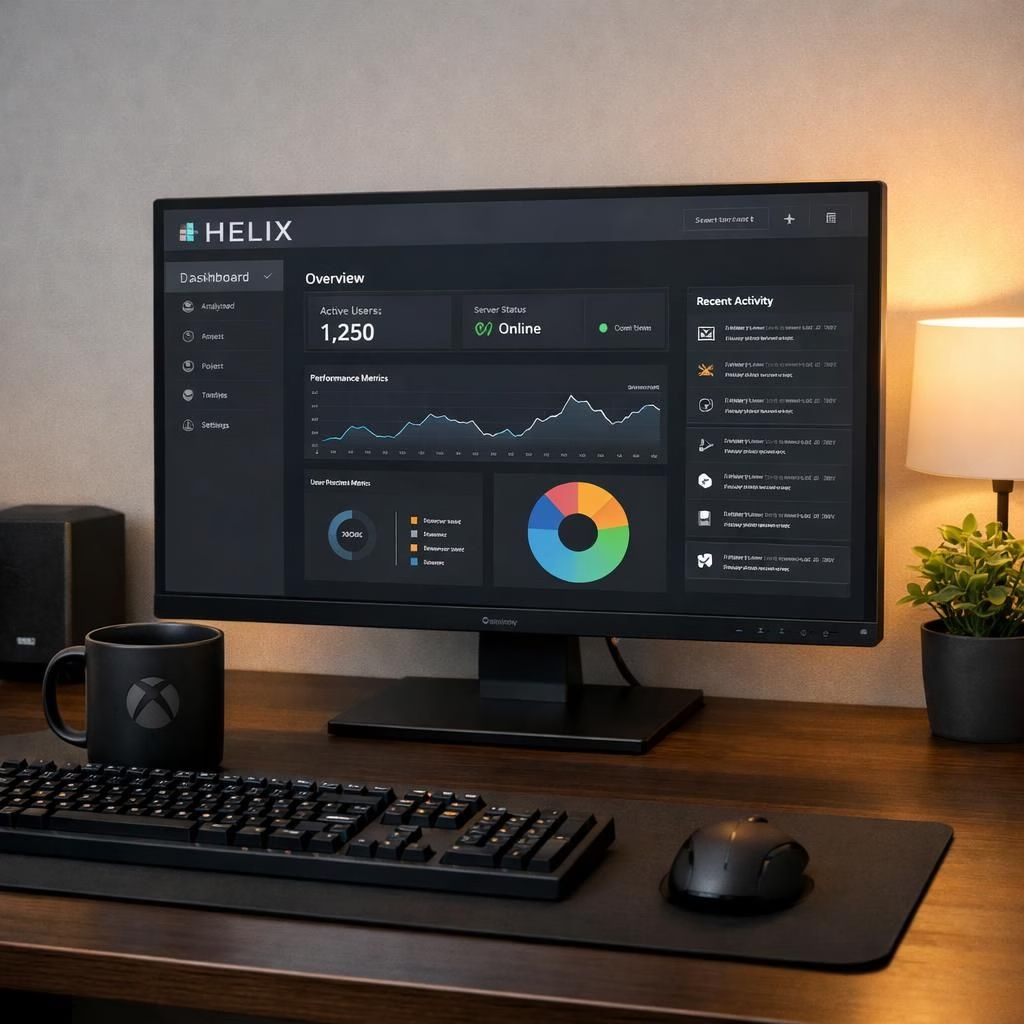
In 2026, Xbox Project Helix marks a bright pivot in how gaming brands talk to players, developers, and the folks who just want a good night of gaming. The renewed leadership under Asha Sharma frames the strategy around clear value, hardware reliability, and a friendlier tone than the old marketing riddles. The two keywords— Xbox and Helix—guide the roadmap, and the message aims to be helpful, not punishing. It’s a fresh start that invites builders and buyers to see the brand as a partner, not a prop in a perpetual trailer.
When Sharma stepped into the CEO seat, the company did something bold and practical: they pulled the plug on a campaign that told people not to buy. The This Is an Xbox campaign, launched in late 2024, tried to signal cross‑device ubiquity—from phones to smart TVs—while quietly implying the actual console was optional. Revenue data showed hardware was under pressure, but the new leadership argued that a clearer message could help the product itself regain its footing. The pivot wasn’t about abandoning ecosystem ambition; it was about aligning branding with a strategy that respects the hardware team and the customers who still crave a real console purchase. The shift sends a clear signal: Xbox hardware deserves a confident, purchase‑driven narrative, not a philosophical scavenger hunt across devices.
Behind the scenes, the era led by Sarah Bond’s vision aimed to break Xbox free of its console identity and chase cloud and mobile with gusto. That strategy, which leaned on cloud gaming and a mobile storefront, ended up rubbing some employees the wrong way and creating a disconnect. The Bloomberg events promise of an Xbox mobile store never materialized, and Bond’s departure coincided with other leadership shifts. Still, the lesson sticks: a brand thrives when it’s honest about where it wants to be and what it can deliver. Enter Project Helix as a practical signal of that intent, a bridge between the old hardware pride and the new multi‑device ambition shared by the brand community.
Xbox and Project Helix: A renewed focus on the reference console
Sharma immediately reframed the mission: Xbox would be the reference console, a baseline competitors compare themselves to in the living room and beyond. The emphasis shifted from flashy cross‑device promises to clear hardware priorities, performance standards, and a dependable user experience. With this stance, Xbox and Helix are no longer chasing every trend but aiming to set a steady, repeatable bar for quality. The goal is to give gamers confidence that the box in the living room is the strongest anchor, with the cloud and PC–console synergy feeding the broader ecosystem rather than competing with the hardware itself.
Helix is increasingly treated as a platform play rather than a single box. The approach emphasizes hardware fidelity, transparent pricing, and a reliable software stack to reduce buyer hesitation. The shift is designed to steady the cadence of game releases and ensure a consistent experience across devices, without erasing the community’s enthusiasm for new technology.
Project Helix and the future PC–Console hybrid: What to expect
Helix is pitched as a next‑gen PC–console hybrid that will host storefronts similar to Steam and Epic. The plan isn’t a fantasy; alpha dev kits are expected in 2027. In practice, this means more flexible access to games, more options for developers, and a storefront that can adapt to a multi‑device world. The strategy treats Xbox as a platform rather than a single box, with Helix acting as the bridge. It’s a pragmatic move that respects the core community of console players while inviting PC and cloud players to join the family without breaking the brand’s identity.
Early moves look decisive: scrap the unpopular ad direction, reinvest in the hardware narrative, and consider more affordable Game Pass tiers. That trio—advertising clarity, hardware fidelity, and price accessibility—reads as a compact plan: more value, more choice. The sentiment is friendly to existing fans and welcoming to newcomers. The brand here isn’t just about a gadget; it’s about a polished experience across devices, with Helix as the thoughtful connector between them.
Developers and retailers will notice a shift too. A consistent message helps studios plan launches around hardware capabilities rather than chasing a moving target. For consumers, this could mean better hardware incentives, a clearer upgrade path, and a smoother rhythm of releases. The Helix roadmap hints at collaboration with partners and a more transparent timeline, which reduces the guesswork that sometimes frays trust in a hardware‑heavy ecosystem like Xbox.
Of course, rebooting a brand is a delicate art. The challenge ahead is to keep the momentum without overcorrecting and losing the playful spark that made the marketing story memorable in the first place. The brand team now balances ambition with accountability, and Helix is central to that balance. If the plan continues to center around the reference console and a robust Helix pipeline, the brand stands a better chance of turning around a dynamic but stubborn hardware cycle.
From a consumer’s perspective, the change feels like a conversation you wish you had started sooner: yes, you can game on a console, but you also can enjoy a broader ecosystem where PC, cloud, and mobile options complement each other. The focus on the reference console does not mean the other platforms disappear; it means the core experience is dependable, and the expansion opportunities stay visible. For enthusiasts, this is a welcome reorientation—an invitation to engage without fear of being upsold by Xbox.
Final reflections: the shift is not about erasing the past missteps but learning from them. The Xbox team embraces a more grounded narrative, and Helix is framed as a bridge—between classic hardware loyalty and modern, multi‑device convenience. The tone is friendlier, the goals clearer, and the path forward more measurable. If this momentum holds, 2026 could become a banner year where gamers notice a tangible improvement in both the hardware experience and the software ecosystem.
Special thanks to the original reporting from Windows Central for the foundational details that informed this analysis. The report offered a clear timeline of leadership changes, marketing pivots, and the early signals around the Project Helix concept. You can read the original article here: Windows Central. We appreciate the opportunity to learn from that work and to present a constructive, forward‑looking interpretation to readers.
Tell us what you think in the comments—your angle on the brand and Helix matters, from hardware satisfaction to cloud strategy, and beyond.
What this means for gamers
- Stronger emphasis on a dependable hardware experience at the core of the brand.
- Clearer upgrade paths across consoles, PC, and cloud—without forcing a single device.
- More transparent timelines for new features and storefront improvements.
FAQ
What does Xbox hardware focus mean for players?
It centers on a solid, repeatable in‑home experience with predictable performance and reliable support across devices.
What does Project Helix mean for players?
The Helix initiative represents a multi‑device strategy that connects console, PC, and cloud into one coherent ecosystem.
When can we expect more details about the Helix roadmap?
Officials have signaled alpha dev kits in 2027, with ongoing updates as the plan unfolds.
References
- Windows Central coverage
- The Verge coverage
- Bloomberg coverage
- Times of India article: Times of India