

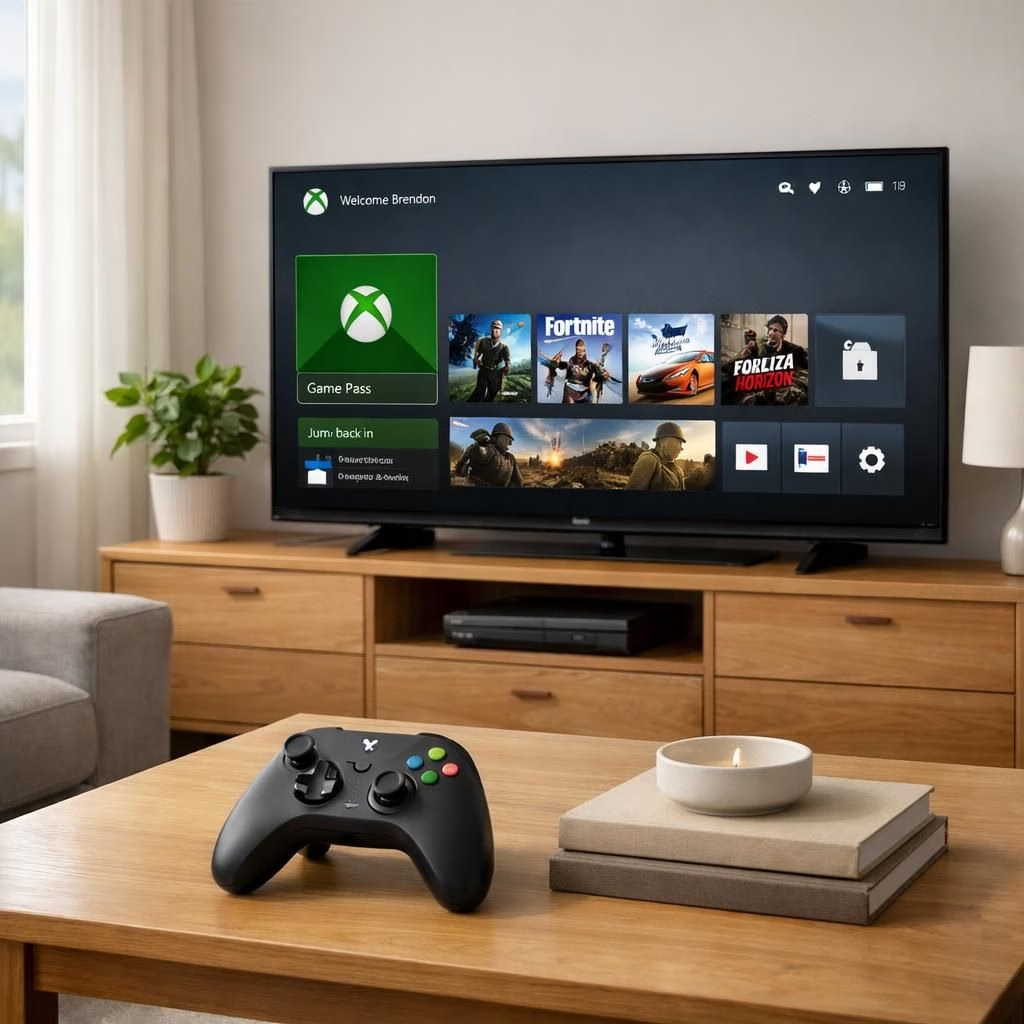
In a move that reads as both a reboot and a rallying cry, Microsoft is nudging its compass back toward Xbox with a smile and a plan. The company has signaled a broader pivot from branding to a real, playable mission for the era. Since adopting the Microsoft gaming label in January 2022 after buying Activision Blizzard, the organization has been working through shifting parts. Now the message—delivered with the calm confidence of people who know how to publish a memo without making it dusty—signals a conscious pivot: Xbox remains the heart, but the whole ecosystem must dance with the crowd that shows up daily to play in gaming. The focus is clear: daily active players as the north star, not just quarterly headlines. In other words, Xbox keeps refining hardware, content, experiences, and services so the act of playing becomes easier, more accessible, and a bit more joyful for everyone involved.
The shift is less about a radical rewrite and more about a practical reorientation. The leadership team—Asha Sharma and Matt Booty—frames Microsoft gaming as a structure with ambition, not merely a sentence on a slide. Their sense of humor helps: the north star is human-scale, grounded in real usage, and designed to avoid the grandiose traps that plague some strategic memos. The goal is to take a long, patient breath and say, loudly but kindly, that while the old playbook helped us get here, the new one will be different—more adaptable, and more focused on the people who fight their way to the couch, open the app, and press start on a daily basis. In short: Xbox and gaming must work for players, not behind the scenes for analysts.
Xbox and gaming: The reorientation kicks off
A key part of the conversation is how the brand sits at the center of the ecosystem without locking the door on elsewhere. The Xbox core remains central, but the company also signals openness to re-evaluating exclusivity windows and even AI usage as they learn. That willingness to adjust on the fly is a refreshing pivot: it says the team will listen more closely to how players actually engage, and then respond in real, practical terms. The two words—Xbox and gaming—repeat themselves not as slogans but as a promise that the platform will stay personal, affordable, and open. This approach fits the modern reality that players want a console that feels like a hub on their terms, with a service layer that respects their time and budget. The emphasis on affordability does not mean cutting corners; it means getting smarter about value, so Xbox remains accessible while the experience stays premium.
Cost discipline and durable growth are not mere buzz phrases here. The leadership talks about strengthening Game Pass with a sustainable financial model, a move that should reassure players who worry about a service drifting toward a perpetual price hike. The company even experimented with price adjustments—lowering Game Pass Ultimate and PC Game Pass—to respond to feedback that some players found the current tier too expensive. The scale of this adjustment matters less than the spirit: a company that tests, learns, and adapts. In a market where price sensitivity meets high expectations, modest, well-judged changes can keep engagement high while preserving long-term vitality for Xbox and gaming.
Xbox and gaming in 2026: A north star that fits in a living room
Beyond the price changes, the broader strategy aims to deliver a better, more personal player journey. The next-generation project known as Project Helix is teased as delivering high performance and a “player-first” experience, with AMD in a multi-year partnership to ensure the hardware doesn’t outpace the software or the people who use it. The plan isn’t to chase the next shiny device but to ensure that every upgrade translates into more intuitive discovery, more meaningful customization, and deeper social integration within gaming. For families and solo players alike, Xbox is framed as a platform that makes building a library of meaningful moments easier, not harder to navigate. In practice, this means better onboarding for new players, clearer pathways into favorite franchises, and a smoother way to find new experiences that feel relevant to how people actually gaming today.
The leadership also points to growth in China, emerging markets, and mobile-first audiences, signaling that the Xbox and gaming umbrella aims to be global, but not at the expense of local relevance. It’s not about sprawling across geographies for the sake of it; it’s about meeting players where they are and translating that attention into better in-game experiences, smarter discovery, and a sense of community that doesn’t require a passport to join. The emphasis on creator-centric platforms—think Minecraft, The Elder Scrolls, and Sea of Thieves—highlights a commitment to content and community that can sustain interest beyond launches and occasional promotions.
On the business side, the plan is to build a sustainable, creator-centered ecosystem rather than chase short-term spikes. The aim is to strengthen discovery and personalization, giving players more opportunities to connect with friends, find games they’ll love, and feel that their time is well spent. The ongoing refinement of social features—smoothing cross-platform play, enhancing friend lists, and polishing in-game communities—helps make gaming feel less like a product and more like a shared hobby with friends across the world. In this framework, Game Pass becomes less of a ticket and more of a gateway to consistent, quality experiences rather than a revolving door of 48-hour trials. The messaging is practical, not preachy: improve the service at a sustainable pace, and players will stay engaged without feeling nickeled-and-dimed or overwhelmed by a wall of options.
Of course, no strategic shift is complete without a nod to the broader industry conversation. Sharma and Booty acknowledge that the model that got them here won’t be the one that takes them forward. That honesty is a breath of fresh air in a space that often talks like it’s steering a battleship. They also mention re-evaluating AI usage and windowing of exclusives, which suggests a future where partnerships and content decisions are more transparent and more aligned with player expectations. In other words, Xbox gaming isn’t about a single revolution; it’s about a patient evolution that respects players, developers, and the reality that technology matures at different speeds in different markets.
Another pillar is the continued emphasis on live games, ongoing stewardship, and a stronger commitment to personalisation. The company wants to improve discovery and social features in a way that makes the Xbox ecosystem feel more welcoming to both longtime fans and new players. It’s a reminder that great games are not just about the moment of release; they’re about the ongoing experiences that keep people coming back to the couch, the controller, and the community around them. This is where Xbox and gaming grows from a brand into a living, breathing space where players feel seen, heard, and respected, even when a clever new feature arrives that makes the menu flow a little nicer or the matchmaking a touch faster.
Finally, the company’s renewed emphasis on affordability, open access, and personalisation lands in a place that matters to real people: it invites more experimentation without risk, more creativity without gatekeeping, and more opportunities to share joyous, sometimes chaotic, gaming moments with friends and family. It’s not a grand manifesto so much as a practical invitation to join a better, more inclusive era for Xbox and gaming, one where players feel their time is valued and their voices heard.
As we look toward 2026, the path ahead is unlikely to be perfectly straight, but it does feel navigable. The focus on daily active players, better hardware and services, thoughtful exclusivity decisions, and meaningful creator ecosystems suggests an ecosystem that respects players and developers alike. And if the late-2025 price adjustments are any indication, Xbox and gaming know how to listen, respond, and adjust in a way that’s accessible yet ambitious. The combination of a grounded north star and a willingness to adapt could deliver durable growth without sacrificing the very experience that makes gaming worth doing in the first place.
In the end, this is less about a dramatic reinvention and more about a purposeful, player-first recalibration—an approach that recognizes that the best thrill in gaming comes from the moment you press start and the world that unfolds is a little better because you showed up. If this direction holds, Xbox and gaming will feel less like a corporate slogan and more like your cozy corner of the future, where you can play, share, and grow with a community that values you.
I’d love to hear what you think about this refreshed direction for Xbox and gaming—please share your thoughts in the comments below.
Practical steps for readers
- Review your current Game Pass plan and consider what fits your monthly budget and playing habits.
- Explore creator-centric games you haven’t tried yet (Minecraft, The Elder Scrolls, Sea of Thieves) to diversify your library.
- Experiment with onboarding options and personalization settings to make the experience feel more yours.
- Try cross-play with friends to experience the new social features and better discovery tools.
FAQ
- What is the new north star for Xbox?
Daily active players. The focus is on how people actually play, not just on launches or quarterly headlines. - Will exclusivity windows change?
Yes. The leadership signals openness to re-evaluating exclusivity timing as part of a broader, more transparent strategy. - How does price affect the strategy?
Price discipline and sustainable growth are priorities. The company has experimented with Game Pass pricing to reflect feedback while maintaining long-term value. - What about global expansion?
Growth in China, emerging markets, and mobile-first audiences is part of a broader aim to meet players where they are, with local relevance.
Conclusion
The shift toward a patient, player-first recalibration is less a dramatic reinvention and more a practical evolution. If the approach holds, Xbox and gaming could feel like a welcoming, durable space where players and creators share a vibrant, ongoing experience.