

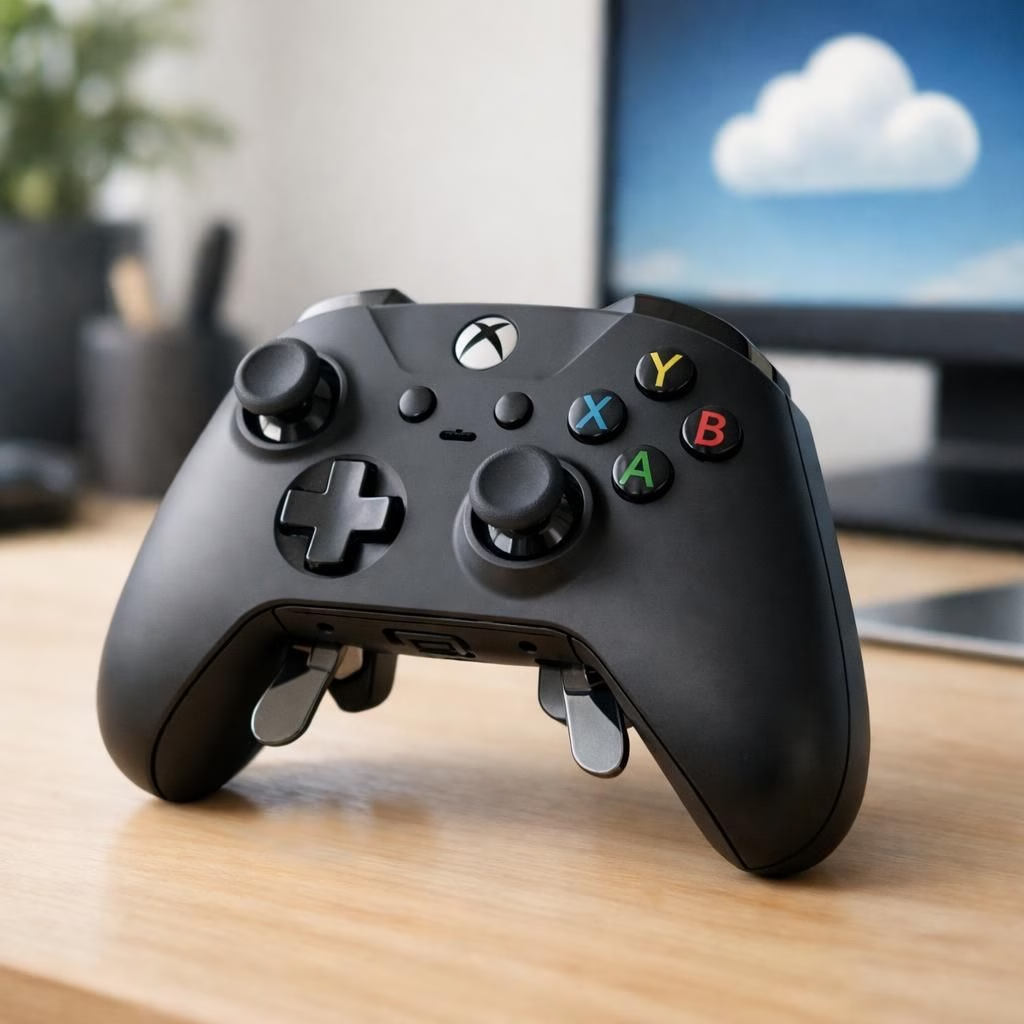
Right on schedule, rumors point to a fresh Xbox Elite Series 3, and seven years after the last Elite, a new generation feels plausible in the wild chatter. Tecnoblog in Brazil flagged a premium gamepad from Microsoft just hours after showcasing a cloud gaming controller, with Anatel’s regulatory listing acting like a watermark of potential reality. The presumptive Series 3 would carry the DNA fans loved in Series 2—swappable d-pads, lockable triggers, removable rear paddles, rubberized grips, and a matte black coat—while wearing some new flair. The real curiosity centers on two front buttons that resemble mouse scroll wheels; they could drive additional inputs or quick in-device setting changes. It sounds small, but such touches echo what players crave: fine-grained control without sacrificing long gaming sessions. The mix of cloud gaming readiness and physical upgrades keeps the hype alive, especially for anyone who has already spent seven years with the Series family and is not quite ready to give up. The chatter extends beyond a single rumor, and the image of a more modular, long-lasting device feels oddly comforting in a landscape of rapid hardware turnover.
Xbox Elite Series 3: Design, controls, and durability
Design-wise, market chatter suggests the Series 3 leans into the best parts of its predecessor: a swappable d-pad system, lockable triggers that protect the gear during frantic matches, removable rear paddles for players who like switchable control layouts, and rubberized grips that stay comfortable through marathon sessions. The matte black finish keeps things businesslike, but the implication is clear: durability and customization remain the north stars. The rumor mill highlights two front inputs that resemble mouse scroll wheels; these could act as additional inputs or facilitate on-the-fly setting changes, a small feature with outsized impact for esports-like accuracy. Some observers expect an infusion of TMR sticks and triggers—modern, wear-resistant alternatives that promise steadier precision over time. If Microsoft leans into this approach, the Xbox Elite Series 3 could become the benchmark for how far a premium gamepad can go before hardware fatigue becomes a real issue. The idea of a smoother, more stable control surface is appealing after many years with the prior model, and it’s easy to imagine fans debating grip texture, weight balance, and the subtlety of the finish long after launch windows close. A cloud gaming orientation could emphasize seamless play across devices and reduce the friction that can derail longer sessions.
cloud gaming: latency, battery, and the cloud button
On the connectivity front, the cloud gaming angle is where the hype shifts from “nice-to-have” to “must-try.” The rumored Series 3 includes a cloud button that could connect the controller directly to Wi-Fi, reducing latency when streaming games rather than playing locally. That feature, if executed well, could tilt the balance toward more seamless cloud gaming sessions without the usual drags of wireless chatter and processing delays. The plan to move to a removable and rechargeable battery pack is equally practical: faster battery swaps without hunting for AA batteries, and the possibility of a more efficient wireless chipset that makes up for the smaller capacity. We still need official confirmation, of course, but the direction is clear: improve latency, simplify life on the shelf, and give players a device that stays relevant across both traditional and cloud gaming play. Expect the wizards of balance to tighten the joysticks and re-tune triggers so that the cloud button feels less like a gimmick and more like a genuine speed dial for your preferred settings. The combination of cloud gaming readiness and thoughtful hardware choices could make cloud gaming feel closer to a native console experience, not just a clever workaround.
Beyond hardware, the Series 3 is often discussed in the same breath as third-party innovations that push durability and precision. The shift toward resistive, wear-proof input mechanisms signals a commitment to longevity—an appealing promise after several years of headline-turnover hardware that wears out too soon. In practice, the imagined Series 3 would balance a robust chassis with the flexibility players expect: a battery system that’s easy to swap, paddles that can be reconfigured for different genres, and a control map that remains reliable under heavy use. The broader takeaway is that, even amid occasionally noisy leaks and speculative coverage from outlets like Tecnoblog and The Verge, there’s a coherent thread: a premium gamepad that’s easier to live with for years rather than months. A device that emphasizes consistent feedback, consistent battery life, and the sense that you’re controlling a supercharged, meticulously tuned tool rather than a disposable gadget.
As Tom Warren’s coverage in The Verge reminds us, a formal reveal may come at an upcoming Xbox showcase, but the details already feel like they’re shaping expectations for the next wave of premium controllers. The probability of a big splash around the time of the show is high, yet the market seems prepared for a thoughtful, well-built controller rather than a flashy flash-in-the-pan. For fans who have ridden the Series line since the original era, the prospect of a refreshed, more durable, and more configurable Xbox Elite Series 3 is as much about confidence as it is about new toys. The broader ecosystem—gaming headsets, cloud services, and the ongoing refinement of latency and input precision—appears to be aligning behind a single, consistent narrative: premium hardware with practical upgrades that pay off in real sessions, not just marketing decks.
Whether you’re a hardcore modifier, a casually curious cloud gaming enthusiast, or simply someone who appreciates a well-made controller that makes long sessions feel shorter, the chatter around the Xbox Elite Series 3 and cloud gaming offers a lot to consider. The practical questions—battery life, input redundancy, pedal-level precision, and how the cloud button interacts with existing Xbox services—are the kinds of details that turn rumor into useful buying decisions. The more we learn, the more this feels like a natural evolution rather than a radical leap: a device designed to stay in the gaming toolbox for years, not just the next season.
Share your thoughts on what you’d want from a premium Series 3 controller, and whether cloud gaming improvements could finally turn latency into a non-issue for most players. If you’ve got hands-on impressions or predictions, I’d love to hear them in the comments.
Special thanks to the original coverage at Tecnoblog for the initial leak reports and to The Verge for broader context and analysis. Your coverage helps writers like me paint a clearer, more entertaining picture of how these hardware waves actually roll out.
Practical considerations for Xbox Elite Series 3 buyers
- Battery life and swaps: a rechargeable pack could reduce downtime between sessions. cloud gaming compatibility adds value if you game across devices.
- Durability: expect wear-resistant sticks and robust paddles for long-term use.
- Layout flexibility: removable paddles and reconfigurable controls help adapt to genres, from shooters to simulators.
- Latency goals: a cloud button and a streamlined wireless path should keep latency in check for cloud gaming sessions.
FAQ
- When will the Xbox Elite Series 3 launch?
- Microsoft has not officially announced a date. Rumors point toward a formal reveal at an upcoming Xbox showcase, with detailed specs to follow.
- Will it still use AA batteries?
- Yes, but a removable, rechargeable pack is expected to enable rapid swaps and improved wireless efficiency.
- Is cloud gaming required to use the Series 3?
- No. The Series 3 should work for local play, while cloud gaming features are aimed at reducing latency during streaming sessions.
- How durable will it be over years of use?
- Durability is a focus, with wear-resistant inputs and a chassis designed for long-term reliability in both traditional and cloud gaming contexts.
Conclusion
The Xbox Elite Series 3 is shaping up as a premium upgrade grounded in durability, customization, and cloud-ready thinking. If the rumors hold, Microsoft may deliver a controller that remains relevant through years of game formats and service changes, rather than a single season of hype. For players who value control, consistency, and fewer interruptions during long sessions, the Series 3 could become the tool that finally makes latency feel like a solved problem.