

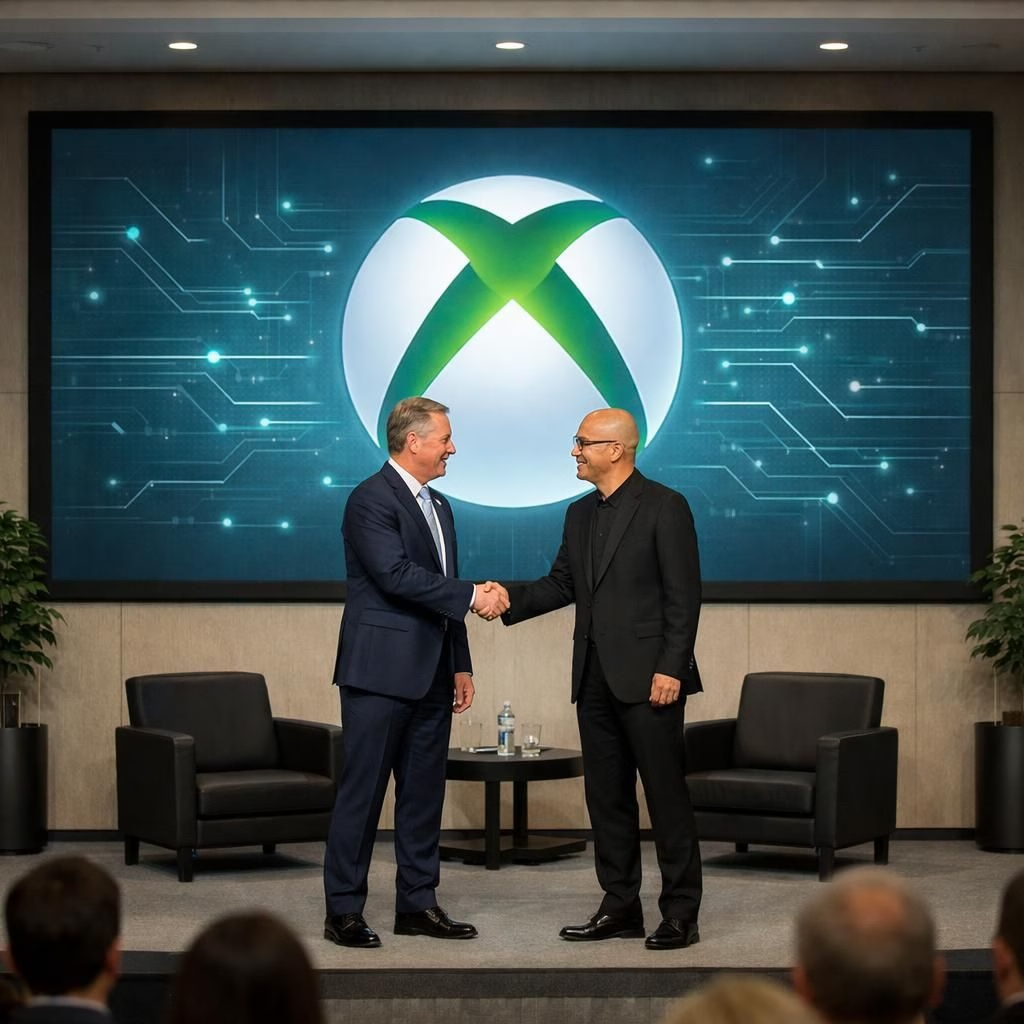
The year 2026 opens with a bright buzz around the Xbox and AI ecosystems. Leadership pivots roll into the spotlight. Former Xbox president Sarah Bond bids farewell to the staff. In her wake comes Asha Sharma, named EVP and CEO of Microsoft Gaming. Phil Spencer is retiring, and Matt Booty steps into the AI Exec role. That signals a desire to fuse creative leadership with data‑driven strategy.
Xbox Leadership Transition in 2026
Sharma’s appointment aims to reshape how the team works across studios, the cloud, and consoles. The move puts Microsoft Gaming at the helm of a broader Xbox ecosystem. It focuses on first‑party games, live services, and cross‑platform initiatives. The leadership shift keeps the human touch while leaning into scalable processes. The change invites experimentation and steady progress, even when challenges arise.
Bond’s exit is acknowledged with gratitude, and Sharma’s early statements emphasize culture, growth, and a deliberate rollout. In the broader industry, transitions bring risk and opportunity. Expect renewed partnerships with independent studios and stronger cross‑play strategies. The focus will be on player‑centric services and better collaboration across teams.
AI Strategy and Gaming Under Sharma
On the AI side, leadership signals smarter data use and tooling. Developers will ship games faster with practical AI improvements. This is not about gimmicks. It is about matchmaking, content recommendations, QA, and more robust live operations. Sharma’s background in responsible AI guides a field where art meets algorithm. This is a moment for teams to turn AI into player happiness.
Matt Booty stepping into the AI Exec role means bigger hopes for scalable tools for partners and faster launches. The aim is to balance fast releases with reliable AI experiences. Expect better performance, smoother events, and more personalized journeys across devices. The ecosystem grows stronger and more resilient, respecting both creative risk and discipline.
Looking ahead, the Xbox community can expect lively collaboration among product, publishing, and engineering. Sharma’s leadership style is collaborative, optimistic, and practical. This combo bodes well for a year when AI features feel like a natural part of play rather than a lab project. Xbox should remain a place where players notice the craft behind the scenes.
Xbox: What players can expect
For players, this means more polished launches, thoughtful AI improvements, and leadership that prioritizes balanced risk and reward. The industry will watch how Sharma translates promises into better, consistent experiences across the Xbox family and beyond.
Practical Implications for Gamers
Here are a few concrete lenses to watch over the coming months:
- Polished launches backed by AI-driven QA and testing cycles.
- Cross‑platform experiences unified by AI-powered analytics and matchmaking.
- Personalized events and recommendations that respect player privacy while improving engagement, enabled by AI.
FAQ
- Q: What does Sharma’s appointment mean for Xbox fans?
- A: It signals a shift toward culture, growth, and stronger cross‑team collaboration, with broader AI adoption across products and services.
- Q: When can we expect concrete AI features in games?
- A: Timelines vary by project, but the emphasis is on integrating AI into live ops, matchmaking, and content personalization rather than gimmicks.
- Q: How will this affect independent developers?
- A: The leadership shift aims to deepen partnerships with independent studios and improve cross‑team collaboration and support.
External Context
- Microsoft’s Responsible AI principles provide context for how the company approaches AI across products and services.