

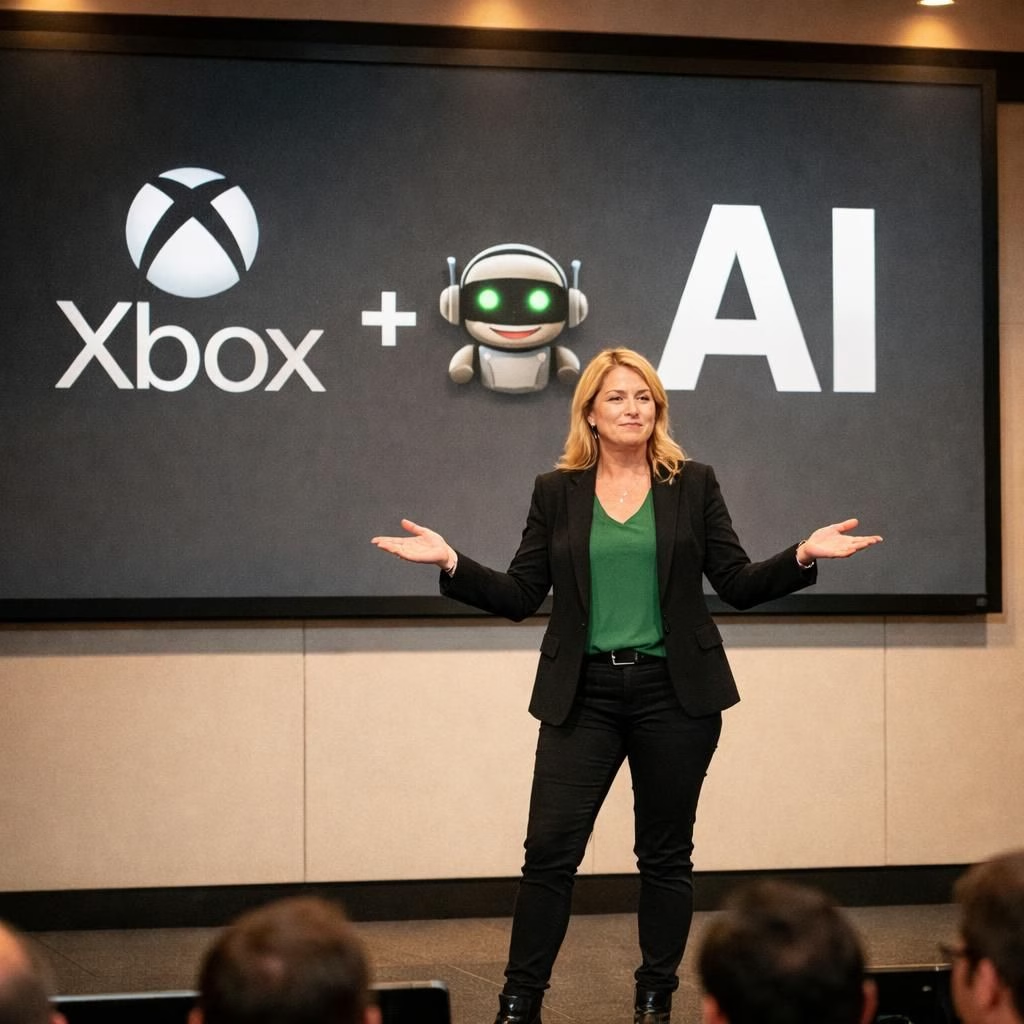
In 2026, Sharma stands at the center of Microsoft Gaming’s pivot, and conversation about who runs social accounts gives way to a public portrait of someone who speaks plainly and tweets thoughtfully. The buzz around Xbox and AI authenticity is the order of the day, and the person in charge of Xbox resists the urge to pretend the future is a plug-and-play dream. The new Xbox boss — Asha Sharma — arrives with a mission to align great games with practical use of AI, while keeping the human core intact. The tone is not a victory lap; it’s a plan with nuance, a promise to balance big ideas with day-to-day deliverables. Xbox fans and industry watchers alike get a more grounded sense of direction as Sharma’s team outlines priorities for developers, publishers, and players. The AI whisperers will still exist, but the focus is on AI as a tool, not a marketing spectacle. The path forward is crisp: better games, smarter services, and a culture that values candid feedback over clever headlines. The talk about AI‘s role is about augmenting human creativity, not replacing it, and that mood shapes every meeting about resourcing, roadmap, and risk management.
Xbox leadership: Sharma’s playbook
When the official announcements landed, they carried a calm confidence. Sharma is framed as someone who knows product, people, and the long arc of gaming culture. She emphasizes studios that ship, partners who collaborate, and players who stay curious. The Xbox leadership team is reorganized with clear ownership: a mix of publishing, platform, and AI-informed product groups. The emphasis on Xbox as a platform for creative risk shows up in how they talk about support for indie teams and big-budget franchises alike. This is not about chasing headlines; it’s about delivering reliable cadence: quarterly updates, transparent roadmaps, and a willingness to admit mistakes in public when needed. Expect a stronger tie between first-party studios and external studios, with a shared language around quality, accessibility, and immersion. In practice, that means more cross-studio collaboration, better tooling, and an emphasis on player-first design. The AI lens will tighten, but the best Xbox initiatives will remain grounded in human stories—the thrill of discovery, the joy of a perfect drop-in moment, and the relief of a game that respects a player’s time and choices.
AI-driven decisions: balancing data and heart
The AI angle is treated as a tool, not a slogan. On the merchandising side, AI is used to personalize recommendations, streamline QA testing, and pre-empt bugs before they ruin a launch week. On the creative side, teams discuss how AI can assist with world-building, not replace the spark of a new IP. The leadership message stays consistent: AI should augment human creativity and speed, not overshadow it. The chatter about layoffs is acknowledged with a careful, empathetic tone — change is hard, but clarity and compassion go hand in hand. Sharma’s approach aims to protect core teams while reallocating resources toward higher-impact projects. The result should be more frequent showcases of gameplay, better post-launch support, and a culture that sees AI as a partner in design, not a sledgehammer on manpower. For developers, the path is practical: invest in tooling, publish transparent milestones, and embrace feedback loops that actually improve the product. For players, the payoff is steadier content drops, smarter accessibility options, and a more helpful AI companion that adds value without getting in the way.
Of course, the public scene never stays quiet. There are rumors and witty captions, like the playful headline about an AI-running social account that became a symbol for the tension between automation and authenticity. The new Xbox boss responds with humor and poise, posting her gamertag to remind everyone that real people stand behind the pixels. The industry leans in: if you want AI to serve gamers, you must show accountability, transparency, and a steady stream of great games from teams that actually ship. Sharma’s plan pushes for a stronger lineup across genres, a smarter live-service cadence, and a culture that rewards thoughtful risk-taking rather than reflexive marketing campaigns. Leaders in the field take note: Microsoft Gaming isn’t chasing a trend; it’s building an ecosystem where AI, human curiosity, and a passion for gameplay converge. The future looks busy, but not chaotic; the aim is to keep the fun in gaming while making the machine smarter and kinder. The role of Microsoft Gaming, under Sharma, is to be the quiet engine behind loud, joyful experiences that bring players together, respect their time, and invite them to join the conversation about what comes next. The narrative is hopeful, the details are actionable, and the tone remains approachable—even when the roadmap grows long.
Original material: “Beep Boop Beep Boop”: New Xbox Boss Asha Sharma Hits Back at Claim Her Social Media Account Is Run by AI, and Posts Her Gamertag. Thank you to IGN for the original coverage and the insights that sparked this friendly rewrite. For the original article link, we extend our gratitude to the source.
Original source attribution and gratitude: We appreciate IGN for the thoughtful coverage that sparked this rewrite and the opportunity to explore the Sharma era with a light-hearted yet insightful lens. Thank you for the original material and for continuing to inform readers around the world about the evolving Microsoft Gaming landscape.
Practical steps for developers and teams
- Clarify ownership and milestones in quarterly roadmaps, inviting feedback from players at every stage.
- Invest in tooling that speeds testing and reduces time-to-ship without sacrificing quality.
- Publish transparent milestones and explain decisions that align with long-term quality.
- Design with accessibility in mind from day one to broaden reach and impact.
What players can expect
- Steadier content drops and more reliable live services.
- AI-assisted experiences that enhance, not overpower, play.
- A transparent roadmap with clear milestones and ongoing opportunities for feedback.
Frequently Asked Questions
- What does Sharma’s approach mean for Xbox’s future?
- It emphasizes a balance between ambitious games and practical use of technology, with a focus on human-centered design and transparent leadership.
- Will AI replace jobs at Microsoft Gaming?
- No. The plan aims to augment human creativity and improve workflows while protecting core teams.
- How will players notice improvements in the short term?
- Expect more frequent gameplay showcases, better live-service support, and more accessible features.
- How will developers be involved?
- There will be ongoing feedback loops, public roadmaps, and cross-studio collaboration to align quality and pace.
References
Further reading
Conclusion: Sharma’s Xbox leadership aims to blend practical AI use with human-centered game design. The result should be a dependable cadence of great games, smarter services, and a culture that values accountability and curiosity. For developers and players alike, the path forward is to stay engaged, share feedback, and watch for meaningful progress across teams and titles.