

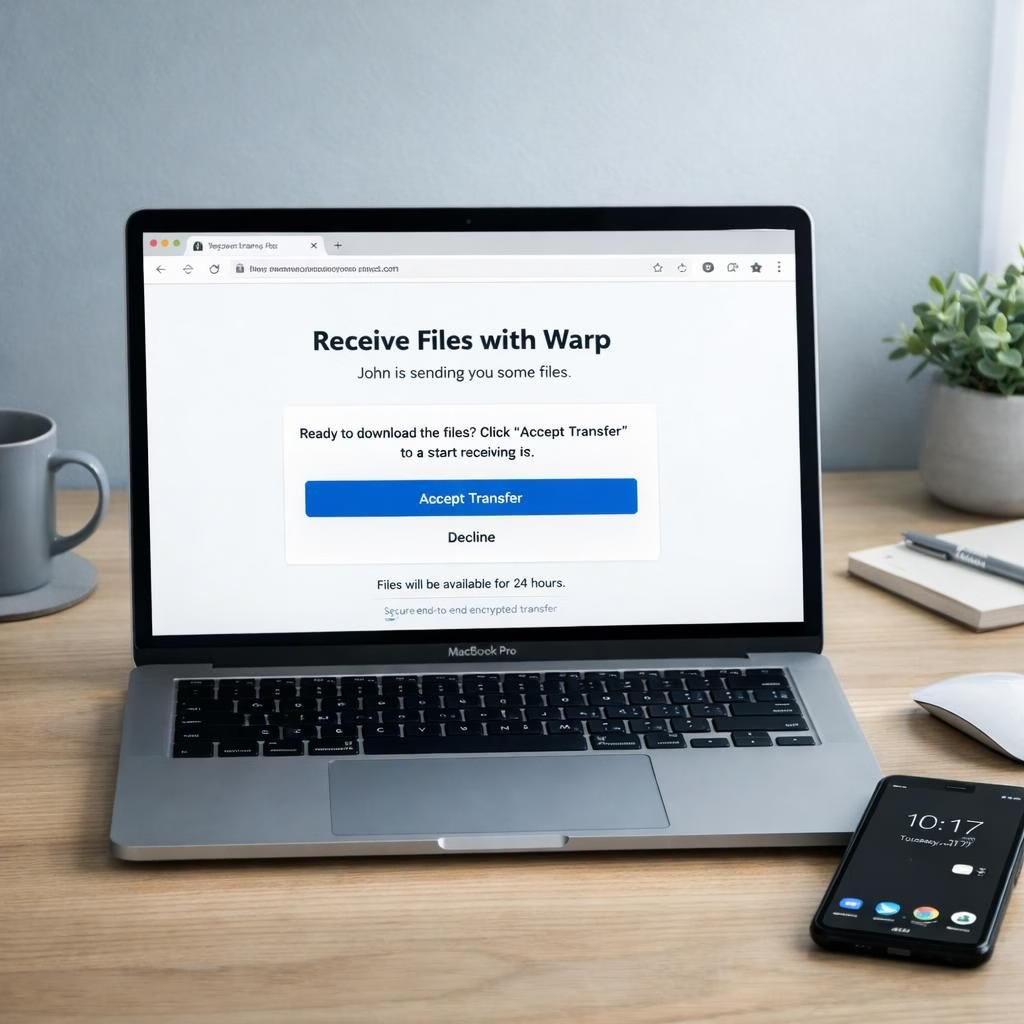
I test Android phones for a living, but I write these notes on a company-supplied MacBook Air. Two simple truths have stuck with me: Warp is real, and Cross-Platform reality keeps finding room at the table. This isn’t a fairy-tale handshake between iOS and Android; it’s a pragmatic bridge that makes everyday file sharing feel less like a scavenger hunt and more like a well-labeled drawer. Enter Warp, Nothing’s ambitious attempt to knit together Android and PC ecosystems with a smile and a browser extension.
Warp and Cross-Platform: A Practical File-Sharing Tale
Warp is not a direct device-to-device pipeline. Instead, the Android app pairs with a browser extension to upload your files to a server, then prompt a download on the other device. If you’ve ever waited for a video to upload over shaky Wi‑Fi, you’ll appreciate the honesty: Warp is fast for small items and serviceable for the occasional image, video, or document. The real magic is in the workflow, not in pretending the transfer is peer-to-peer in 2026.
On the phone side, you’ll find the option to send via Warp in your usual share sheet. It’s universal—any Android device can join the party, not just Nothing’s hardware. On the PC or laptop side, you can paste highlighted text into your browser’s clipboard, right-click an image to nudge it into Warp, or simply push a file from the desktop to the cloud-backed path. The result is a cross-Cross-Platform pipeline that scales across macOS, Windows, and Linux, with a Chrome-based browser required for the extension.
Android-to-PC Dreams Meet Cross-Platform Reality
Where Warp shines is simplicity. You launch a transfer, the files ride up to a Google Drive-backed server, and a download prompt appears on the destination device. Nothing’s storing or peeking at your data beyond what Google Drive already knows, which may be a small comfort if you’re worried about the “nothing” in Nothing meaning total invisibility. It does require you to link Warp to your Google account, but—spoiler—your personal Drive folder stays relatively quiet. Your shared Warp files aren’t wandering through your Drive like stray cats; the system keeps an eye on them and tends to keep clean, organized evidence of your latest exchanges.
According to Nothing’s senior global PR manager, there are no file size limits beyond your Drive quota. The catch? Warp only keeps the latest 10 files; when a new one uploads, the oldest one is pruned. It’s the friendly, low-stress archive policy that reduces bloat and calms anxiety during a busy day. The beta is free to use, and the claim is that Warp is a more universal option than Google’s own AirDrop integration or competing efforts from Oppo and Honor to bridge Android-to-Mac sharing.
You’ll notice some quirks, of course. Right-click interactions in certain web-app contexts may suppress Warp’s options in favor of the app’s own menus. Google Docs is a notable example here; in that environment Warp won’t appear in the right-click menu. It’s a reminder that browser extensions live in a crowded menu world, where apps fight for the privilege of being the easy button. But these edge cases aside, the core flow remains solid: you pick a file or snippet, press send, and watch it surface on the other side with a download prompt.
From a workflow perspective, Warp’s real value is multi-device support. If you’re juggling multiple phones or multiple PCs, you can initiate a transfer from one device and retrieve it on another later. The receiving device does not have to be online when you start the transfer—a nice convenience when you’re coordinating work across a few gadgets in a single day. The system isn’t magical, but it’s practical and surprisingly reliable for light-to-medium transfers. And for text, links, or single images, results come through almost instantly—nearly real-time under a good connection.
There’s a sense, though, that Warp is a stepping stone rather than a final solution for fast, large file sharing. A 2 GB video took a while to push through the pipeline in testing; the upload and then download add up. If you’re chasing cinematic readiness for big media, you’ll probably want a direct, device-to-device method or a dedicated cloud transfer service. But for everyday sharing—screenshots, brief documents, short videos, and quick text snippets—Warp delivers a clean, uncomplicated experience that makes Chrome-based Cross-Platform stuff feel less like an afterthought and more like a feature you’ll remember to use.
Ultimately, Warp’s retention policy—your latest ten files live in the queue and older items drop out—keeps clutter down and your disk on a sensible diet. It’s a pragmatic compromise: enough history to backtrack a few steps, not so much history that you drown in old transfers. The beta status and free access make this a low-risk test drive for anyone who spends time bouncing between Android and PC architectures. If you’re a multiclass user—several phones, a few desktops—Warp becomes a useful anchor for your daily routines, even if it isn’t the final boss of Cross-Platform file sharing.
Update, April 15, 2026: The team clarified that file retention is capped at the latest ten items, and that you can adjust expectations if you routinely handle multi-gigabyte media. The takeaway remains the same: Warp offers a fast, simple path for many typical tasks, with the caveats you’d expect from a beta service that relies on Google Drive as the back end.
Original article: The Verge: Nothing Warp Android file sharing. Thank you to The Verge for the original article and material.
So what does this mean for you? If you want a no-drama way to move text, images, or modest files across devices, Warp is worth a look. It isn’t a flawless magical conduit for all data types or all file sizes, but it is a thoughtful step toward smoother Cross-Platform collaboration. If you’re curious, give Warp a spin and tell me how it fits into your daily mix of Chrome, Android, and Windows or macOS usage. I’d love to hear your thoughts in the comments.
Warp in Practice: Cross-Platform Realities
Practical tips for everyday use: start a transfer from the device you’re actively using, then pick it up later on another machine without worrying about whether that second device is online right now. Keep expectations modest for large media—Warp excels with text, images, and short clips. For larger payloads, a traditional cloud transfer or a direct device-to-device method may still be faster.
Tech Details & Practical Tips
- Warp uses a Google Drive-backed server to shuttle files, so it benefits from familiar cloud reliability but relies on your Drive quota for size limits.
- The latest-ten-files retention policy helps avoid clutter while giving you enough history to backtrack recent transfers.
- Edge-case behavior (like right-click menus in Google Docs) is a reminder that browser extensions operate in a crowded ecosystem.
FAQ
-
What can Warp transfer?
Images, videos, documents, and text or links. It’s designed for quick, light transfers rather than large media libraries.
-
Do I need Nothing hardware?
No. Warp works with any Android device and a Chrome-based browser on macOS, Windows, or Linux.
-
Where is my data stored?
Data is uploaded to Google Drive for the transfer, with Nothing not accessing your Drive contents beyond the normal Drive scope.
-
Is there a limit on file size?
There are no explicit size limits beyond your Google Drive quota, but retention is limited to the latest ten items.
Conclusion & Next Steps
Warp offers a thoughtful, cross-platform bridge for everyday sharing between Android and PC ecosystems. It’s not a universal fix for every transfer, but it’s a practical tool you’ll likely reach for when you need a quick move of text, images, or short clips. If you’re curious, try Warp in your own workflow and share how it fits into your Chrome, Android, and desktop routines. Your feedback helps refine what a truly seamless Cross-Platform experience could become.
References
External readings: For broader context on cloud transfers and cross-device workflows, you can review Google Drive help articles on file types, size, and retention. Also see Nothing’s public mentions of Warp on official channels as available.