

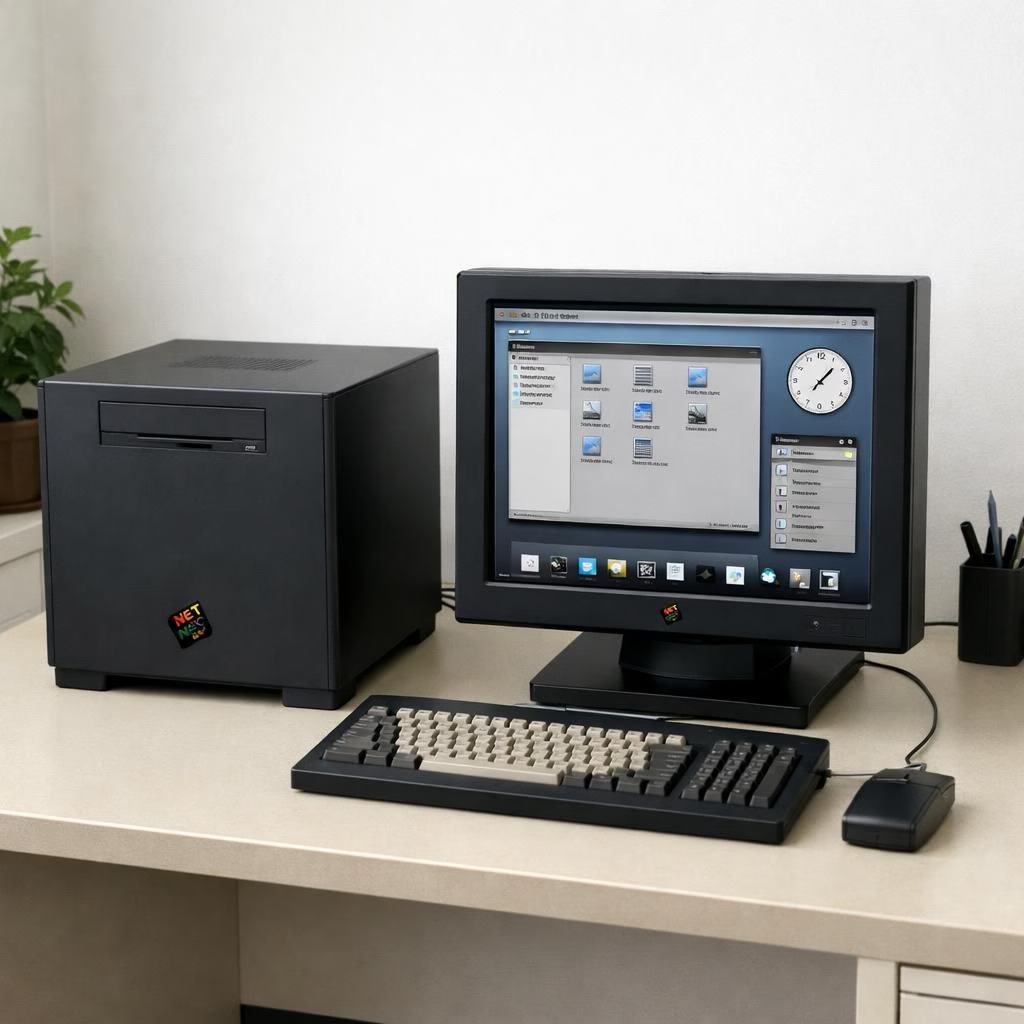
Steve Jobs and NeXT meet again in this sunny, slightly satirical profile that drops you into the late 1980s and early 1990s, a time when design required pragmatism and software demanded discipline. The piece blends archival details with a breezy tone, showing how Steve Jobs and NeXT pushed the boundaries of hardware and software in ways that still feel relevant in 2026. The core truth remains: NeXT was a proving ground, a workshop where Jobs’ appetite for elegant interfaces collided with the stubborn realities of boot sequences, opaque documentation, and stubborn hardware quirks. Steve Jobs and NeXT taught a generation to aim for polish without letting progress stall.
Steve Jobs and NeXT: Foundations of a Hardware-Software Mind
From the get-go, Steve Jobs and NeXT built a discipline that looked as good on the desk as it did in the lab. NeXT machines offered sleek hardware, but the magic happened in the software stack: NeXT software stack, a GUI that felt both futuristic and approachable. The result rewarded developers who cared about UI polish as well as kernel stability, and Jobs insisted that hardware and software should sing in harmony. Ars Technica’s coverage frames these years with a wink, and the facts stay sharp: Jobs believed in cohesive systems, and NeXT delivered that cohesion—often with a stubborn, charming startup attitude.
Ars Technica’s Take on Steve Jobs at NeXT, with a Smile
Ars Technica provides a perceptive, readable lens on Steve Jobs and NeXT, balancing technical detail with accessible storytelling. The report highlights the NeXT workstation’s ambitious design, including the black cube case and the push for a unified developer experience. The Ars Technica style—curious, exact, slightly sardonic—made NeXT a magnet for programmers who argued about kerning as passionately as kernel code. Steve Jobs’s leadership comes through: he pushed for elegance, but he also urged teams to confront hard technical choices head-on.
Technicolor Details: Steve Jobs, NeXT, and the User Experience
From the glossy black shells to the carefully chosen fonts, the NeXT user experience was a statement. It wasn’t merely about making software run; it was about making software feel inevitable. Steve Jobs led with a vision of cohesion, insisting that hardware, OS, and tools form a single, harmonious ecosystem. The NeXT story shows how design decisions ripple through the product line, shaping how developers and users interact with the machine.
In 2026, the lessons remain actionable: plan for polish, but power your product with solid engineering and a clear identity that users can trust. Ars Technica’s reporting helps parse the noise, offering a grounded, respectful look at how Steve Jobs and NeXT changed the trajectory of personal computing. The NeXT era is a reminder that good taste and good code are not enemies.
Readers with a taste for tech history and a sense of humor will appreciate how a philosopher-CEO and a stubborn workstation managed to influence product design years later. If you enjoyed this tour through Steve Jobs and NeXT, you’ll see how the same principles show up in modern indie hardware and careful software ecosystems. The tale is about discipline, timing, and the willingness to ship something that works well enough while chasing perfection. If you have your own experiences with Steve Jobs and NeXT, share them below.
Original article: Steve Jobs in Exile is a fine profile of Jobs’ years at NeXT — Ars Technica. Original article.