

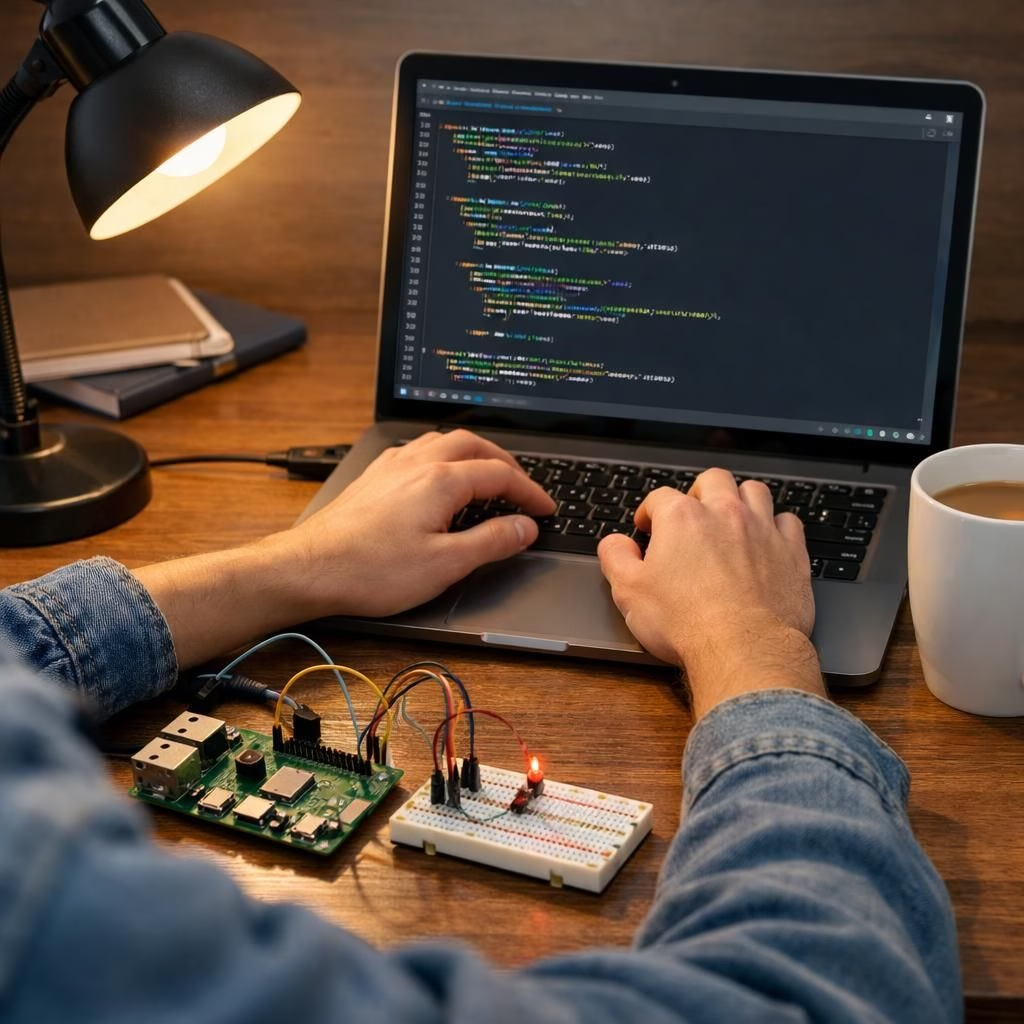
Meta’s CTO Andrew Bosworth told a college freshman to stop waiting and start building. In 2026, the core idea is to blend vibe-coding and ai-coding — not as buzzwords, but as repeatable habits. Learn by doing, not chasing a perfect syllabus. Embrace hands-on projects, small experiments, and steady iteration, whether software or hardware.
Bosworth’s message lands in a moment when artificial intelligence blends with every keystroke. Instead of insisting on one rigid path, he nudges students toward experimentation and real-world practice. The takeaway is clear: the most relevant skills come from doing, testing, iterating, and learning through doing again. In this article, we explore how vibe-coding and ai-coding work together to create a modern playbook for curious beginners and seasoned learners alike. We’ll keep the energy upbeat, the tips actionable, and the science honest. And yes, we’ll sprinkle in practical tools that help you turn abstract ideas into tangible outcomes—without drowning in theory.
vibe-coding in practice: from theory to hands-on
What is vibe-coding if not a delightful nod to the vibe of a project? It’s about translating intent into something you can touch and test. You don’t chase the perfect architecture first; you sprint with a small build, learn from it, and grow. In this sense, vibe-coding is a philosophy as much as a technique. It invites beginners to choose a tiny project, like automating a desk lamp with gentle motion sensing, and then scale up as confidence grows. The strategy is simple and repeatable: pick a goal, pick a tool, build a minimally viable version, and iterate. This cadence keeps motivation high and fear of failure low. When you embrace vibe-coding, you trade endless planning for real, demonstrable progress. And when you pair vibe-coding with ai-coding, you gain an ally that translates your natural-language goals into working snippets of code, tests, and small demonstrations.
Think of vibe-coding as the sprint practice you need to stay in the game. It emphasizes immersion: you should be building more than you’re debating. The approach reduces the distance between an idea and a demonstrable outcome. In practice, vibe-coding means you’ll spend time wiring up a Raspberry Pi or an Arduino, then watching how a line of Python or C++ becomes a practical result. This is where theory steps aside and curiosity takes the wheel. The result is a loop of learning by doing, with feedback that’s immediate and tangible. If you want a mental model, imagine sketching a blueprint and then turning that sketch into a working prototype before anyone can ask you for a slide deck. That is the core promise of vibe-coding in action.
ai-coding and vibe-coding: a practical toolkit for 2026
ai-coding isn’t magic; it’s a helpful co-pilot that can speed up your work. AI-powered coding tools draft boilerplate, translate ideas into code, and refine outputs with natural-language prompts. In the hands of a learner, ai-coding makes it easier to test ideas and compare approaches. When you pair ai-coding with vibe-coding, you get a practical workflow: start with a natural-language goal, let AI draft a baseline, then use vibe-coding to carve, adjust, and test until it feels right. The synergy isn’t a shortcut; it’s a smarter rhythm for 2026, where tools are abundant and feedback is immediate.
For a practical path, begin with small AI-assisted builds that produce verifiable results. Use ai-coding to draft a function that reads input and lights an LED, then switch to vibe-coding to add a sensor, troubleshoot, and refine your wiring. The process should feel like progress, not a stack of unfinished ideas. Over time, you’ll accumulate a portfolio of tiny, functioning projects that show you can blend mental models with hands-on execution. The more you practice, the more confident you’ll become with both vibe-coding and ai-coding in real projects, not just concepts.
Hardware basics for the curious: vibe-coding with Raspberry Pi and Arduino
Hardware remains a critical doorway into technology because it makes ideas tangible. Bosworth didn’t suggest abandoning hardware know-how; he proposed starting with approachable tools that give quick, visible feedback. A Raspberry Pi or an Arduino board offers a friendly entry point into the physical world. With vibe-coding, you’ll wire a sensor, write a small script, and see a response—perhaps a light pattern or a motor spin—within minutes. Hardware projects teach you the language of circuits, timings, and resilience. You’ll learn to handle power considerations, debouncing, and error handling in the real world, not just in a simulator. For more advanced learners, moving toward printed circuit boards expands your scope from hobby projects to product-ready prototypes. The hardware path keeps you grounded and hungry for hands-on experiences, which is exactly where real learning happens.
Document your journey. A well-kept lab notebook, photos of your breadboard, and a short readme with your goal, steps, and results help you track progress and communicate value. The vibe-coding mindset here is simple: build, test, adjust, and repeat. The ai-coding companion can help you generate parts lists or compare different microcontrollers for a given task, but your hands-on work remains the heart of learning. This is how curiosity becomes capability, one small project at a time. If you’re looking for hardware inspiration, you can also explore the field with a laptop like the one in our highlighted deals page Dell laptop deal.
Mindset and momentum: action over overthinking
Beyond the nuts and bolts, Bosworth’s guidance nudges us toward a productive mindset. He emphasizes action over overthinking, though he’s not anti-reflection. He mentions periods of deep introspection, but keeps them sparse and strategic. The idea is to build a personal ethos that favors progress while preserving a clear sense of direction. When you’re tempted to ruminate, switch to a quick build. When you’re unsure, draft a minimal viable version and test it. The feedback you get from real projects is infinitely more telling than any theoretical debate. In the end, action compounds. A week of small builds becomes a portfolio of skills, and that portfolio opens doors.
A practical week-by-week plan to start now
- Week 1: pick a small project that excites you, like a smart light reacting to sound.
- Week 2: prototype with a Raspberry Pi, using ai-coding to draft a simple script that handles input.
- Week 3: refine with vibe-coding, wiring the hardware and testing edge cases.
- Week 4: document your process and write a short reflection.
- Weeks 5–8: expand the project, add features, and compare alternatives suggested by AI.
- Weeks 9–12: consolidate into a mini-portfolio and prepare a short pitch for peers.
You’ll notice how these weeks blend ai-coding and vibe-coding in practical ways. The result is steady progress, not a burst of effort. This is how curiosity becomes demonstrable skill in 2026.
Real-world tips to stay productive and inspired
- Build something you can show, not just describe.
- Pair coding with small hardware experiments to anchor concepts.
- Use ai-coding to accelerate routine tasks, but rely on vibe-coding for hands-on validation.
- Track your learning with a simple journal or repository so progress is visible.
- Join communities where you can share progress, get feedback, and celebrate small wins.
Original article: Thank you to the original source material for the Bosworth AMA and its insightful practical guidance.
We’d love to hear your thoughts on ai-coding and vibe-coding. How would you start building today? Share your experiences and ideas in the comments section below.
References
- Original source: Times of India — Meta CTO Bosworth AMA
- Raspberry Pi Foundation
- Arduino
- OpenAI Copilot and AI-assisted coding
- AI-infused hardware: MSI QD-OLED monitor