

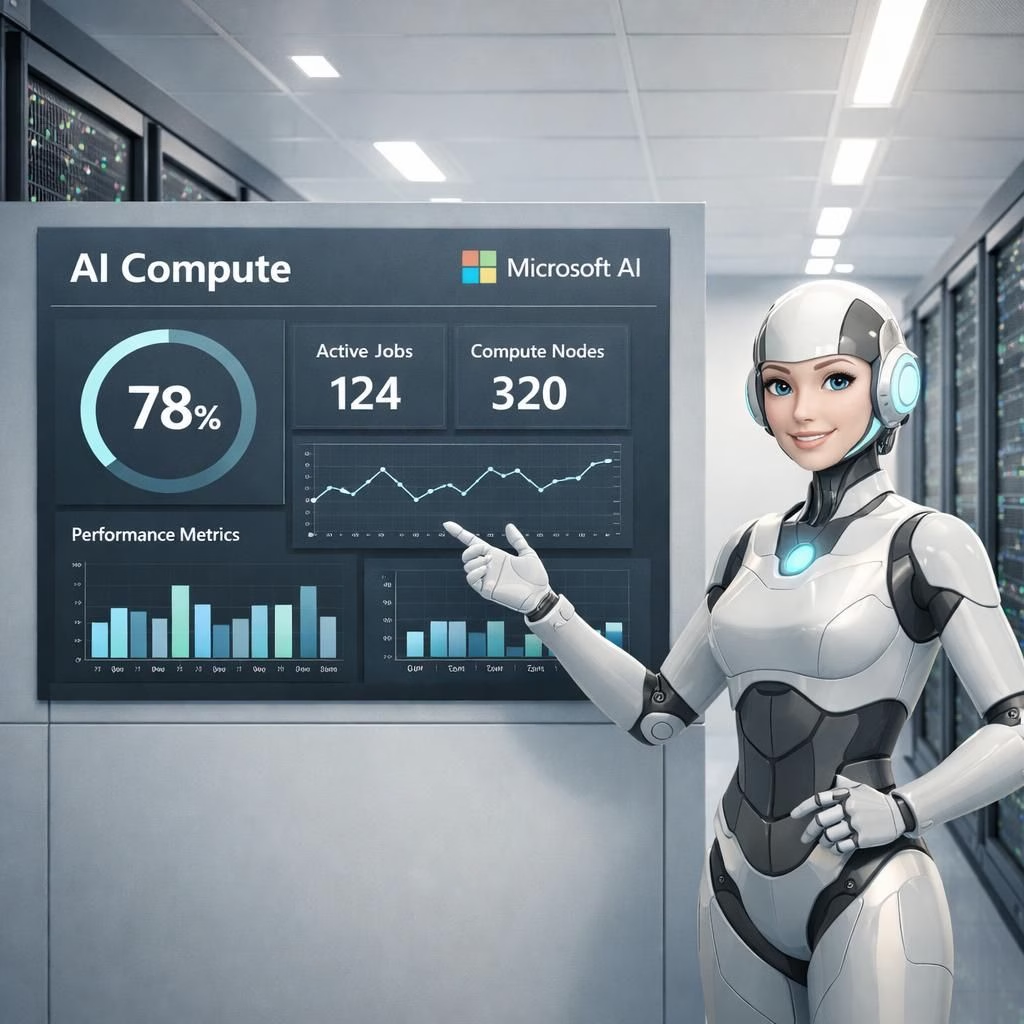
In 2026, AI compute feels like a well-run data center gym. Microsoft AI wears a practical badge today. Mustafa Suleyman notes they cannot yet build the largest scale models. The compute ramp will unlock that potential later this year. So they stay in the mid class range. The mid class range balances cost, performance, quality, and large-scale usage. This is not a stumble; it is a deliberate, steady stride. It signals progress you can measure, not hype you can’t verify.
AI compute and Microsoft AI: A pragmatic 2026 balance
Microsoft has been quietly building its in-house AI stack. The MAI-1 foundation model runs on Nvidia H100 GPUs and sits in preview. Suleyman emphasizes internal capacity and self-sufficiency. The plan is to build chip clusters that scale to frontier size. They will fund data budgets so the state of the art comes within reach in two or three years. They aim to reduce partner reliance while watching costs and power. The team also hires talent from rivals, signaling practical collaboration rather than surrender. The tone stays hopeful even in tough quarters.
AI compute roadmap toward self-sufficiency
On the ground the path is pragmatic. It includes cloud compute, tighter data budgets, and steady data-center cadence. Suleyman states the mission plainly: self-sufficiency in the next couple of years. The team builds frontier-scale compute fabric. They align data budgets so frontier models can arrive without chaos or cost explosions. The shift from renegotiations to internal capability is cultural. Microsoft expands its in-house stack and adds talent to speed things up. The result is steadier progress with less risk.
Demand for AI tools grows in 2026. Suleyman expects enormous enterprise use. Microsoft tunes pricing, tooling, and governance to match supply and demand. The MAI-1 and related tools move from preview toward broader adoption as compute ramps up. Self-sufficiency remains the north star. It is not retreat; it is a careful long-term strategy to unlock sustained innovation. The design choice of a measured mid-range approach stays central.
AI compute and Microsoft AI talents costs and pace of change
As the company expands its in-house stack, it also ramps up hiring beyond the usual suspects. Former Allen Institute chief Ali Farhadi is among the notable additions. Suleyman emphasizes reducing the cost of AI tools without compromising quality. The practical takeaway is simple: better tools lower costs and make AI more accessible for customers and developers. The company will continue to align incentives between research, product, and field, ensuring frontier aims translate into tangible products that help people, businesses, and developers thrive in 2026 and beyond.
In leadership reshuffles, clear responsibility emerges: Suleyman now oversees AI model development; Jacob Andreou leads Copilot offerings. The split makes experiments faster and production more reliable. The balance of ambition, governance, and reliability stays in view. The plan keeps customers and developers safe while enabling bold experiments.
The roadmap is not a single model; it is a compute-and-data strategy that scales for enterprises. It aims to be robust, affordable, and predictable. The emphasis on in-house foundation models helps control costs and risk. The mid-range posture becomes a design principle rather than a temporary compromise. It keeps the company moving forward with confidence.
Real progress comes from execution. The team tests, iterates, and listens to feedback. The result should be a safer, more accessible AI experience. The approach blends compute, data, and talent into practical, repeatable gains. It is a measured sprint with long legs.
Special thanks go to the original article for the thoughtful material that inspired this rewrite. We appreciate the insights into Microsoft AI and Original source article.
What do you think about AI compute and Microsoft AI in 2026? Please share your thoughts in the comments.
Practical steps for organizations focusing on AI compute
- Assess data budgets and align them with a clear frontier-model timeline.
- Plan for in-house compute capacity to reduce reliance on external partners.
- Balance cost, performance, and risk when selecting tooling and models.
- Invest in hiring and retention to accelerate internal capability while maintaining governance.