

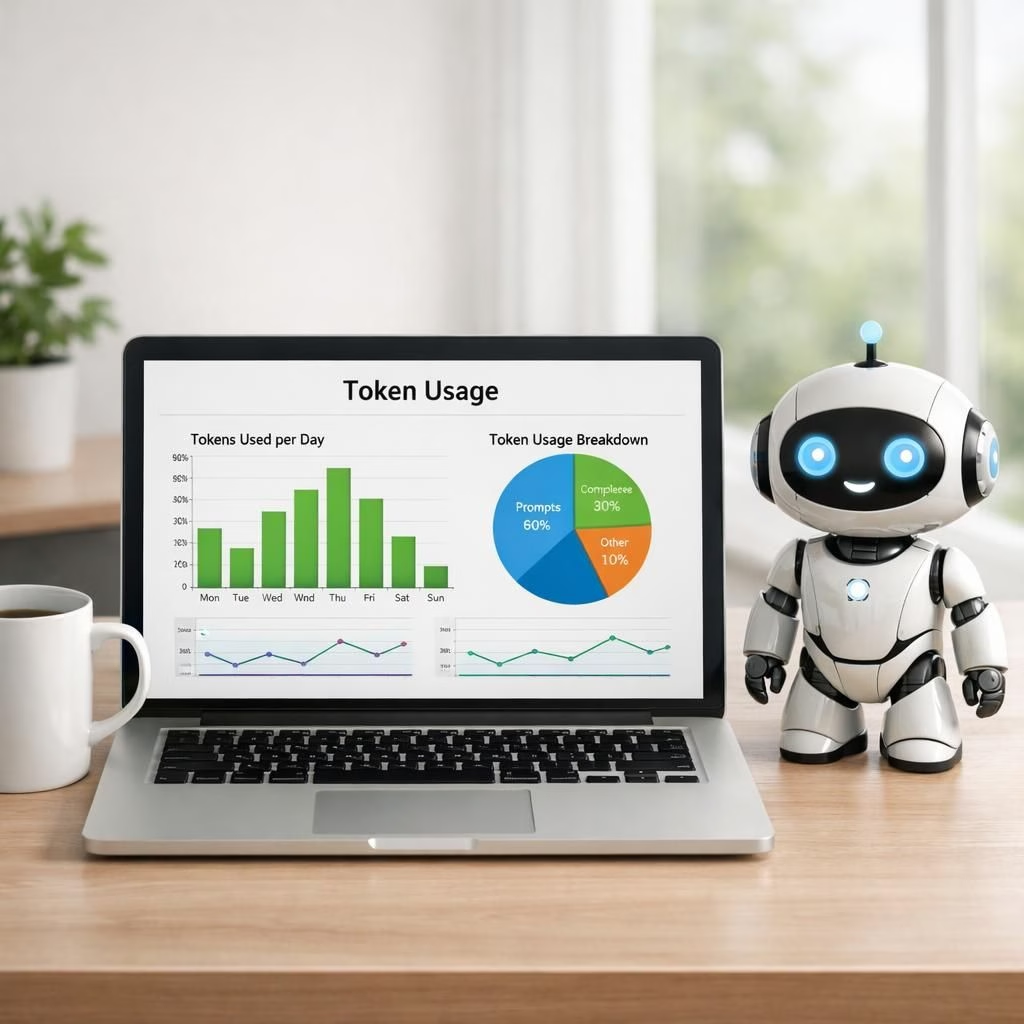
In 2026, tokenmaxxing and AI aren’t just buzzwords; they’re daily office rituals where engineers chase tokens, dashboards glow, and meetings become token-management boot camps. The goal is straightforward: more tokens equal more output, more visibility, and yes, more cost. A New York Times feature on big-tech habits shows Meta, OpenAI and friends tracking AI usage with internal dashboards, token counters, and perks that feel as practical as gym memberships for data. The phrase tokenmaxxing sounds playful, but the behavior behind it is serious: teams try to prove they are the most productive by pushing more data through AI systems, collecting a bigger token bill, and hoping the boss notices. The vibe is competitive, but the consequences—rising costs, heavier resource strain, and a new kind of performance pressure—are real. The good news: the trend is steering conversations about efficiency, governance, and smarter tooling, turning a comic meme into a sober improvement plan that includes guardrails and smarter budgets. People who embrace this mindset argue that when used well, tokenmaxxing can push teams toward clever automation, faster prototyping, and smoother handoffs between humans and machines. The challenge remains: keep the smile, set sensible limits, and insist on outcomes that matter. This isn’t a joke; it’s a nudge toward smarter scaling, better collaboration, and a humane pace of automation.
tokenmaxxing and AI in 2026: a productivity paradox
Token usage has become a visible badge of hustle. In tokenmaxxing, engineers run several AI agents at once. They thread code, data, and tests through multiple copilots. Tokens are data units the AI processes. They pile up like a high-score tally. Some teams show token counts on internal dashboards. This makes work feel like a friendly competition and a cautious warning. Generous token budgets are now coveted as perks, like dental coverage or free lunch. A single running agent can push tokens into the hundreds of millions weekly. Some setups report counts near a billion. The cost line climbs with every token. That matters for budgets and for morale. The NYT article notes that big players watch these numbers closely; they want automation that saves money, not just prints bigger numbers. The paradox remains: AI can boost efficiency, yet tokenmaxxing can inflate the bill. The cure is governance that emphasizes value, output, and repeatable results. In short, focus on outcomes, not tokens counted on a screen. tokenmaxxing can be a force for good when paired with clear ROI and responsible budgeting for AI use.
Smart token budgets and AI etiquette: balancing ambition with sustainability
The frontier isn’t doom and gloom. It invites smarter practices. Some teams treat tokenmaxxing as a shared experiment. They set monthly budgets, track ROI, and review what works. They separate “catalyst” AI use from routine tasks. They require clear deliverables for every automation sprint. They build guardrails to prevent runaway costs. They encourage humans in the loop to verify outputs. They invest in training so people know what good AI looks like. They use governance tools that flag unusual token bursts. They balance ambition with sustainability. And they keep the culture positive, curious, and a little playful. The core idea: use AI to amplify human judgment, not to replace it at any cost. To keep the balance, teams should pair tokenmaxxing with quality checks, documentation, and transparent dashboards. This approach protects jobs, time, and budgets while still letting clever AI do the heavy lifting. With sensible governance, tokenmaxxing becomes a disciplined catalyst, not an uncontrolled sprint.
- Set clear budgets per team and per project.
- Require a demonstrable ROI for major automations.
- Prefer iterative wins over all-at-once automation.
- Monitor token growth and adjust personnel expectations.
- Keep data privacy and security in mind with every tool.
Original article link: Thank you to The Times of India for the original reporting.
What do you think about tokenmaxxing and AI in your work? Share your thoughts in the comments below and join the conversation. If you enjoyed this take, please consider sharing with colleagues who might appreciate a light but insightful look at 2026 work tech.
FAQ: tokenmaxxing and AI
- What is tokenmaxxing? It describes pushing more data through AI systems to demonstrate productivity, often tracked via token counts on dashboards.
- Is tokenmaxxing always bad? Not always; when governed, it can accelerate automation and learning, but unmanaged growth raises costs and risk.
- How can teams measure ROI? Tie automation efforts to concrete deliverables, time saved, and measurable outcomes, with regular reviews.
- What safeguards help? Establish budgets, governance dashboards, human-in-the-loop checks, and data-security policies.
- How to advocate for responsible AI use? Start with a pilot, set clear milestones, and communicate value beyond token totals.
Conclusion: Tokenmaxxing can drive powerful automation, but only with guardrails. The path forward is clear: measure value, govern responsibly, and keep human judgment central. If your team designs budgets and dashboards with outcomes in mind, you can enjoy the benefits of automation without paying an excessive price.
References
- Original article: https://timesofindia.indiatimes.com/technology/tech-news/ai-has-created-a-new-status-game-among-engineers-at-it-companies-that-analysts-say-is-expensive/articleshow/129745409.cms
- New York Times technology reporting: https://www.nytimes.com/section/technology
- OpenAI pricing: OpenAI pricing
- OECD AI governance: OECD AI governance