

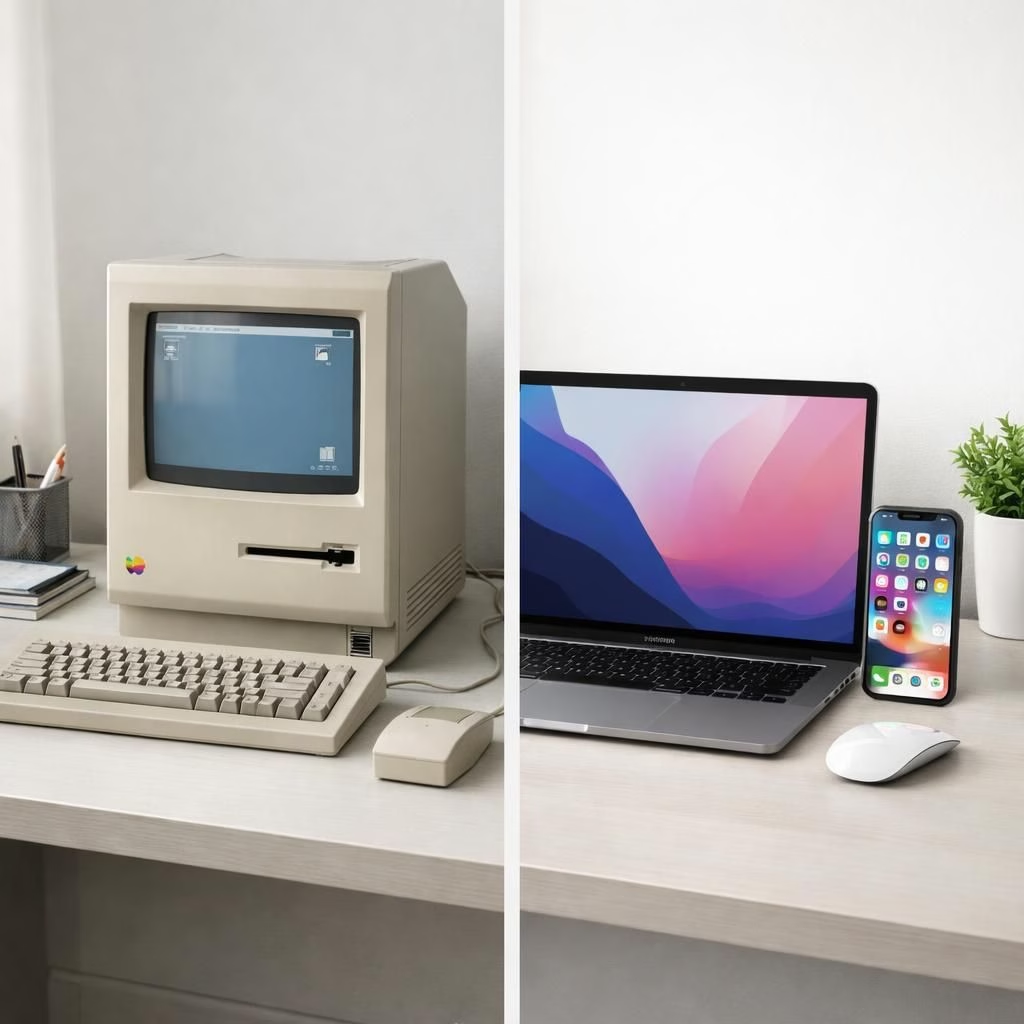
Apple marks 50 years of thinking-different, a philosophy that refuses to blend in with the noise. The celebration doubles as a reminder that progress comes from people who dare to think-different. The company’s early machines showed that you could blend a basic grid of circuitry with a creative mindset. Since 1976, Apple has paired powerful hardware with a humane design ethos. The result? Products that educated, entertained, and occasionally provoked our sense of style. In 2026, the thinking-different spirit remains a constant drumbeat. The cornerstones of that idea—simplicity, privacy, and accessibility—still anchor every release. Tag B milestone is less a birthday party and more a public exam in curiosity. We learn by watching history leap from the Apple II to Vision Pro. The journey has reshaped how people connect, learn, and express themselves. So we pause to reflect, cheer, and plan for what comes next.
thinking-different Milestones
The thinking-different mindset was never just clever marketing; it was a method. Apple broke the grid with the Apple II, a machine that taught millions to program in home basements and classrooms. The Macintosh followed with a graphic interface that felt like a design class disguised as a computer. Each leap in the 80s and 90s pushed the idea that form and function could tango. The iPod then turned a pocket portal into a stage for music, while the iPhone turned a phone into a pocket computer. The iPad joined, and the Apple Watch later reminded us that tech could live on our wrists. Vision Pro promises to fold our digital life into real space. Through all these moves, thinking-different stayed the compass guiding hardware with a humane touch. And yes, the App Store, iCloud, and Apple Music joined the lineup as evidence that services can be delightful rather than detouring labyrinths. AI breakthroughs and other innovations continue to shape these ideas beyond devices.
apple-50th Reflections
Apple’s private letter from CEO Tim Cook frames the milestone as a look back at values and people. He notes that “Thinking different has always been at the heart of Apple,” a line that sounds almost like a promise. The company links progress to the liberal arts and a human-centered design. Privacy remains at the core of product decisions, a rare stance in a data-driven era. Accessibility is not an afterthought but a design pillar, making devices usable for many people. And the planet gets a seat at the table, with commitments to responsible manufacturing and recycling. For the Tag B milestone, the letter revisits its core idea and asks us to keep curiosity alive. The 50th anniversary becomes a reminder that a big device can feel small if the aim is to empower real human activity. The broader message is optimistic: Apple plans another wave of silicon breakthroughs, smarter software, and services that connect communities, not just gadgets that glow. Tag B milestone appears as a compass for the years ahead, guiding privacy, accessibility, and environmental responsibility alongside bold invention.
thinking-different in 2026
Looking forward, the thinking-different mindset acts like an internal weather vane. The company leans into faster silicon, better AI integration, and more thoughtful privacy protections. It imagines education and enterprise use cases that honor user agency without sacrificing security. The emphasis shifts toward experiences that blend learning, creativity, and collaboration. Apple continues to emphasize environmental stewardship, community impact, and affordable access to technology where possible. In a world of rapid change, thinking-different becomes a steady sail rather than a flashy flag. Apple’s ecosystem grows with a design ethos that treats people as partners, not as data points. The result is a brand that stays curious while staying grounded in real-world needs. The Tag B spirit lingers, reminding us that legacy is not a museum piece but a starting line.
Practical takeaways for readers
- Ask: How can you blend technology with human-centered design in your projects?
- Prioritize privacy and accessibility from the start, not as an afterthought.
- Experiment with small, iterative prototypes that invite feedback—this is thinking-different in action.
FAQ
- What does thinking-different mean for Apple today?
It remains a call to challenge conventions, fuse liberal arts with engineering, and ship products that empower real people in everyday life. - How can readers apply this mindset at work?
Start with user needs, design with privacy and accessibility in mind, and embrace rapid prototyping to test ideas quickly. - Where can I read Tim Cook’s full reflections?
Apple’s official newsroom published the letter. You can explore it for the company’s stated values and outlook.
As technology evolves, the story remains less about gadgets and more about empowering people. For context and direct statements from Apple, see the official release in the Apple Newsroom.
References
External context: For broader tech coverage and industry perspectives, you can also explore Apple’s privacy and design commitments on the official site: Apple Privacy.
Original article: https://www.apple.com/newsroom/ — Thank you to Apple for providing the source material. If you enjoyed the journey, share your thoughts below and tell us how you see five decades of progress shaping the next decade. Let’s discuss in the comments.