

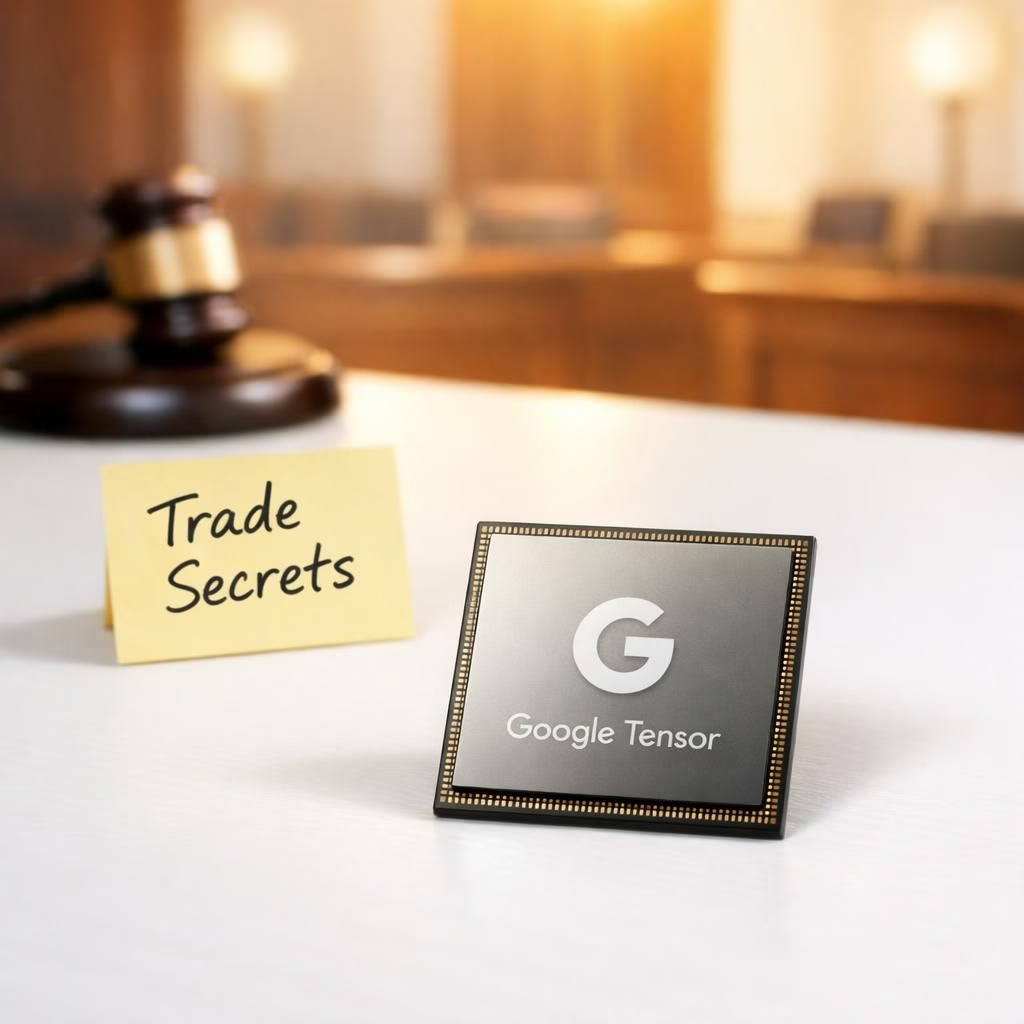
Tensor and Trade Secrets have made headlines again in 2026, but this piece keeps a constructive, hopeful vibe. The case centers on Samaneh Ghandali, Soroor Ghandali, and Mohammadjavad Khosravi, three individuals facing 14 felony counts in the Northern District of California after allegations of theft of confidential hardware information tied to Google’s Tensor processor used in Pixel phones. Samaneh, a former Google hardware engineer, is an Iranian national who previously worked in Silicon Valley; Soroor, 32, was once an intern there; and Khosravi, 40, applied for jobs at Google several times but never joined the payroll, instead aligning with a separate tech firm. This case fuses human curiosity with corporate risk, and the courtroom will decide how the Tensor-related information traveled, stored, and potentially transferred while the trio pursued opportunities in the high-stakes world of hardware design.
In practical terms, the charges include conspiracy, theft of Trade Secrets, and destruction of evidence. The Justice Department and federal prosecutors describe a tightly wound narrative of confidential hardware knowledge associated with Google’s Tensor processor, the silicon brain behind Pixel devices. The defendants were arrested in February and brought before a San Jose federal court, with potential penalties that loom large if guilt is established beyond a reasonable doubt. Google has said it strengthened safeguards around its confidential information and promptly alerted law enforcement after discovering the incident, signaling a shift toward more vigilant data governance across major tech firms.
Tensor safeguards: how this case reshapes risk thinking
The Tensor footprint invites a broader discussion about who can access sensitive IP and how access is controlled. The Tensor processor sits at the heart of Pixel performance, and any alleged misappropriation touches not just a single device but the competitive landscape for years to come. Companies like Google have long emphasized robust access controls, audit trails, and compartmentalized work streams to prevent impropriety. This real-world reminder urges teams to document every privilege grant, rotate credentials, and apply least-privilege models for engineers, interns, and contractors. The Trade Secrets footprint in this case becomes a practical case study in governance that protects innovation while staying within the law. (For related industry context, see AI and smart infrastructure to power global trade).
- Limit access to sensitive hardware data based on project need and role.
- Document privilege grants and rotate credentials on a regular cadence.
- Establish a clear, tested incident response plan and secure collaboration tools.
- Maintain auditable logs to deter unintended disclosures by contractors or interns.
From a practical perspective, the Tensor IP discussion translates into concrete steps for security teams. Access to sensitive hardware schematics or tooling should be tied to project needs, not casual curiosity. Regular insider risk assessments, clear policy guidance for departing employees, and transparent incident response playbooks help reduce the chance that even well-intentioned technologists cross lines. This is not about paranoia; it’s policy-aware development where the Tensor-focused work stays within clearly defined lanes and is tracked with precision. In short, strong governance supports creative work rather than stifling it. This theme also echoes in AI market coverage, such as AI stocks.
Trade Secrets and trust: balancing innovation and security
The Trade Secrets dimension in this narrative is as much about trust as it is about laws and penalties. Trade secrets protections create a framework that encourages collaboration and competition alike, while also imposing consequences for misappropriation. The case underscores how teams should treat sensitive information—classifying assets, labeling sensitive data, and using secure collaboration tools that leave an auditable trail. It’s a gentle nudge that trust inside a company is earned through clear rules, transparent handoffs, and verifiable security practices. The lesson here is straightforward: protect Trade Secrets with accessible, well-communicated policies that empower engineers to innovate without playing fast and loose with confidential material. When teams align on these guardrails, the pursuit of breakthrough hardware like Tensor-powered Pixel devices can continue with healthier maturity and fewer ethical gray zones.
Beyond the courtroom drama, the ecosystem must maintain confidence that Trade Secrets are safeguarded without turning every project into a fortress. Collaboration remains essential for rapid hardware advancement, but collaboration must occur within a framework that makes violations detectable and manageable. The balance is delicate, yet achievable, when organizations invest in secure development environments, robust onboarding for new hires, and continuous training on what constitutes sensitive information. This alignment helps the industry push forward while preserving the integrity of the innovations that define modern devices.
The case also echoes broader concerns about tech espionage in a globally connected era. It sits alongside other notable incidents, reminding policymakers, industry leaders, and researchers that vigilance is not a one-off event but an ongoing practice. Trade Secrets protection supports a healthy competitive landscape where legitimate innovation thrives, and it discourages practices that erode trust in the tech economy. In practical terms, that means better incident response, stronger contracts with third-party vendors, and clearer expectations for all contributors working with sensitive material. The result is a tech sector that can celebrate progress without losing sight of the boundaries that preserve fair play and national security.
Another thread in this story involves Linwei Ding, the other high-profile figure in recent memory who faced conviction on counts relating to theft of Trade Secrets and economic espionage. The parallel news cycle reinforces a consistent message: when sensitive AI and hardware know-how travels beyond authorized channels, the consequences extend beyond individual careers to the broader landscape of national competitiveness. The judiciary, prosecutors, and security professionals all weigh these outcomes to refine strategies that deter, detect, and deter again. It’s a sobering reminder that the stakes are real, and the responsibility to secure our most valuable ideas rests with many hands—engineers, managers, and administrators alike.
To readers who want practical guidance: prioritize clear access controls, implement robust logging and alerting, and maintain a culture of accountability that rewards careful handling of sensitive data. Protecting Trade Secrets and other confidential material starts with the basics—confidentiality agreements, secure development practices, and an informed workforce that understands the line between lawful innovation and impropriety. When teams keep these elements in balance, they can pursue ambitious hardware goals with confidence—and a good sense of humor about the inevitable plot twists in high-tech life. For broader IP discussions, see AI deepfakes.
In closing, the Tensor and Trade Secrets conversation is less about villains and more about systems: how we design, share, and guard the ideas that power the devices we rely on every day. The courtroom will decide the legal questions, but the practical takeaways belong to every product team, security professional, and researcher who builds the next generation of pixels, processors, and pervasive intelligence. The core message remains hopeful: with thoughtful governance, collaboration can flourish, innovations can accelerate, and the risk of missteps can be managed with clarity and care.
Special thanks to Bloomberg for the original reporting that inspired this discussion. Original reporting link: Bloomberg.
What are your thoughts on the Tensor case and Trade Secrets protections in 2026? Share your thoughts in the comments below.
References
- Times of India. ex-google engineer along with her husband and sister charged for stealing trade secrets related to Tensor processor for Pixel phones. https://timesofindia.indiatimes.com/technology/tech-news/ex-google-engineer-along-with-her-husband-and-sister-charged-for-stealing-trade-secrets-related-to-tensor-processor-for-pixel-phones/articleshow/128592124.cms
- Bloomberg: Bloomberg home page (for original reporting context) https://www.bloomberg.com
- DOJ – Office of Public Affairs (general page) https://www.justice.gov/opa/pr/