

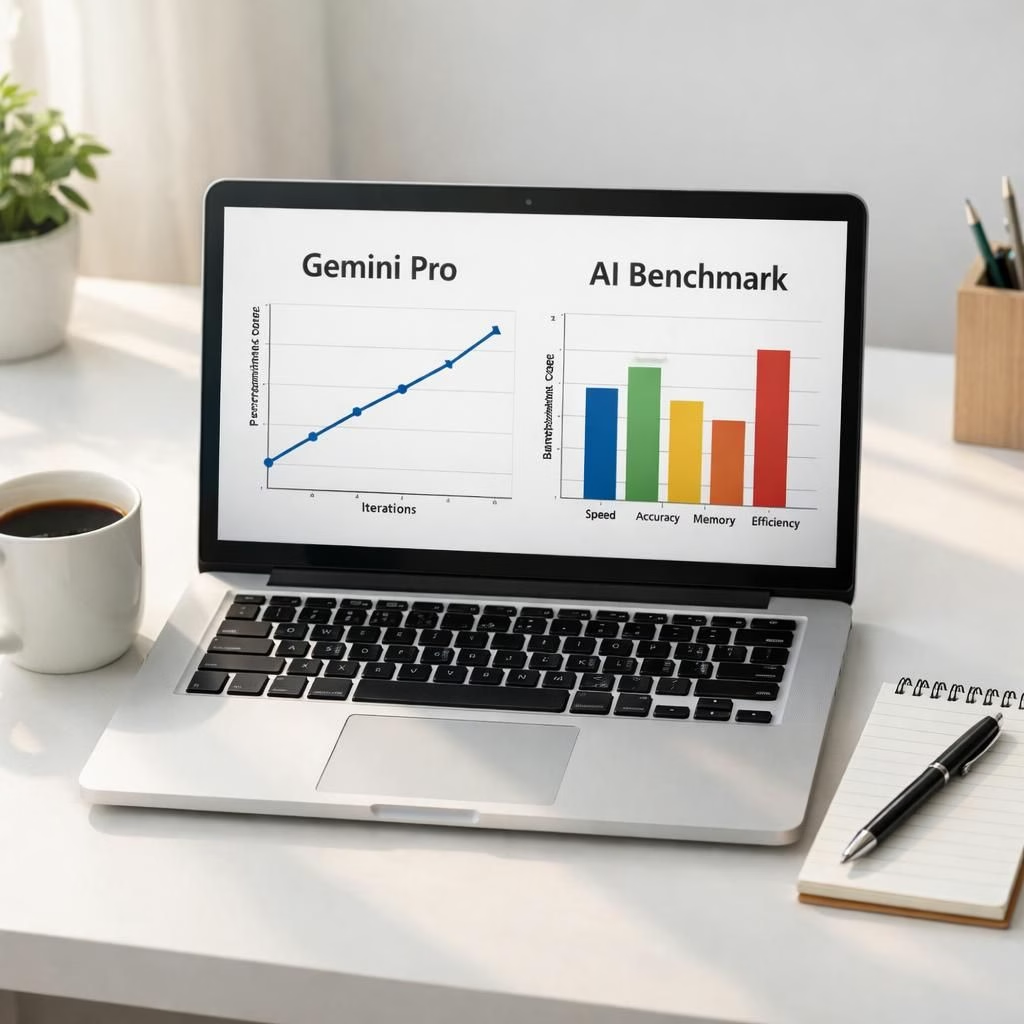
In 2026, Gemini Pro sits as a high-performance tool in the AI toolkit, and the Tag B conversation continues to shape real-world choices. The headline numbers aren’t just about edge cases; they’re about what teams can ship faster with fewer surprises, clearer reliability, and better predictability. This piece reframes key stories into practical, human-scale insights for daily work, not just what appears on a screen.
Gemini Pro and AI Benchmark takeaways
The latest benchmarks show that the top-performing model delivers steady, repeatable wins in tasks like data parsing and multi-step reasoning. The gains translate into real-world speedups, with a healthy signal-to-noise ratio that makes results more trustworthy. In practice, those scores become practical improvements in daily workflows rather than lab bragging rights.
Two important themes emerge: first, the improvement curve is a steady climb across generations; second, performance in complex workloads—like multi-hop reasoning, long-context tasks, and integrated coding or data analysis pipelines—feels more like a dependable feature than a novelty.
In real terms, Gemini Pro is not just about higher numbers; it’s about maintaining coherence across longer projects, handling nuanced prompts, and offering a dependable baseline for integrating with existing stacks. The latest public materials emphasize smarter parameter tuning and smarter task handling. Marginal gains compound when systems break problems into solvable chunks and stitch results back together with minimal loss of context, which means fewer re-prompts and less rework.
In a fast-moving field, these improvements translate into tangible productivity gains without upheaval to current workflows. For developers, managers, and researchers, the message is simple: invest in thoughtful integration, monitor outcomes with discipline, and lean into tools that offer steady gains over time rather than flashy but brittle spikes. The numbers become signals about what’s sustainable, repeatable, and a durable efficiency boost for your team.
AI Benchmark insights for Gemini Pro users
The conversation shifts from “can it do this task?” to “how reliably can it operate within a production pipeline?” For teams building end-to-end solutions, benchmarks indicate that with the right guardrails and pipelines, results become genuinely compelling. Expect smoother collaboration with automated reasoning in exploratory data analysis, faster turnarounds on code-generation tasks, and fewer manual corrections after draft outputs. The improvement is steady where it matters: reliability, repeatability, and usable outputs after the first pass.
Handling real-world data under pressure also matters. In long-running sessions or high-variance inputs, you’ll see steadier responses, shorter iteration cycles, and higher tolerance for imperfect prompts. This makes it easier to design systems that feel nearly human in their adaptability—without becoming brittle. Good benchmarking isn’t about a single heroic score; it’s about a dependable partner that stays the course through a workday, not just a sprint to the finish line.
Looking at the broader ecosystem, the gap between “best in class” and “practically useful” is narrowing. Teams once faced a choice between raw capability and reliability now have a spectrum of options that fit real-world constraints. The practical upshot is more inclusive adoption: you don’t need a big budget to leverage these advances; modestly resourced teams can still automate repetitive tasks, accelerate research cycles, and free time for analysis and interpretation rather than data wrangling.
For developers, managers, and researchers focused on long-term impact, the advice is clear: invest in thoughtful integration, monitor outcomes with discipline, and lean into tools that offer steady gains over time rather than flashy but brittle spikes. Align benchmarking outcomes with day-to-day goals and you’ll see that the numbers are signals about sustainability, repeatability, and durable efficiency.
As you plan for 2026 and beyond, remember that real work happens after the press release. Benchmarks matter when they map to speed, quality, and predictability in product cycles. In practice, that means better user experiences, faster iteration, and clearer paths from concept to deployment. The math behind the benchmarks remains important, but the human payoff—less firefighting, more thoughtful engineering, and more reliable outputs—matters just as much.
In the end, the conversation centers on two questions: does the model help you move faster without breaking your existing systems, and can you trust the outputs across the types of tasks your team handles every day? If the answers lean toward yes, you’re not chasing a number; you’re pursuing a small but meaningful improvement in how work gets done. That’s what good technology can deliver.
Original reporting and inspiration: a big thank you to TechCrunch for the initial coverage of standing benchmark performance and the broader context they provide. You can find the original discussion and coverage here: TechCrunch.
Want to weigh in with your experience or questions about these benchmarks? I’d love to hear your thoughts. Please share your perspective in the comments below.
Image attributions and context are provided for educational purposes and to illustrate a practical setup. If you’d like to reuse or remix this piece, please credit the original sources and link back to this post.
Gemini Pro in practice: practical steps
- Inventory your critical workflows and identify repeatable tasks that automation can improve.
- Set guardrails for automated reasoning, including input validation and fallback prompts.
- Pilot a small end-to-end pipeline using Gemini Pro and measure latency, output quality, and error rates.
- Gradually scale, maintain human-in-the-loop for edge cases, and document learnings for the team.
FAQ
- What does Gemini Pro bring to my team beyond raw speed?
It offers reliable coherence, better multi-step reasoning, and smoother integration with existing tools. - How should I track success from benchmarks?
Compare real-world task completion times, error rates, and user satisfaction before and after adopting Gemini Pro. - Is it safe to deploy in production?
With guardrails, tests, and monitoring, you can reduce risk and catch edge cases early.
References
Original source linkback: TechCrunch.