

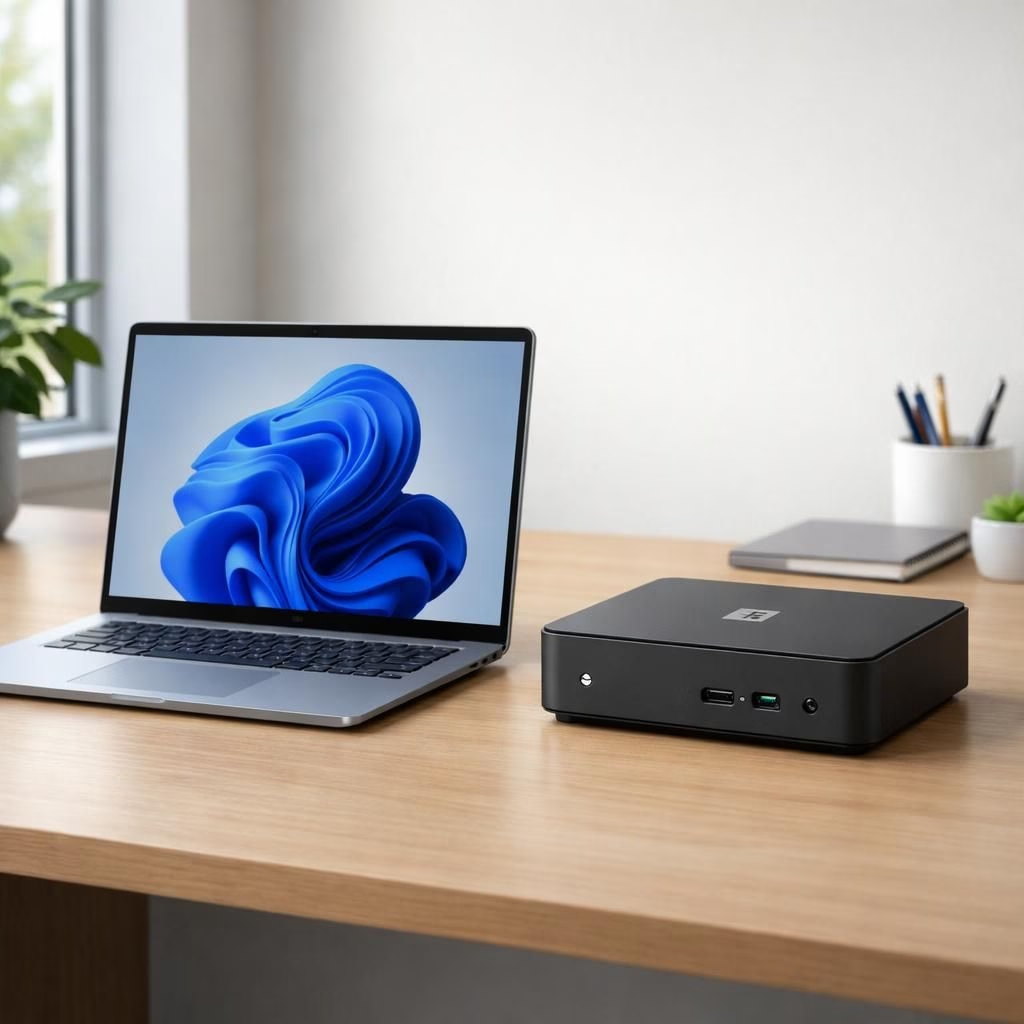
Welcome to a practical look at Microsoft’s 2026 lineup: the Surface Laptop Ultra and the Surface Dev Box. These devices blend everyday portability with heavy-hitting compute, shaping how we work, learn, and build today.
Surface Laptop Ultra: a desk-friendly duet
On the Surface Laptop Ultra, Microsoft leans into a refined keyboard, a comfort-friendly chassis, and a display that stays readable for long documents. The laptop balances portability with performance, emphasizing thermal efficiency so you can join video calls and edit light projects without the fan fuss. The design keeps the heft in check while delivering a chassis that feels durable on a coffee-shop table. The goal is to pair everyday mobility with enough punch for side projects and long sessions, especially in busy workweeks with back-to-back meetings.
For professionals who travel light, the Surface Laptop Ultra remains a thoughtful companion for daily work and daylight meetings. The device is built to stay comfortable through day-long use, offering a responsive keyboard and a display that stays crisp even when your schedule runs late.
Meanwhile, the Surface Dev Box serves as a compact yet capable workstation for developers and AI experiments. It plays nicely with local ML workloads, virtualization experiments, and demo runs. The goal is to let your laptop stay slim while your Surface Dev Box handles the heavy lifting behind the scenes. In a real-world setup, the duo mirrors how teams actually work: the laptop is the portable cockpit, and the Surface Dev Box is the mission control.
For professionals who want to travel light, the Surface Laptop Ultra remains a thoughtful companion for daily work and daylight meetings. The balance of portability and performance makes it easy to carry through airports, co-working spaces, and client sites without sacrificing speed when you need it.
Surface Dev Box: a dev-friendly powerhouse ready for local AI and big builds
The RTX Spark Dev Box stories from HotHardware remind us that local compute can move fast. The idea isn’t to replace the cloud but to provide a robust sandbox where model training, code compilation, and data crunching can happen with minimal back-and-forth. With fast NVMe storage and room for multiple GPUs, the Surface Dev Box becomes a tool for experiments, not a toy.
In practice, the arrangement matters: you keep your Surface Laptop Ultra light for meetings and note-taking, then flip to the Surface Dev Box when you want to iterate on AI models or run heavy builds without waiting. The ecosystem responds when both pieces communicate smoothly through Windows and your favorite dev tools. Surface Laptop Ultra and the Surface Dev Box map to workflows that real teams actually use every day.
NVIDIA, AI chips, and the broader PC scene
Industry chatter around PC chips and AI accelerators is loud, with NVIDIA often at the center of the conversation. The latest GPUs push faster, smarter performance into desktops and laptops, shortening build times and making AI experiments feel more approachable. The hardware is becoming less mythical and more practical for daily labs, hack sessions, and side projects.
Meanwhile, the broader market sees a push to export AI know-how and chip design across borders. Asus, for instance, hints at exporting its AI blueprint worldwide, seeking partnerships to scale AI-ready gear globally. The trend signals that AI isn’t a niche curiosity anymore; it’s a shared toolkit for creators and developers across nations. Euronews.com covered this angle, reminding readers that the AI playbook travels fast and nations adapt quickly.
Asus and the AI playbook: exporting the blueprint
How Taiwan’s Asus plans to export its AI blueprint to the world is a headline you’ll see echoed in trade journals and tech blogs as the year unfolds. The idea is simple: spread practical AI hardware knowledge so teams can experiment locally instead of relying solely on cloud environments. The Verge article paints an optimistic view that the future isn’t just for mega-companies but for hands-on builders like you and me.
When you step back, the takeaway is hopeful. The Surface Laptop Ultra emphasizes day-to-day ergonomics, while the Surface Dev Box pushes the boundary on what you can build locally. The two align with AI-enabled software, improved developer tooling, and faster compiles. If you chase the latest silicon stats, remember that real-world impact often comes from smoother workflows, faster iterations, and a workstation that simply gets out of your way.
All of this paints a picture of a PC era that treats portability and power as complementary rather than competing goals. The journey from bare metal to meaningful productivity looks less like a leap and more like a careful upgrade plan you can fit into a busy week. In 2026, the hardware is catching up to the work we want to do, not the other way around.
Practical workflow tips
- Start a project on the Surface Laptop Ultra for meeting notes, emails, and quick edits.
- Move GPU-heavy tasks or model training to the Surface Dev Box to keep your laptop responsive.
- Sync code and data between devices using your preferred dev tools and local storage for fast iterations.
FAQ
- Do I still need a Dev Box if I have a powerful laptop?
- Not always, but a Dev Box can dramatically speed up heavy workloads, training runs, and complex builds without slowing down your laptop.
- Is the Surface Laptop Ultra good for video editing?
- Yes, it offers a capable display, decent GPU acceleration, and efficient thermals that help maintain performance during longer sessions.
- How do I connect the laptop and Dev Box together?
- Typically via a shared workspace, networked storage, and your standard dev tools that support remote or local workloads. A fast network helps reduce any latency if you’re moving data back and forth.
- When will these devices be widely available?
- Availability varies by region. Check official Microsoft product pages or authorized retailers for the latest timelines.
Original article: A first look at Microsoft’s Surface Laptop Ultra and Surface Dev Box. Thanks to The Verge for the inspiration and for starting a broader conversation about portable power and on-desk compute.