

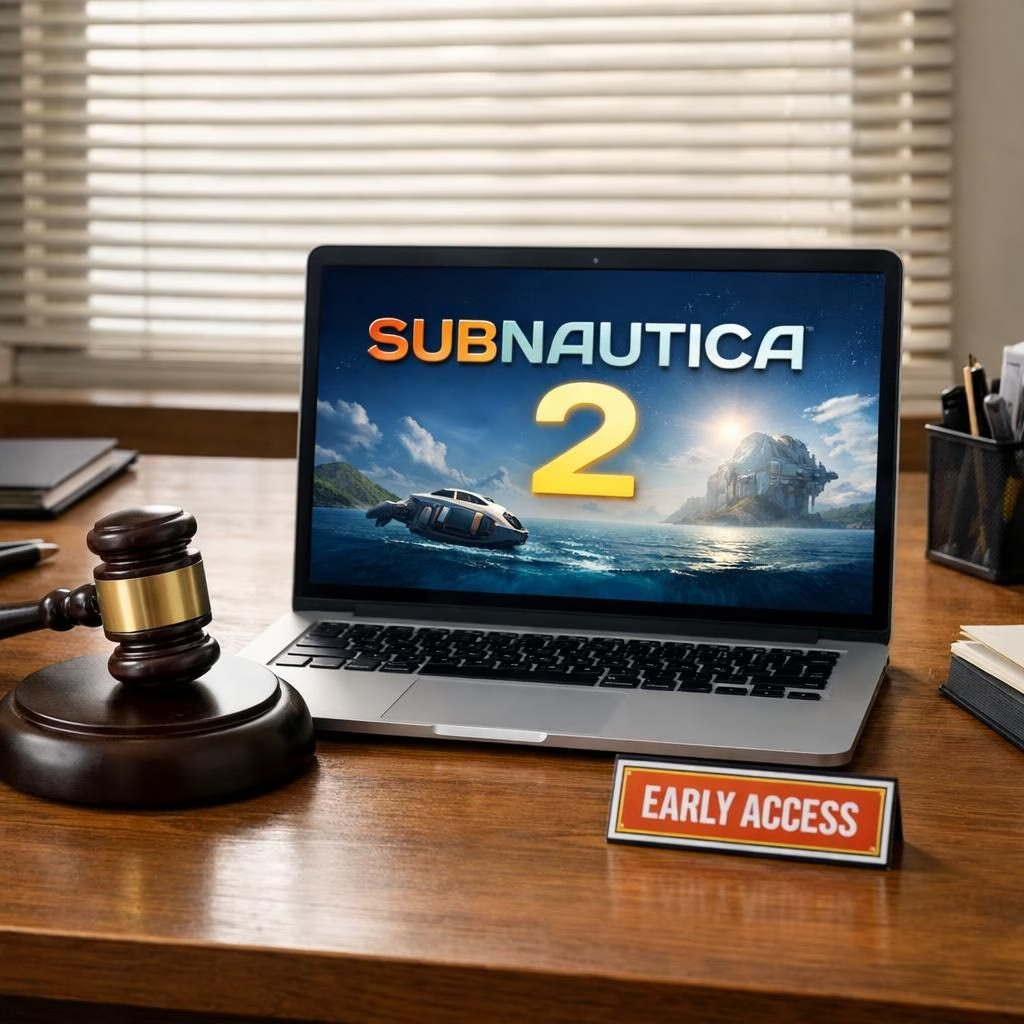
Subnautica 2 fans woke up to a brighter tide today as the legal seas settle, and the CEO reinstatement brings a refreshing dose of clarity to the studio’s governance. The change signals a shift toward accountability and a clearer development path.
Subnautica 2 and CEO reinstatement: A positive reboot for live service games
The decision is not just legal theater; it’s a reset button that could recalibrate how Subnautica 2 and other studios talk about risk and reward in live service titles. In the immediate term, the leadership’s CEO reinstatement will prompt internal audits, contract clarifications, and a renewed emphasis on deliverable milestones. Teams will likely adopt leaner, more predictable development cycles to meet the court-ordered expectations while still preserving space for experimentation. Fans desire a product that ships with polish rather than perpetual patches, and this ruling creates a framework that could help transform early access into a genuine learning phase rather than a waiting line. In 2026, we may see a pattern where transparency, not drama, defines the relationship between developers and players.
From an investor’s lens, clarity reduces risk and improves the ability to forecast budgets and releases. A well-documented governance structure lowers the odds of surprise leadership changes and the churn that follows. For the studio’s culture, the outcome could be a healthier workplace where milestones are celebrated, not muttered about in the break room. For the community, predictable cadence helps creators align their own schedules around content drops, events, and community initiatives. The court’s intervention is not a vendetta; it’s a negotiated protocol that, if executed well, can yield a more durable product road map, better QA cycles, and a kinder user experience during the early access window in 2026. The ongoing governance shift, driven by the CEO reinstatement, should reassure partners and players alike.
Subnautica 2, CEO reinstatement, and a calmer path for early access
Beyond the courtroom drama, this turn offers a chance to talk about how studios balance ambition with accountability. Investors typically applaud clarity; fans appreciate transparency; and teams gain a dashboard for progress rather than a fog of ad hoc decisions. The user community is used to patient enthusiasm, but even the most devoted crowds crave a sense that leadership listens. If the studio translates this governance reset into reliable roadmaps and quality patches, the early access phase could become a showcase rather than a bottleneck. The 2026 horizon invites a new kind of collaboration between developers and the communities that keep the game alive during the wait. The governance shift and its CEO reinstatement could become a model for sustainable pacing going forward.
Another angle worth noting is how this affects crunch culture and resource allocation. When leadership alignment returns, teams can prioritize sustainable schedules over heroic, overnight sprints. In practice, expect more frequent but smaller updates, tested validations, and quieter nights for QA testers. That alignment also reinforces the value of the CEO reinstatement as a governance signal.
Industry watchers might also see this as a reminder that legal mechanisms can serve as a check on hype cycles. The initial surge of announcements and leaks can give way to calmer, more deliberate communication. A well-timed press release here, a thoughtful blog post there, and a stable patch cadence can transform uncertainty into confidence. For Subnautica 2 and its negotiating table, the goal remains simple and noble: keep the boat steady, steer with listening ears, and deliver on promises without sacrificing creativity.
On a lighter note, this whole sequence reads like a well-scripted patch note: some bug fixes, a few performance improvements, and a public expression of gratitude toward the players who stuck with it. If governance changes hold, we may see fewer dramatic news cliffhangers and more constructive updates that actually land in your library with minimal fanfare and maximum polish. The takeaway is that a clear governance path can coexist with bold experimentation, and that combination makes the Subnautica universe more inviting in 2026.
In a broader sense, the court-ordered reinstatement marks a turning point where legal clarity meets creative ambition. The studio gains the runway to refine its early access program, and players gain a reliable horizon to look forward to. That balance is worth cheering for, and it reflects a broader trend in gaming toward transparency, accountability, and steady improvements. A well-governed launch feels a lot nicer on the nerves than a surprise patch parade.
Source notes and thanks
- Original reporting from Kotaku via Google News
- Bloomberg.com coverage
- IXBT.games reporting
- TechRaptor coverage
- Bloomberg Law News
What are your thoughts? Share your ideas and reactions in the comments below.
External reading
- The Verge coverage on live-service games governance
- Bloomberg Technology coverage on leadership in gaming
References
Original article sources: Kotaku, Bloomberg.com, IXBT.games, TechRaptor, and Bloomberg Law News. Special thanks for the original material.
What are your thoughts? Share your ideas and reactions in the comments below.