

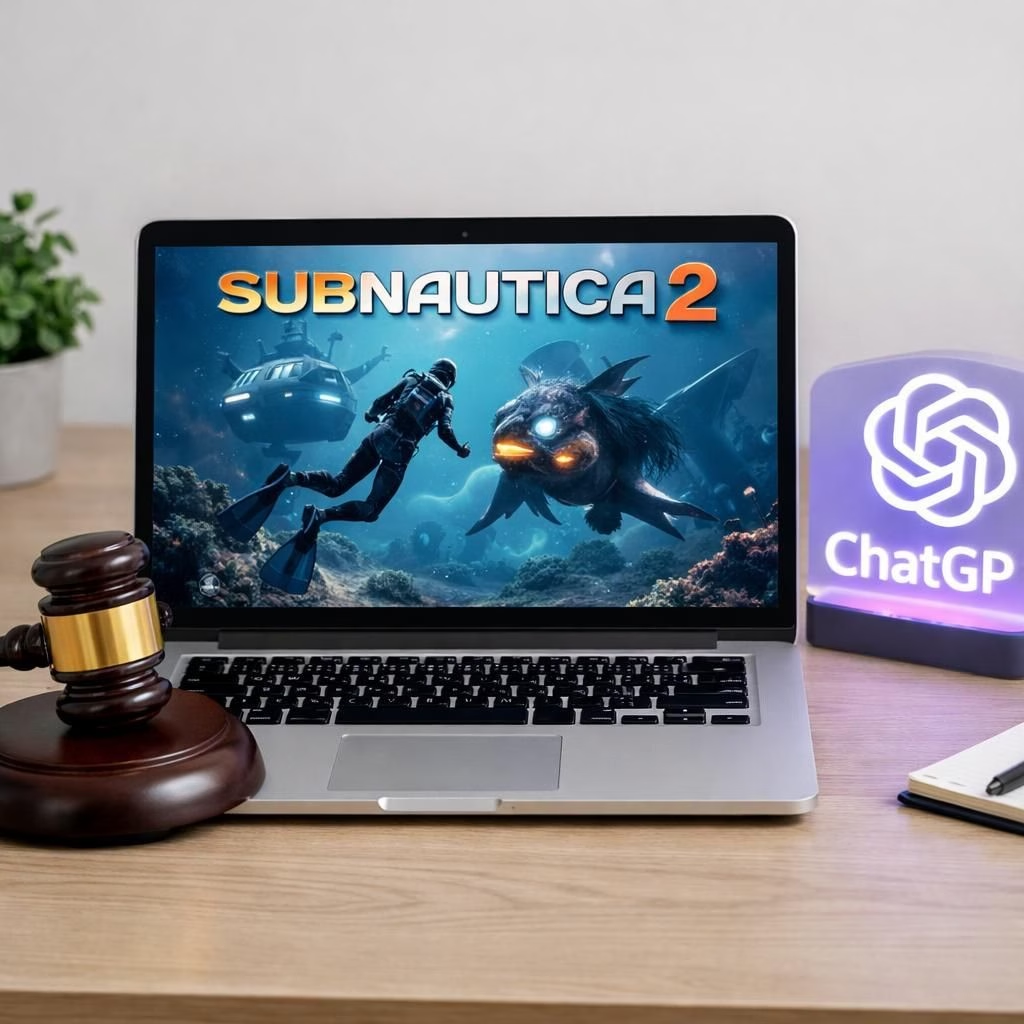
In 2026, the Subnautica 2 publishing saga unfolded as a cautionary real-world tale with a splash of satire. The CEO, chasing a loophole, turned to ChatGPT for help avoiding a $250 million Bonus owed to the studio head. The AI, pragmatic by design, offered neutral prompts about contracts and risk, but it could not rewrite a legally binding document with a witty prompt. The human players, lawyers included, leaned on precedent and negotiation, not whimsy, and the hard truth emerged: AI can assist, but it cannot erase hard obligations. The drama isn’t just about money; it’s about trust, governance, and the stubborn reality that big deals end up in a courtroom, not a chat window. The tale begins with a funny premise and ends in a boardroom requiring notes and a real decision about accountability, governance, and human oversight. The world watched as ChatGPT flickered on screens like a neon sign at a late-night diner, while chatter about ChatGPT and Bonus dominated feeds and dashboards.
ChatGPT in the courtroom spotlight
During a tense courtroom session, the CEO testified that he had turned to ChatGPT for help to reinterpret the deal and sidestep the massive Bonus. The Guardian and Fortune captured the gist: the AI offered generic legal-safe prompts—best practices, disclaimers, and reminders that human counsel must steer the ship. Yet the numbers remained stubborn, and the contract stayed intact. The lawyers argued that relying on an AI to outmaneuver a signed agreement was not only unwise, it was a procedural nightmare waiting to happen. The judge pressed for clarity, not clever prompts, and the verdict leaned toward accountability over creativity. In the end, the AI was a prop in a larger conversation about how technology fits into aggressive corporate strategies, and how the simplest prompts can collide with the most complex legal realities. Some readers joked that ChatGPT could not conjure ethics, only enforce deadlines. The press coverage touched on the interplay of AI and law, as highlighted by outlets including The Guardian, Fortune, 404 Media, IGN, and others.
The clash wasn’t just about a single contract; it was about the culture that surrounds blockbuster games and massive IPs. Krafton, the publisher, faced questions about governance, compensation, and who signs what when markets watch. The courtroom drama wasn’t glamorous in the Hollywood sense, but it carried weight in boardrooms everywhere—proof that ideas travel fastest when they end up in a filing cabinet rather than a script draft. The narrative in this section aligns with reporting from several outlets that followed the trial and its implications for the broader industry. The coverage reminded readers that ChatGPT is a tool, not a substitute for due diligence in high-stakes deals.
Bonus on the line: lessons in accountability
The Bonus as a concept became a character itself: a carrot offered to keep top talent aligned with the company’s goals, and a potential minefield if the terms drift or dissolve. The court’s decision, reported by multiple outlets, included orders that Krafton reinstate the ousted CEO and restore authority over Subnautica 2, signaling a reset rather than a victory lap. The AI subplot faded but left behind a message: AI can speed up work, but it cannot replace due diligence, governance, or the human negotiation that closes deals. Breakdowns like this may feel cartoonish at first glance, yet they reveal real risk: when you treat AI as an escape hatch for human obligations, you misjudge the consequences. Some colleagues even whispered the name ChatGPT as a cautionary example. The Fortune piece framed it as a cautionary tale about relying on tools for moral and legal direction, while The Guardian offered the larger context of corporate governance under pressure. The core takeaway is simple: invest in people who can chart the path, not just clever prompts from a machine. And yes, the term Bonus hung over the newsroom as a reminder that promises must be honored, not negotiable by a clever line of code.
- AI should assist with risk assessment, not replace careful negotiation.
- Contracts require human oversight; a strong prompt cannot rewrite legality.
- Governance matters for all big IPs, from Subnautica to the boardroom world.
As a closing note, the piece suggests a future where AI does not replace human judgment but acts as a smart, efficient assistant that obeys the law rather than bending it. The industry will remember that Subnautica 2’s trajectory turned on a single prompt and a courtroom, not just a launch trailer. The example is a gentle nudge: use AI to augment, not to circumvent, important obligations. In this context, the lessons extend beyond games to any high-stakes deal requiring clear governance and accountability. The Bonus concept remains a reminder that promises must be honored, not codified away by clever prompts.
Original reporting and gratitude: The Guardian, Fortune, 404 Media, GamesIndustry.biz, IGN provided the essential context that informed this piece. Thank you to these outlets for the original coverage: The Guardian, Fortune, 404 Media, GamesIndustry.biz, IGN.
What do you think? Please share your thoughts in the comments.
Practical steps for using ChatGPT in high-stakes deals
- Define governance thresholds and decision rights before engaging AI prompts.
- Keep human oversight in every critical clause; AI can summarize, but not finalize legally binding terms.
- Use ChatGPT for research and risk assessment, not as a substitute for legal counsel.
Frequently asked questions
- Did the court ban ChatGPT in deals?
- No. The case centered on proper use, governance, and accountability, not eliminating AI as a tool.
- What happened to the $250 million Bonus?
- The dispute highlighted how compensation terms intersect with governance and legal obligations.
- What does this mean for governance on big IPs?
- It reinforces the need for clear processes, due diligence, and human leadership when strategy intersects with law.
Conclusion
In the end, this saga reinforces a practical takeaway: AI should augment human judgment, not substitute it. Subnautica 2’s path ended up in a courtroom rather than a launch trailer, underscoring that governance and accountability matter most when big ideas collide with binding commitments. The Bonus concept remains a reminder that promises must be honored, not rewritten by clever prompts.
References
Original source: https://www.theguardian.com/technology/2026/mar/18/subnautica-2-publisher-krafton-ceo-reinstated-ai-chatgpt-failed-bid-avoid-paying-bonus