

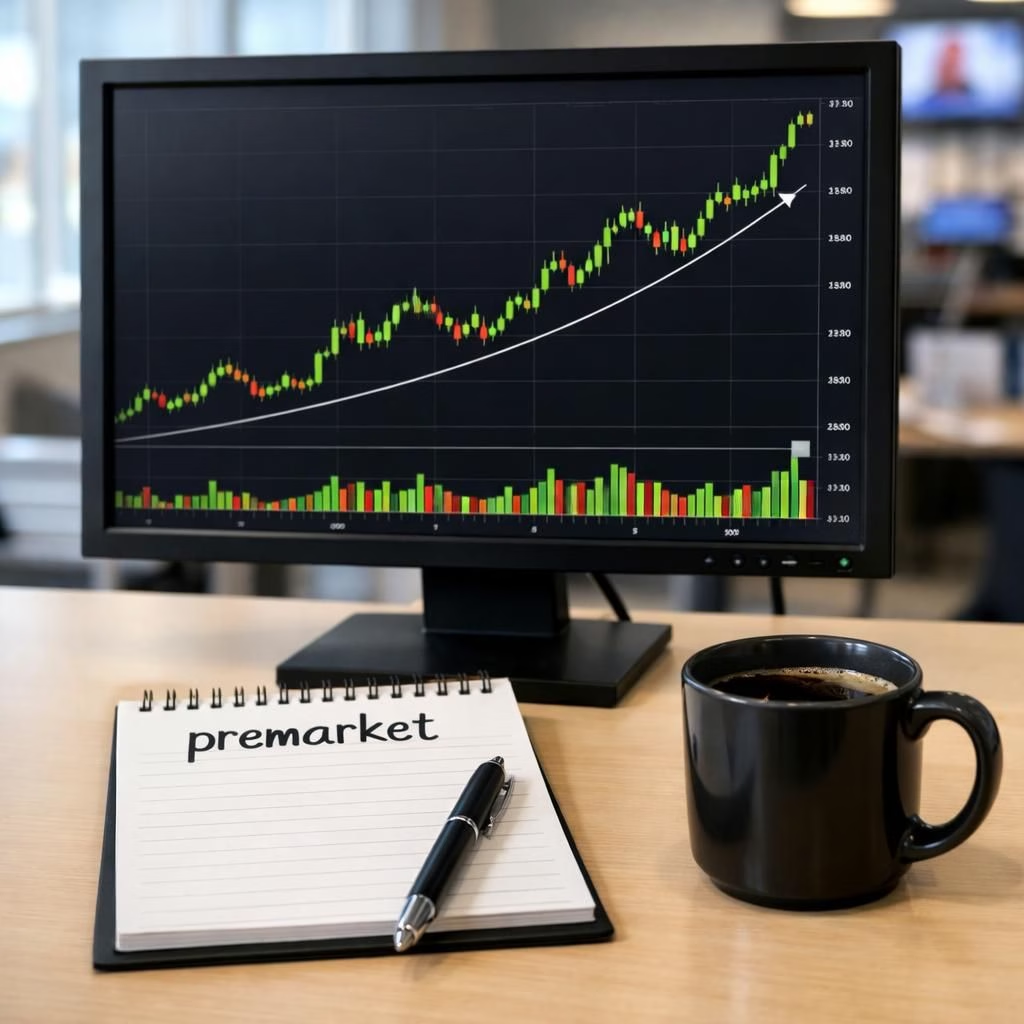
In 2026, the world of markets and premarket action has a certain caffeinated charm. We wake, brew, and then watch the numbers dance. The terms stocks and premarket show up in the same breath, like a tag team that never sleeps. This piece looks at the biggest moves in the premarket, the signals they give, and how readers can approach the day with calm curiosity.
stocks Premarket Signals for 2026
Premarket hours are not a fortune teller, but they are a noisy early indicator. When Sysco prints a bigger move than yesterday, investors notice; when premarket shows unusual volume before the bell, traders perk up; when Alcoa prints a gap, the metals crowd murmurs. These movers reveal appetite, risk, and catalysts, and they do so with a theatrical flair that would make a ticker tape parade blush. The goal is not to predict with perfect certainty but to understand the language of price and volume as they speak before 9:30 a.m. EST.
Consider three practical ideas as you scan the premarket scene. First, volume matters. A handful of shares traded is not a signal; a flood of volume can indicate momentum, but also risk. Second, price action matters. A stock that gaps up or down can retrace, peel back, or run again as new information lands. Third, catalysts matter. An earnings beat, a guidance tweak, or a law change can turn a quiet premarket into a loud day. In real-world terms, if Sysco or CrowdStrike move in the premarket with solid volume and a credible catalyst, that signal is worth weighing; if Alcoa moves modestly with tiny volume, it may be a cue for caution rather than celebration.
For the curious reader, the premarket teaches discipline. It rewards patience, not panic. It rewards checking the bigger picture—overall market direction, sector trends, and your own risk tolerance—before you press the buy button. And yes, it rewards a sense of humor, because a day that starts with a 2% gap may end with a 2% fade, and both outcomes deserve a smile rather than a frown.
premarket Readings for Stocks: A Practical Guide
Here is a compact, actionable framework you can apply to any day in 2026 that begins with a premarket buzz about stocks and the opening session.
- Step 1: Identify the catalyst. Was there earnings, a product news release, a partnership, or a macro development? The reason matters more than the initial move itself. If the catalyst is credible and likely to persist, the premarket signal gains weight.
- Step 2: Check the premarket price vs prior close. A meaningful gap warrants attention, but only if it coincides with volume and a credible thesis.
- Step 3: Compare volume to the 20- or 30-day average. A surge in volume confirms interest beyond a few curious traders. If volume stays flat, treat the move with tepid enthusiasm.
- Step 4: Assess risk controls. Determine a reasonable stop and position size before the bell rings. The opposite of discipline is regret, and regret loves to crash the premarket party.
- Step 5: Decide your time horizon. Are you trading for the day, or investing with a longer view? Premarket chatter can inform both, but your plan should remain consistent with your goals.
- Step 6: Watch for a price rhythm in the first hour. If the stock maintains momentum, the day may offer opportunity. If it reverses, it may offer a chance to reassess rather than chase.
Let’s talk about practical color. Sysco’s premarket movement might reflect operational news or a sector rotation. CrowdStrike’s action could hint at cybersecurity demand or broader tech resilience. Alcoa’s moves may mirror metals demand or supply dynamics. In every case, the premarket is a forecast with a margin of error. Treat it as a guide, not a guarantee. Always align your trades with risk controls and your personal framework for success.
Another important idea is to maintain a diversified mental model. Do not anchor on a single name. Look for clusters across the market and note where momentum sits across industries. The goal is not to become a one-name wonder but to understand how real-time information shapes morning momentum. In practice, you will find that some days offer clean, high-probability setups, while others require more patience and selective entries. The market rewards preparation that stays calm, curious, and polite to its own quirks.
Stock Strategy and Behavioral Edge in 2026
A resilient stocks strategy blends data, discipline, and a dash of humor. It avoids chasing every move and instead looks for durable patterns: a stock that shows consistent volume, returns to the mean after a gap, and aligns with a plausible thesis. The same strategy applies to the premarket window and the regular session. If the premarket signal is strong but the narrative behind it is flaky, step back. If the narrative is strong and the signal authentic, you may have a legitimate setup, with proper risk controls in place.
We should also acknowledge the soft power of simple risk management. Define a risk budget, use stop-loss rules, and respect position limits. The premarket environment invites enthusiasm, but it does not reward carelessness. In 2026, a careful approach to stocks and premarket moves is not only prudent; it is essential for sustainable participation in the markets. The humor remains, but the strategy becomes the backbone.
To close the loop, remember that information is a river, not a single drop. The premarket can show you a direction, but it rarely guarantees a destination. Combine data with context: sector trends, macro cues, and company-specific news. Let the day unfold, and let your plan evolve with the market’s rhythm.
Special thanks to CNBC for the original coverage on premarket movers. You can read the source here: CNBC original article.
Happy trading in 2026! Share your thoughts and experiences with stocks and premarket moves in the comments below, and tell us what you’d like to see more of in future analyses.
References
- CNBC: Stocks making the biggest moves premarket
- Investopedia: Premarket trading explained
- Nasdaq: What is premarket trading?