

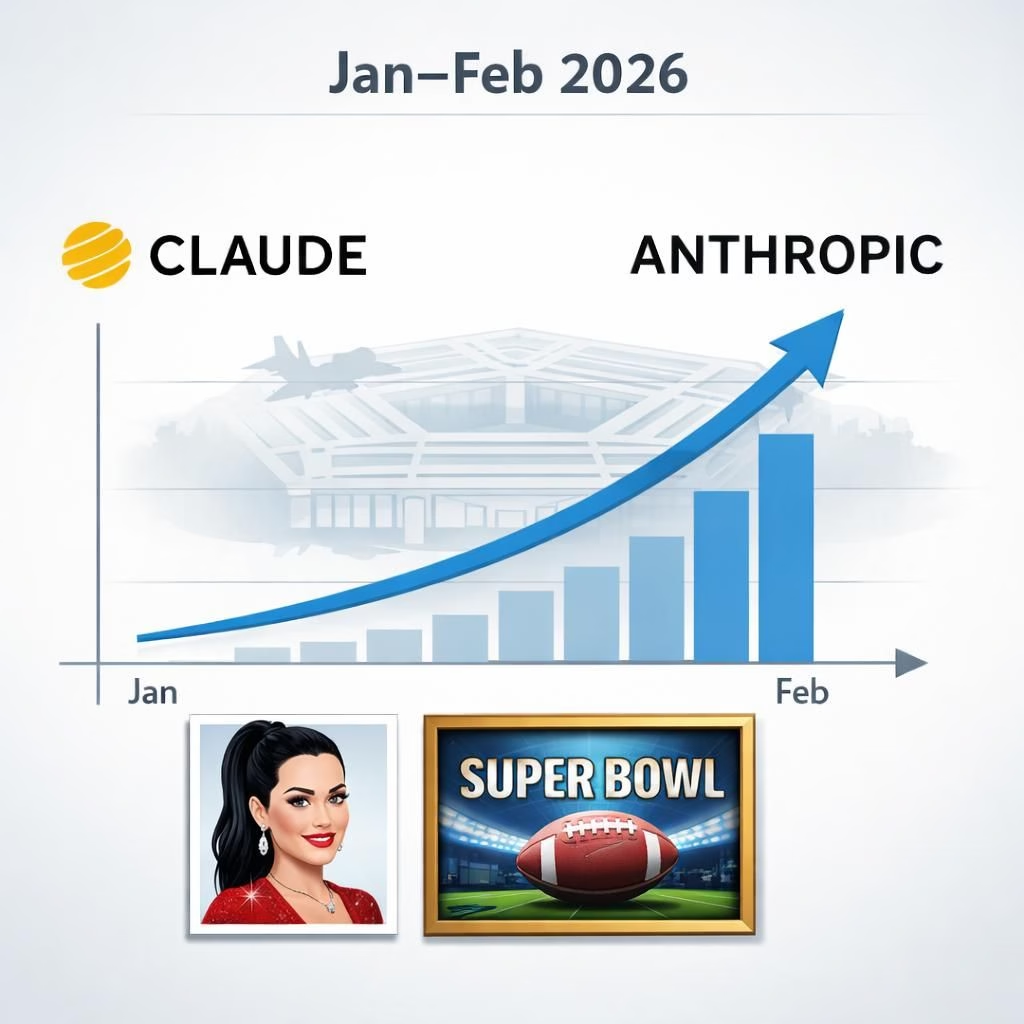
Claude and Anthropic found themselves in headlines as a Pentagon dispute briefly turned into a consumer growth engine. An Indagari analysis of anonymised credit-card data from roughly 28 million US shoppers shows subscriptions to the platform more than doubling in January–February 2026, with the majority choosing the $20 Pro tier.
Claude Anthropic: The 2026 Subscriptions Surge You Couldn’t Ignore
Digging into the numbers, the TechCrunch-published analysis carried by Indagari paints a clear picture: subscriptions for the platform surged in January and February 2026 as conversations about AI ethics and governance intensified. The data set centers on billions of anonymised credit-card transactions from roughly 28 million U.S. consumers, offering a rare intersection of tech hype and real-world purchasing behavior. The report confirms subscriptions more than doubled during the period, with a strong bias toward the entry-level Pro tier at $20 per month.
Anthropic vs. Pentagon Drama Boosts Claude’s Momentum
The growth timeline aligns with late January, when outlets like the Wall Street Journal and Axios began detailing a dispute between Anthropic and the United States Department of Defense over how its AI could be used. The resulting coverage framed Claude’s value proposition as safe, governance-forward AI with clear boundaries, making the proposition feel more tangible to potential buyers who had previously treated AI as a distant, glossy technology. The Indagari data show a spike in subscriptions as the controversy intensified in February, suggesting that audiences didn’t just read about the fight — they acted by subscribing.
The DoD’s pushback, including warnings about supply-chain risk, added friction for corporate buyers but reinforced the perception that Anthropic is serious about governance. This narrative resonated with risk-conscious subscribers who value alignment with stricter norms, and it helped translate media attention into practical engagement through the Pro tier at $20 per month.
The public-relations arc also included cultural touchpoints that amplified Claude’s visibility. Katy Perry’s decision to subscribe to Claude’s top tier became a social-media moment, while a series of Super Bowl ads targeted a well-known rival with witty, indirect jabs. OpenAI’s Sam Altman weighed in publicly, reminding the industry that bold messaging often invites responses from major players. Anthropic also found itself part of the cultural conversation as the stakes around governance grew.
Beyond the PR theater, the data highlight a practical consumer behavior shift: new subscribers leaned toward the Pro tier, signaling intro-level adoption with the option to scale. In a market where enterprise contracts and defense partnerships can be slow-moving, a broadly accessible entry point matters. The $20 price point lowers the barrier to trial, enabling more users to experiment with governance, safety, and user experience. For analysts, this pattern suggests that a governance-forward story, paired with a transparent pricing ladder, can create a durable subscriber base even amid geopolitical and competitive turbulence.
From a competitive standpoint, the Claude-Anthropic growth story complicates the OpenAI narrative. The public-facing jab of the Super Bowl ads—tied to policy-oriented positioning—added nuance to the risk profile of a high-profile dispute. OpenAI’s leadership, including Sam Altman’s public reactions, underscores how the AI market remains as much a social-political theater as a technical marketplace. Yet the data-driven growth in January and February 2026 cannot be dismissed as mere PR gloss. Indagari’s anonymised credit-card data captures real consumer behavior, reflecting a decision by a not-insignificant slice of users to engage with the platform through the Pro tier during a period of notable public discourse about AI governance and national security concerns.
For readers navigating the AI tools ecosystem, a few takeaways emerge. First, a governance-forward narrative can translate into practical adoption if paired with a pricing strategy accessible to a broad audience. Second, cultural moments—celebrity sign-ups, memorable ads, and selective public statements—can act as amplifiers, increasing the likelihood that curious users dip their toes into a platform. Third, and perhaps most crucially, a credible stance on autonomy, surveillance, and weapons use matters to many prospective users who weigh not only capabilities but policy alignments when choosing an AI assistant for daily tasks.
As we watch 2026 unfold, the Claude-Anthropic arc serves as a case study in how controversy, governance, media storytelling, and a sensible pricing ladder can move a tech product from niche curiosity toward broader, real-world usage. The data suggest that users are listening—and paying—when the narrative aligns with their values and budgets. Whether you’re a casual user, a small-business founder, or a policy-minded reader, the period January–February 2026 offers a useful reminder: trust and accessibility can be powerful growth engines when paired with a crisp, credible message.
Original reporting by TechCrunch inspired this recap. Thank you to TechCrunch for the original data and narrative material: TechCrunch.
Have thoughts? Share them in the comments below.
Practical takeaways for evaluating AI tools
- Look for governance policies that the vendor publicly commits to and how they translate into product behavior.
- Test pricing ladders that include an approachable entry tier to gauge real-world value before enterprise commitments.
- Watch for cultural moments (celebrities, campaigns) as signals of broader market resonance—not sole drivers of adoption.
Frequently asked questions
- What explains the surge in subscriptions?
A governance-forward stance, broad media coverage, and a low-cost entry point encouraged trial and adoption. - Why does the Pro tier matter?
It lowers the barrier to experimentation, helping users assess how governance features translate into daily use. - What role does Anthropic play in governance?
Anthropic’s stated policies and guardrails influence perceptions of safety, privacy, and responsible AI use among prospective customers. Anthropic‘s leadership argues for stricter norms in the industry. - Is this growth sustainable?
Early momentum is clear, but longer-term adoption depends on continued governance signals, product value, and enterprise demand.
Takeaway: For buyers and builders evaluating AI tools, governance clarity paired with accessible pricing matters. The Claude-Anthropic arc from early 2026 demonstrates how narrative and credibility can translate into real usage. For next steps, consider testing a low-friction onboarding path and watching for governance signals from vendors like Anthropic in policy areas.
References
External sources for further reading: TechCrunch, Wall Street Journal, Axios.