

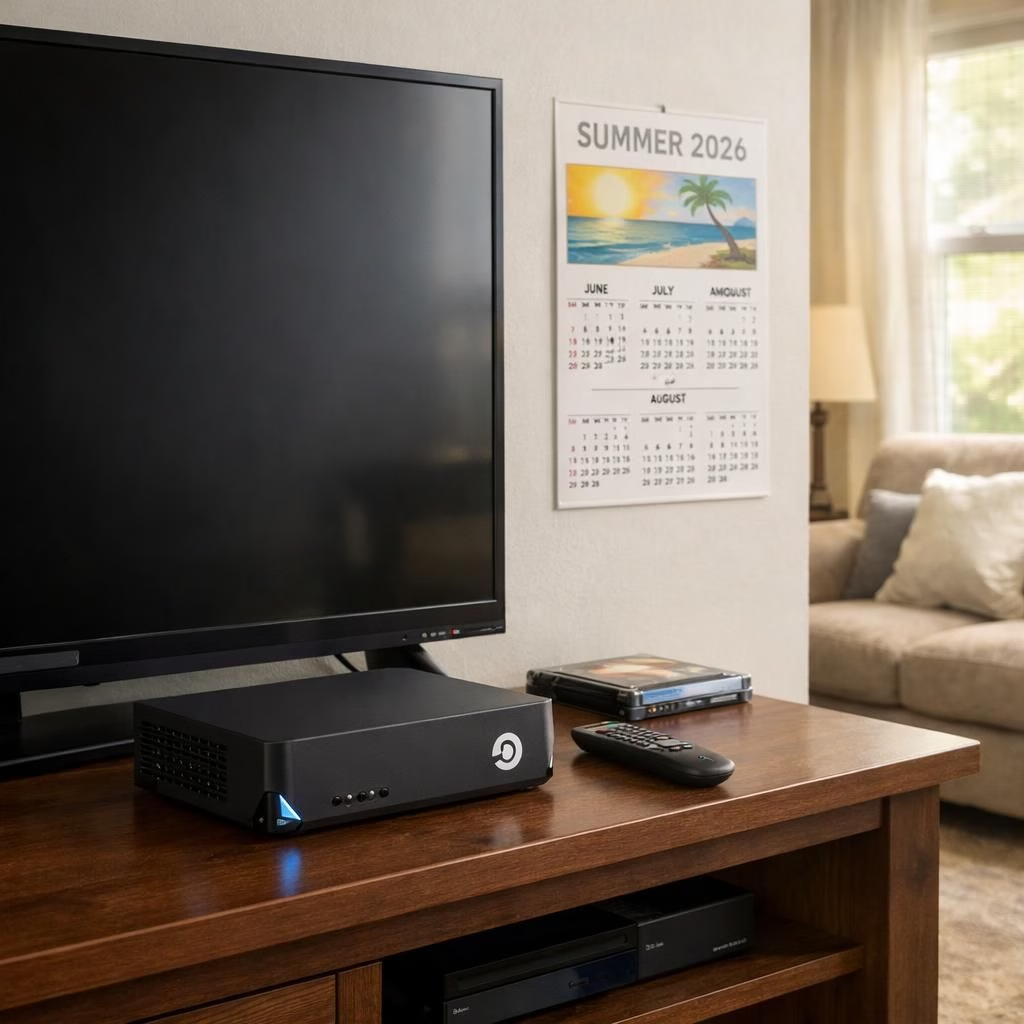
Steam Machine chatter is back with a sunny twist: Valve says the Steam Machine is ready to ship this Summer, and the internet nods in amused agreement. The core truth stays simple: Valve pushes a living-room PC concept into mainstream consciousness, with the Steam Machine and the Summer cadence guiding media cycles and gamer expectations. In this lighthearted update, we translate press quotes into practical takeaways for gamers and developers alike, aiming for clarity over hype.
Steam Machine Summer Preview: Realistic expectations
First, let’s separate hype from hardware reality. Valve hints at a ship window this Summer. That phrase matters more than flashy demos. A “this Summer” window gives room to ship, update, and adjust without fanfare. The coverage from major outlets stays pragmatic. Buyers want a clear path from idea to shelf. The Steam Machine remains a concept blending PC flexibility with a console-like ease of use. The dual aim is broad appeal and solid support. The Summer terms keep circling back, like a favorite game loop. Valve’s approach prioritizes compatibility, not gimmicks. The takeaway for buyers is simple: expect an ecosystem that grows with time, not a single gadget that stops at unboxed glory.
Design discussions point toward accessibility. A compact chassis, careful cooling, and a friendly price tend to dominate chatter. If the hardware lands as expected, you’ll get a tidy box that sits under a TV and above the coffee table. The narrative remains patient, which suits a world where software updates mature long after a hardware launch. Fans crave a reliable base, a steady cadence of patches, and a library that grows rather than shrinks. The repeated emphasis on Steam Machine and Summer in coverage signals a plan that favors gradual growth over a flashy spectacle.
Steam Machine and the Steam Frame: Practical Details for Summer
The teased Steam Frame reveals a design direction rather than a single device. Expect a modular vibe, a focus on heat management, and humility about price. The real payoff would be a system that feels ready for both casual play and marathon sessions. SteamOS refinements are likely to accompany hardware, smoothing setup, friendlier account flow, and better compatibility with a broad range of games. In this frame, the Steam Machine becomes less a one-off product and more a platform with a familiar baseline. The Summer window keeps expectations aligned with updates and ongoing support rather than a single event.
From a user-experience angle, the emphasis is on turning on a screen, picking a game, and starting to play. Fewer menus, more speed. SteamOS improvements could cut install friction and improve controller-to-PC mapping. If these moves land, the device will feel like part of a living-room routine rather than a curious lab project. The atmosphere around Steam Machine and Summer remains practical: a balance of performance headroom and ease of use, with room to grow as developers adapt to the platform. You’ll hear less about novelty and more about reliability and a smoother onboarding path for new players.
Steam Machine setup: quick-start checklist
- Unbox and connect to a TV or monitor, then attach a controller or keyboard.
- Power on and follow the on-screen setup wizard for SteamOS.
- Sign in to your Steam account and configure wireless peripherals.
- Adjust display and audio settings for your living room layout.
- Check for OS updates and begin exploring the library.
What this means for buyers, streamers, and DIYers this Summer
For buyers, the path seems approachable and friendly. Bundle options may appeal to families and roommates who want a simple setup with a clear upgrade path. For streamers, the promise of low-latency streaming, a robust library, and approachable shareability matters. DIYers can appreciate a platform that invites tinkering without voiding warranties. The messaging stays warm: you can attach a Steam Machine to a TV and a soundbar, or pair it with a monitor for desktop use. SteamOS remains a selling point by reducing configuration anxieties and offering a familiar storefront with a capable runtime.
The Summer timeline gives developers a runway to bring titles to SteamOS with confidence. It also invites publishers to consider cross-play and cross-platform improvements, since Steam Machine aims to be a bridge rather than a barrier. Consumers are likely to welcome a living-room PC that respects the ergonomics of lounging, gaming, and occasional multitasking. The ecosystem’s growth hinges on practical patches, accessible support, and a library that keeps expanding as more games land on SteamOS.
In practical terms, this Summer release could become a quiet catalyst for a broader PC-to-TV movement. You can imagine a future where the living room becomes less about a console and more about a versatile PC that plays nicely with a controller, a keyboard, or a touch screen. The appeal is clear: fewer setup hassles, more time spent playing, and a sense that the platform is listening to its users. Steam Machine and Summer here signal a deliberate, incremental evolution rather than a bold leap.
For families and shared living spaces, the message is that this is a device you can actually rely on for multiple users and moods. For hardcore PC builders, there’s a note of respect for the underlying flexibility. For educators and students, there is potential for a shared but powerful computing experience that does not feel out of reach. The Summer window can serve as a soft landing for these different use cases, with updates designed to smooth out any rough edges and broaden compatibility over time.
All told, the Steam Machine narrative remains resilient. Valve’s Summer timeline gives engineers something concrete to chase, and it gives consumers something hopeful to anticipate. If the hardware aligns with expectations, the story shifts from rumor to routine, with a platform that honors PC power while delivering living-roomsimplicity. The long view should emphasize upgrades, compatibility, and a calmer onboarding process. Steam Machine and Summer together spell a measured, user-centric path forward rather than a frantic sprint to a single launch moment.
Original reporting and quotes from The Verge, Engadget, ScreenRant, Kotaku, and Notebookcheck are gratefully acknowledged here. A special thank you to The Verge for the original material that sparked this discussion. For more context, see the linked sources in the attribution below.
We invite you to share your thoughts in the comments.
Original reporting: The Verge. Thank you for the original material that sparked this discussion.
FAQ
- Q: When is the Steam Machine shipping?
A: Valve has targeted a Summer window with ongoing updates rather than a single launch. - Q: What is Steam Frame?
A: A design direction and platform concept intended to bundle modular hardware with SteamOS refinements. - Q: Will SteamOS support new hardware?
A: Valve is expected to refine compatibility and onboarding as hardware evolves. - Q: Is this a good option for families?
A: The narrative emphasizes living-room practicality, easy setup, and shared use across multiple users. - Q: How does this affect PC-to-TV adoption?
A: If updates stay steady, it could nudge more living rooms toward a controller-friendly PC experience.
Bottom line
The Steam Machine strategy aims for measured, user-centric growth rather than a single, splashy launch. If the plan holds, expect gradual hardware refinement, a robust OS, and a living-room experience that scales with software updates. For now, mark the Summer window on your calendar and watch for practical improvements.
References
Original reporting: The Verge. Thank you for the original material that sparked this discussion.