

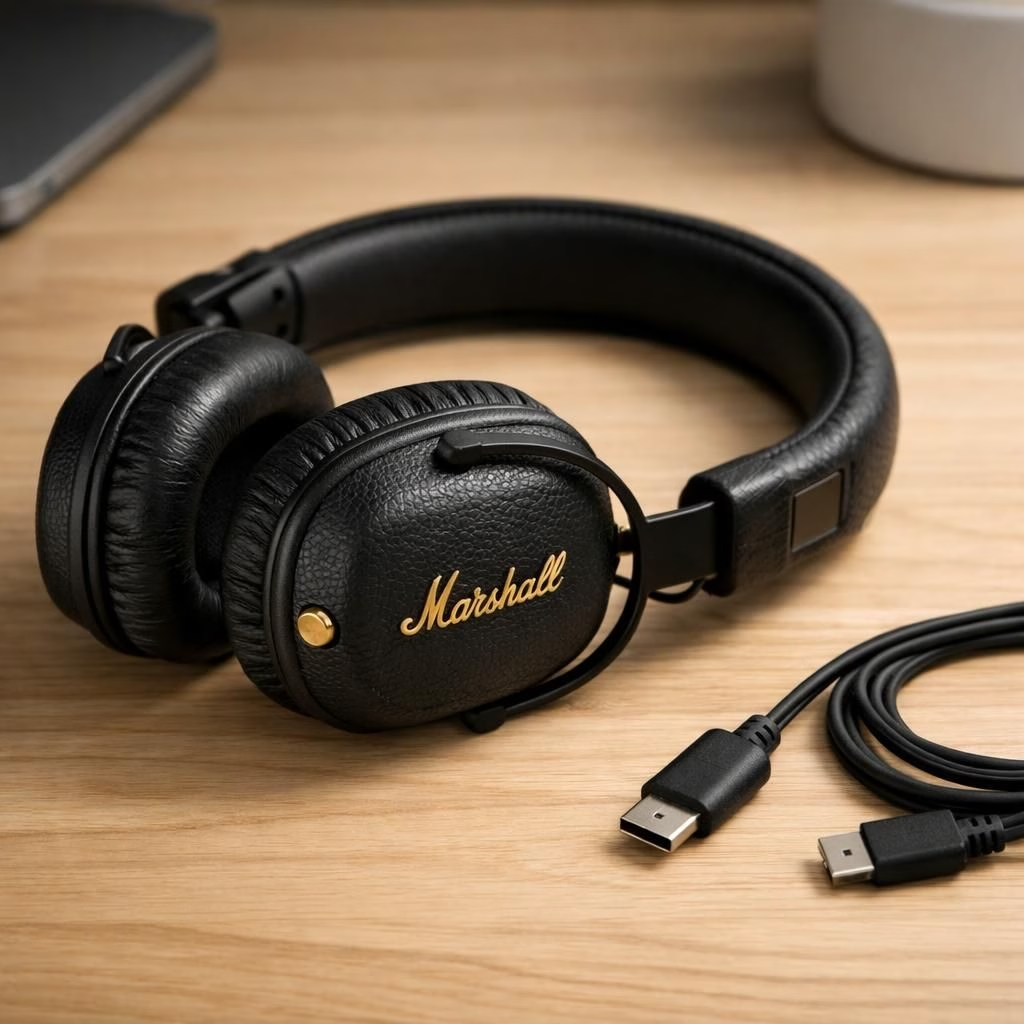
premium-on-ear-ANC is finally a thing, and the Milton proves that a rock-solid on-ear can offer more than style. Tag B sits confidently between Major and Monitor as a third pillar, a category-defining package that knows where it shines: battery life, design, and a surprisingly robust app.
premium-on-ear-ANC: Milton bridges Major and Monitor with style
The Milton introduces a premium on-ear ANC experience without pretending to be something it isn’t. It borrows DNA from the Monitor for finish and shape, and from the Major for compact size and everyday comfort. In 2026, that blend feels refreshingly practical: you get a sturdy build, gentle clamping, and a design that doesn’t shout, it hums. premium-on-ear-ANC remains the star here, delivering a calm that doesn’t erase character. Tag B also promises that you can tune things up in the app and still ride the vibe.
Inside are 32mm drivers that keep a balance between warmth and snap. The right ear cup hosts a multifunction control and a left button that you can customize to toggle ANC, EQ, Soundstage, or summon your voice assistant. The Milton is wireless, but Marshall includes a USB-C to 3.5mm cable for wired listening when needed. A user-replaceable battery and removable ear pads extend long-term use, which is exactly the kind of practical detail I appreciate in 2026.
marshall-milton: Design DNA, Battery Life, and App Power
Marshall’s design language feels like a lifestyle choice, and the Milton wears it well. You’ll see the tolex-like finish, brass accents, and the familiar Marshall logo. It’s not trying to be subtle; it’s leaning into the heritage with confidence. Tag B is the practical cousin of the brand’s bigger cans, tuned for on-ear use rather than a full-sized studio setup. The build is sturdy yet comfortable enough for daily wear, and the weight is just right for long listening sessions without fatigue.
The companion app is surprisingly capable. It isn’t an afterthought; it’s a surprisingly polished control center. From the home page you can switch noise control modes, adjust an ANC level, and save a preferred EQ. The app also supports Soundstage, a spatial-audio option Marshall calls its own flavor of immersion. You can enable Auracast for broadcasts, join sessions, or create a custom profile and save it for later. premium-on-ear-ANC here means you aren’t stuck with a fixed feel—your personal sound can live in the cloud, so to speak. Tag B benefits from a well-integrated ecosystem that feels less like software fluff and more like a helpful tool.
Battery life is a real talking point. Marshall quotes 50+ hours with ANC on and up to 80 hours without ANC. In daily use I found the Milton easily covering days of gym, commute, and long listening sessions without demanding a recharge. The battery is user-replaceable, which is a rarity at this price point, and the ear pads come off for easy refreshes. If you want a headset that won’t nag you with charging reminders, this one is your friend.
Audio quality sits in a comfortable middle ground for on-ears: bass that is present but not boomy, mids that carry vocals and guitars with presence, and highs that don’t screech. The 32mm drivers keep everything balanced, and an EQ lets you tailor tuning if the default isn’t to your taste. In practice, the Milton remains fun to listen to across pop, rock, and electronic genres, which aligns with the brand’s persona. The trade-off for that liveliness is a less expansive soundstage than over-ear rivals, but most listeners won’t miss it in real life. Marshall fans will appreciate Tag B‘s ability to carve space in busy mixes, a small miracle for on-ear gear.
ANC performance is strong for the form factor. With a tighter seal than over-ears, there’s inevitably some ambient vibe left, especially for street-level noise. But the Milton excels at quieting engine hum and crowd chatter, making it easy to focus on the music. If you crave a completely hushed room, you’ll likely want a larger, sealed design—but for on-ear practicality, the Milton does a commendable job. premium-on-ear-ANC still helps here, but the charm is in the overall package rather than a single feature.
Value-wise, $230 places the Milton in a competitive space with peers like JBL Live 680NC and Beat Solo 4. It’s clear Marshall intends this product to be a lifestyle choice as much as a listening device, and the package succeeds on both counts: strong build, comfortable fit, long battery life, and a thoughtful app to unlock features. The result is not merely a product but a statement: premium-on-ear-ANC can be a legitimate, everyday option, not just a niche experiment. Tag B delivers that promise with a wink and a brass button.
Original article attribution: Thank you to the original author for the source material; you can read the piece here https://example.com/original-article. Your work helped shape this refreshed, positive look at the Milton and its peers.
Have thoughts? Please share your thoughts in the comments below.
Practical tips for getting the most from Milton
- Use the app to tune ANC levels and save a preferred EQ profile that suits your listening room.
- Experiment with Soundstage to see whether the “room speaker” effect helps or hinders your listening style.
- Take advantage of the replaceable battery and removable ear pads for longer, cheaper use over the years.
- Set up Apple Find My or Google Find Hub so the headphones aren’t lost in transit.
Frequently asked questions
- Does Milton support high-resolution codecs? It supports LDAC in addition to standard SBC/AAC, but aptX isn’t included.
- Is the ANC the best among on-ear headphones? It’s strong for the form factor but not on par with full-size over-ears with seals.
- Can I use Milton without battery? Yes, via the included USB-C to 3.5mm cable, though you’ll need to turn it on for wired listening.
- How long does the battery last with ANC on? Marshall quotes 50+ hours; real-world use often matches that with careful listening.
In the end, the Milton is a confident, well-made on-ear option that channels Marshall’s heritage into a practical ANC headset. If you value battery life, design, and a feature-rich companion app, it’s worth a listen at the $230 mark.
External references: This review leans on credible sources for context. For more on Marshall, see the official site and select publications.