

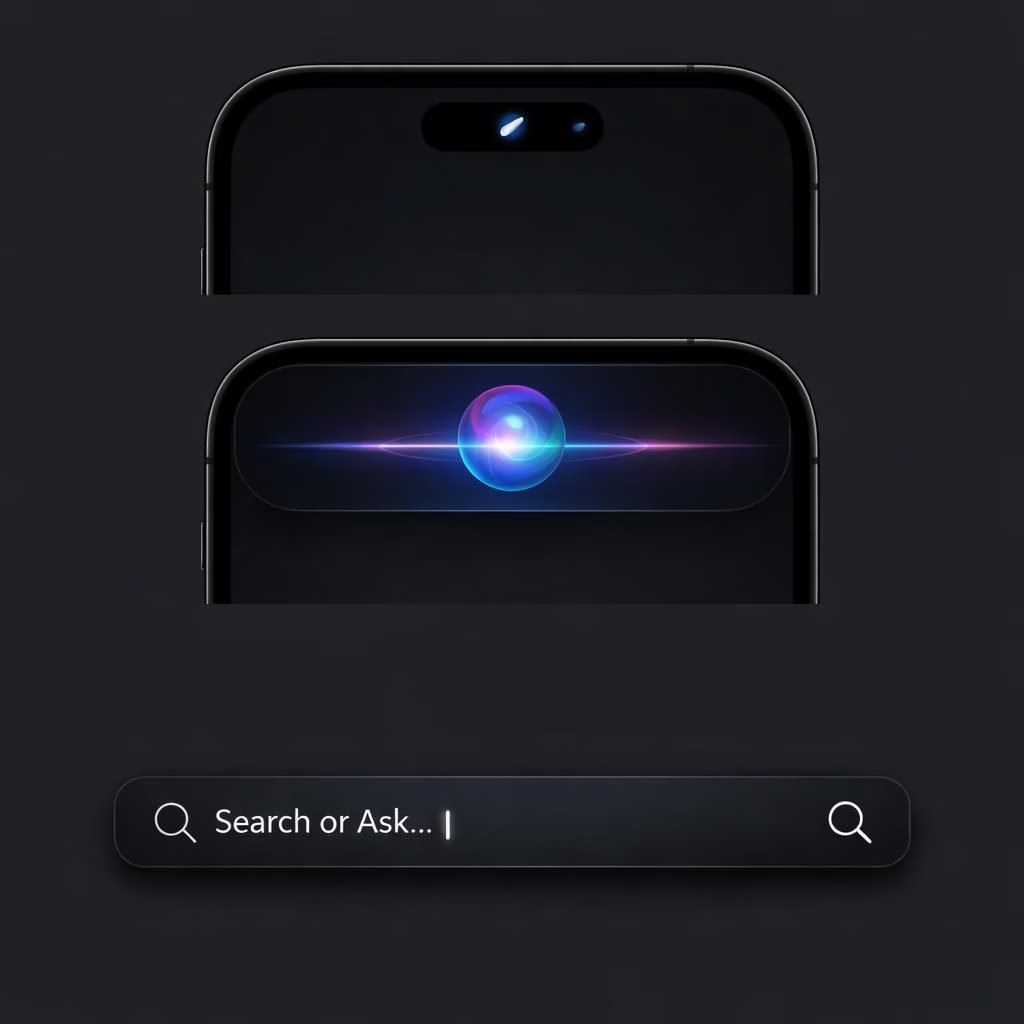
Siri is getting a grand makeover in iOS 27, and Apple fans can finally stop whispering about a potential reboot. The plan, teased ahead of WWDC 2026, centers on a more capable Siri, including a standalone app, a chatbot-like interface, and the ability to juggle multiple commands at once. This overhaul also dives deeper into personal data and on-screen content, promising smarter suggestions while keeping a friendly, human-centered vibe.
What you see in the teaser is more than marketing; it’s a design study that hints at a Dynamic Island-embedded Siri UI. The glowing cursor and the “Search or Ask” prompt suggest a live, contextual assistant that responds with a mix of direct answers and follow-up questions. The teaser seems to show Siri running inside Dynamic Island, a place where quick actions can bloom without pulling you away from your current app. It is bold, but also playful in its minimalism, signaling that Apple wants a voice assistant that feels like a co-pilot rather than a kiosk.
Siri in iOS 27: A Standalone App and a Multi-command UI
The plan is to turn Siri into a real standalone app, allowing it to live outside the app switcher with its own presence. It will handle multiple commands at once and manage on-screen content more deeply, enabling richer contextual actions. Apple reportedly plans to extend support for third-party AI agents, which could give Siri the ability to consult external tools, services, or bots for specialized tasks. All of this points to a more capable, more reliable assistant that can multitask without tripping over itself. For users, this could mean fewer “OK, one moment while I think” pauses and more proactive help that actually feels like a collaboration.
As part of this shift, iOS 27 could push Siri toward a more chatbot-like experience, with a standalone app presence and tighter integration with personal data for context-aware responses. The result may feel less like a single command line and more like a fluid conversation that helps you move across tasks without interrupting your flow. Third-party AI agents would be optional extensions, governed by clear permissions to protect privacy while expanding capability.
iOS 27 Performance, Battery, and Stability Gains
In addition to Siri, the broader iOS 27 ecosystem promises performance improvements across iOS 27, iPadOS 27, and macOS 27. Expect faster wake times, smoother transitions, and better battery life as Apple refines core services and optimizes the software stack. The teaser emphasizes dark-mode visuals, suggesting that the changes feed into a calmer, more efficient experience. While the teaser video shows a striking aesthetic, Apple cautions that details could shift before launch, but the general direction seems solid and well-tested. The goal is a cohesive feel across devices, with Siri and system services weaving together more predictably and efficiently.
Beyond the core assistant, iOS 27 is likely to bring refinements to app ecosystems and notification handling, so the whole experience feels less noisy and more intentional. The emphasis on performance translates into real gains—faster app launches, snappier searches, and quicker responses from Siri when you ask for weather, travel directions, or a quick calculation while multitasking. This is where collaboration between the AI core and third-party agents could shine, offering specialized capabilities without sacrificing safety or privacy.
Apple is also signaling a refined design language that uses dark mode to its advantage. The teaser visuals—glowing accents, clean lines, and a restrained color palette—hint at a philosophy: powerful features delivered with calm, unobtrusive aesthetics. This is not merely a cosmetic upgrade; it’s a promise that Siri and iOS 27 will feel like a more trustworthy duo under real-world use, whether you’re drafting emails, planning a trip, or juggling several apps at once.
On the home screen, Apple is experimenting with undo and redo actions to simplify re-layouts of apps and widgets. This is a small tweak, but it reduces the cognitive load when rearranging your digital home. For power users who tinker with widgets and stacks, this could feel like a quiet victory that makes iOS 27 a touch more forgiving and a touch more fun to customize. The change isn’t flashy, but it’s the kind of thoughtful detail that signals a mature, user-first approach to system UI tweaks.
Privacy and control are also part of the story. Deeper personal-data integration can unlock smarter, context-aware responses, but Apple has signaled it will pair such features with clear opt-ins, visible data usage summaries, and tight sandboxing. The idea is to offer a smarter Siri without surrendering control. Third-party AI agents could become optional extensions, accessed through a transparent permission framework with explicit boundaries. In short, you should feel confident about what Siri is studying about you and how it uses that data to improve your day.
As with any major software reveal, plans can evolve. The iOS 27 trajectory appears largely intact, according to insiders who have watched the marketing teasers, internal tests, and developer documentation. If the direction holds, users can expect a more capable Siri, better system performance, and a calmer, more efficient iOS 27 experience across devices. Yet the exact feature set may shift between now and launch, as is common with a mid-cycle upgrade designed to absorb feedback and polishing time before release. The takeaway is optimism about a more integrated, smarter, and more reliable Apple experience, anchored by Siri as a central intelligent assistant rather than a peripheral convenience.
So, what does this mean for you, the everyday user? In practical terms, expect Siri to be less of a digital assistant sidekick and more of a proactive partner. You might see more relevant suggestions in the moment, quicker task chaining across apps, and a more seamless interface that respects your current activity. If you appreciate a tidy, customizable home screen, the undo/redo ideas could finally make layout changes less painful. And with third-party AI agents on the table, you could unlock new workflows—think specialized tools for design, coding, or media editing—without leaving Siri’s chat-like flow. The net effect could be an OS that feels faster, cleaner, and more capable without asking you to relearn how to live inside your iPhone, iPad, or Mac.
In the end, the aim is clear: iOS 27 and Siri should feel like a natural extension of you—smart when you need it, quiet when you don’t, and always respectful of your privacy. The poster art, the teaser video, and the insider chatter all point to a Siri that’s less about voice commands and more about a confident conversation with your devices. If this vision holds, the WWDC 2026 reveal could mark a meaningful shift in how we interact with our digital assistants—less friction, more flow, and a bit of whimsy when you ask the right question.
Original article and kudos to the original coverage: Bloomberg News for the early insights and thoughtful context on Apple’s Siri overhaul. A sincere thank you for the preliminary reporting that helped shape this analysis.
What do you think about Siri’s potential iOS 27 overhaul? Share your thoughts in the comments below, and tell us which feature you’re most excited to see in WWDC 2026.
Original article attribution: Bloomberg News; thank you for the detailed preview and context about Apple’s WWDC 2026 plans.
References
- Bloomberg News — coverage and context on Apple’s Siri overhaul.
- Apple Newsroom — official materials related to WWDC 2026.
- LiveMint article — original source linkback used for context.