

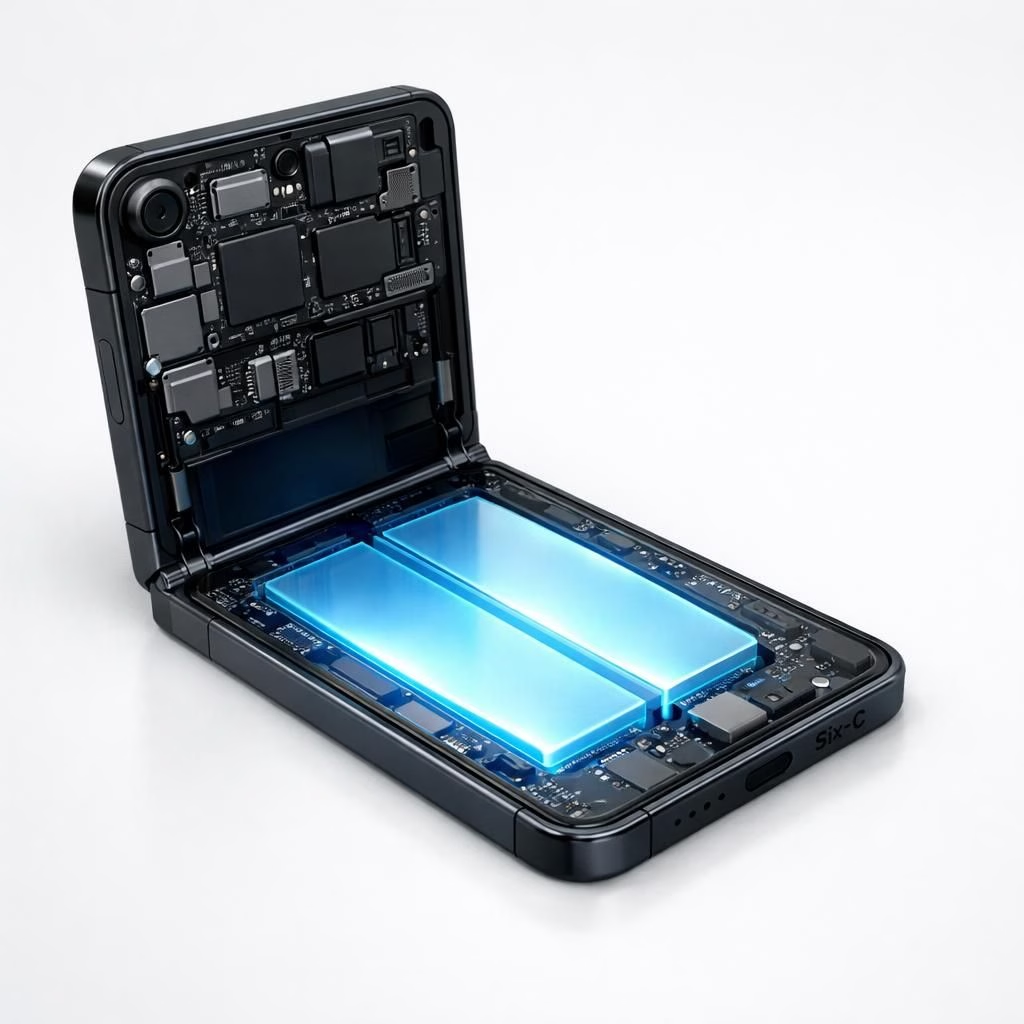
Si-C batteries are rewriting the energy story for smartphones, giving you more power in a slimmer package. In the realm of smartphones, silicon-enhanced anodes push energy density higher, letting designers pack bigger cells into thinner bodies—especially for foldables. This isn’t a gimmick; it’s a real leap in how we store and deliver juice, with silicon content reaching new highs in top models. Si-C batteries offer a path to thinner frames without sacrificing usable life.
Si-C batteries: The energy-density breakthrough
Traditional Li-ion cells have hit a ceiling. Adding silicon to the anode increases capacity within the same space. The challenge? Silicon expands and contracts during charge cycles, which can stress the cell. Honor spearheaded real-world progress here. In the Magic V6, the fifth-generation Si-C batteries hit 25% silicon content. The 1TB Chinese market variant pushes to 32% silicon, delivering a folding 7,150 mAh battery in an 8.75 mm folded thickness. Cao calls this the start of the 7,000 mAh era for foldables. These aren’t niche numbers; they redefine those dramatic foldable specs. Manufacturing teams note higher silicon content can complicate production, but the gains in energy density are substantial.
Si-C batteries aren’t just about bigger numbers. They shape how heat, weight and durability are managed in real devices. Higher energy density enables slimmer frames while sustaining endurance, a balance that matters especially for reviewers and everyday users alike.
Si-C batteries are a core part of the strategy that pushes foldables toward thinner, more resilient designs. This approach means longer service life and fewer charging stops for many daily tasks.
Si-C batteries aren’t just about raw numbers. The 25% to 32% silicon content in the Magic V6 series demonstrates the maturity of this technology and its potential to redefine how foldables are designed and marketed.
on-level progress in silicon content in Si-C batteries is accompanied by the need for careful manufacturing controls. As silicon content rises, production environments must be stricter and processes more sophisticated to manage expansion safely and reliably.
Meanwhile, OnePlus has pushed silicon deeper into its stack. The OnePlus 13 started at 10% silicon, while the OnePlus 15 uses a Silicon NanoStack design with 15% silicon and a dual-cell architecture. The payoff is a 7,300 mAh Si-C battery tucked into a standard candy-bar footprint. The result is more energy density without a chunky feel—exactly what premium smartphones crave.
Smartphones get slimmer and stronger with Si-C batteries
The broader design impact is clear. Higher energy density enables thinner frames and longer life, particularly useful for folding smartphones from Honor, Oppo, and others. The Magic V6 becomes noticeably slimmer in folded mode while offering power that lasts through busy days. The OnePlus 15 demonstrates that you can shrink the chassis slightly while packing more juice, keeping a premium look and a comfortable grip. In short, Si-C batteries give smartphones the best of both worlds: sleek profiles and dependable stamina.
Si-C safety, testing, and durability
Safety testing is rigorous and continuous. Honor subjects its Si-C batteries to extreme puncture, stress, and temperature tests beyond the basics. They use a layered silicon-graphite design and a CVD process to keep expansion orderly, plus an elastic binder to stabilize the internal dimensions. OnePlus runs more than seventy unique tests, checking performance across temperature, voltage, and stress scenarios. The Silicon NanoStack family in the OnePlus 15 keeps over 80% of its health after four years of use. Together, these efforts translate into a durable, safe battery story for real-world use.
Safety and durability are central to the Si-C battery narrative. Both Honor and OnePlus emphasize endurance testing that far exceeds standard certification, underscoring a practical, long-term view of this chemistry.
Costs, manufacturing, and market outlook for Si-C in smartphones
Cost remains the big hurdle. Si-C battery cells typically carry a 20% to 40% premium due to materials, stricter production environments, and more complex processes. This premium is expected to persist in the near term, which helps explain cautious steps from Apple, Google, and Samsung. Scale, supply chains, and continued R&D will gradually reduce costs as volumes rise and lines mature. In the meantime, the energy density gains translate into better form factors and longer device life for early adopters, especially in foldables and compact flagships.
What this means for you: Real-world impacts of smartphones with Si-C batteries are clear—longer life, faster charging, and smarter power management.
For users, Si-C batteries deliver clear value. You get two-day battery life on many high-end devices, even with bright displays and demanding apps. Folding smartphones become genuinely usable with less compromise on battery life. The price remains higher, but the gap should narrow as volumes rise. Expect faster wireless charging and smarter battery-management features as software catches up to the chemistry. The design wins are substantial too: thinner devices, less heat, and more resilient rigid-fold structures. The technology also pushes the entire industry toward more sustainable, long-lasting devices.
In summary, Si-C batteries are not a curiosity. They’re a mature, safe, and scalable solution that enhances the daily smartphones experience. As manufacturers scale, we’ll see this chemistry become standard across more models, bringing ubiquitous benefits to everyday users.
Original article: Tom’s Guide: Silicon-carbon batteries are here. Special thanks to Tom’s Guide for the original material and insightful reporting.
Have you tried a device with Si-C batteries? Share your thoughts in the comments and join the conversation.
Practical takeaways for buyers
- Look for devices advertising “Si-C batteries” to identify the trend.
- Expect thinner profiles with longer life, especially in folding models of smartphones.
- Be ready for higher upfront costs, with price gaps narrowing as volumes rise.
- Software updates and battery-management features help preserve Si-C health over time.
FAQ
- What are Si-C batteries?
Si-C batteries use silicon in the anode to boost energy density, enabling bigger capacity in the same space compared with traditional Li-ion cells. - Are Si-C batteries safe for everyday use?
Yes. Manufacturers stress extensive safety and reliability testing, including aging and thermal stress, to ensure long-term performance. - Will all phones adopt Si-C soon?
Adoption will be gradual. Early leaders focus on premium devices and folding models, with volume-driven cost reductions over time.
References
- Original source: Tom’s Guide: Silicon-carbon batteries are here
- Nature Energy coverage
- IEEE Spectrum coverage