

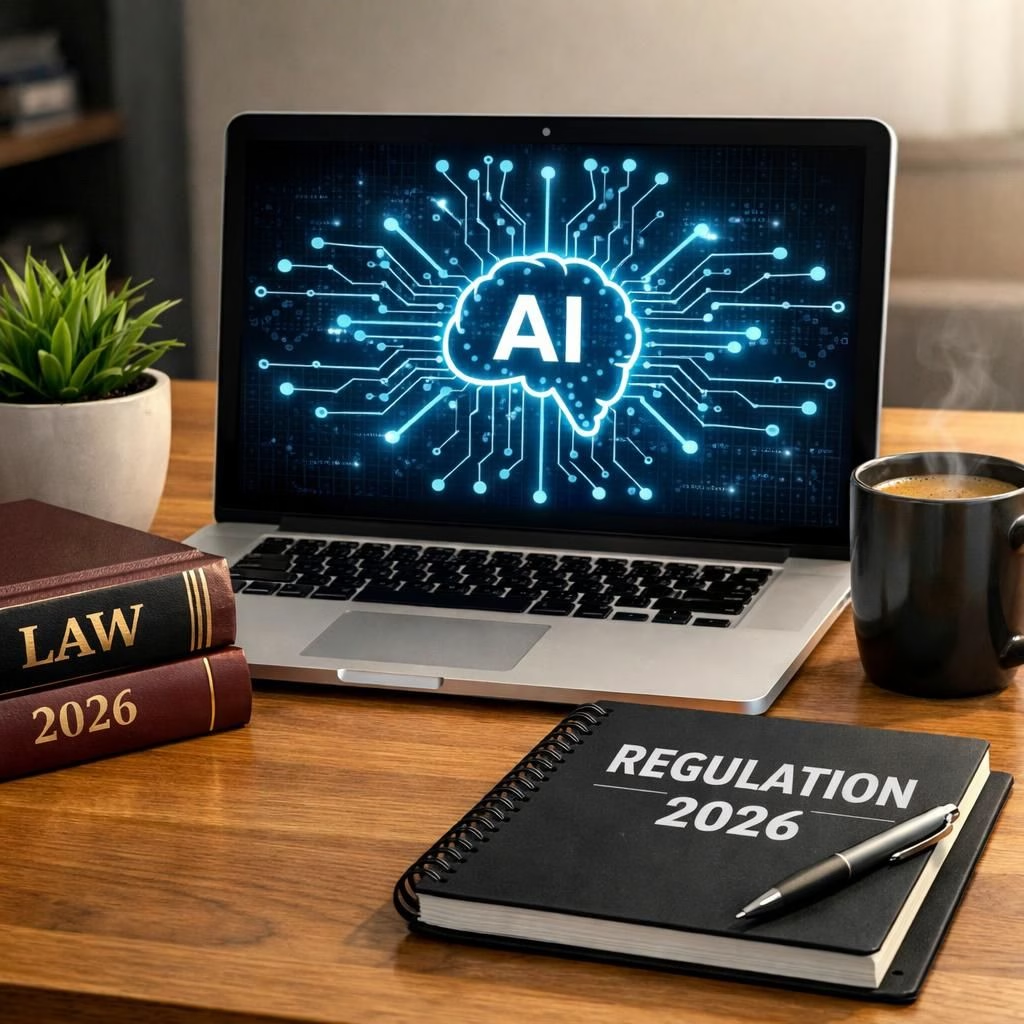
regulation is tightening and ai-infrastructure is expanding as 2026 opens with a clearer map for tech builders, investors, and policy watchers. The era of unchecked growth is receding, replacing it with capital discipline, talent pipelines, and more thoughtful product design. Optimists see opportunity in the new clarity, while skeptics remind us that risk still wears a business suit.
regulation and ai-infrastructure: navigating 2026’s tech landscape
New York’s bold social-media safeguards are not just a local headline; they set a global tone. The legislation adds warnings for addictive features, requires more transparent interfaces, and nudges platforms toward responsible design. It signals a policy shift that rewards safety as a feature, not a afterthought. For firms, the takeaway is simple: compliance can coexist with growth, and it should be built into the product from day one. The word “regulation” is no longer a spoiler, it’s a design constraint that can spark creative solutions rather than stifle ambition.
Meanwhile, ai-infrastructure is no longer a whisper in the boardroom. It has become a strategic pillar. Investors have poured tens of billions into ai-infrastructure bets, and the pace shows no sign of slowing. The idea is not to chase hype but to build robust platforms that scale with trust. This means better data control, stronger security defaults, and clear paths to responsible deployment. When leaders talk about ai-infrastructure, they are really describing the backbone that makes safe, useful AI possible at scale.
regulation meets ai-infrastructure: lessons for leaders in 2026
Consider the corporate moves that grabbed headlines this year. You see a pattern: capital is flowing, but it’s selective. Major tech firms announce large-value commitments, yet they pair these bets with tighter governance. The return for executives is not merely access to billions in funding. It is a clearer mandate to pair ambition with accountability. That balance matters because a well-governed AI program can outpace a reckless one. The buzzword here is responsibility, and it reshapes capital allocation as surely as any rate decision.
In the same breath, the labor market shows a talent shortage in critical areas. The AI race requires engineers who understand safety, ethics, and reliability as components of performance. Companies are not just buying chips; they are hiring researchers who can design systems people trust. The result is a two-tier market. Established players attract seasoned minds with practical incentives. Newcomers borrow time to prove viable business models. The core truth remains simple: ai-infrastructure lives or dies by its people and its practices, not by a glossy pitch deck alone.
Security and privacy continue to haunt the headlines, but there is a constructive arc here too. A high-profile breach reminds everyone that distributed workforces require rigorous vendor management and auditable controls. The industry responds with stronger standards, more transparent incident reporting, and better user protections. The lesson is practical: robust security is not a cost center; it’s a competitive differentiator that supports longer, healthier growth cycles. In this world, regulation fuels resilience, and ai-infrastructure upgrades deliver real risk reduction.
Creators and platforms are not exempt from change. The creator economy has its growing pains, including partnerships that collapse and models that need recalibration. Yet the same forces that test profitability also push for fairer compensation and sustainable business structures. Investors notice when a platform aligns incentives with creators’ long-term value. The result is healthier ecosystems and more reliable revenue streams. Regulation and ai-infrastructure together help creators focus on craft rather than endless firefighting.
Of course, the big players still write the headline chapters. Nvidia’s talent acquisitions and strategic partnerships show how human capital can outpace pure technology spending. Companies invest in people to accelerate innovation while protecting competitive edges. Hedge your bets by valuing talent as much as toolkits. The smarter path combines world-class talent with scalable, secure ai-infrastructure that can adapt as markets evolve. Regulation again acts as a compass, guiding this adaptation toward consumer trust and sustainable outcomes.
Across geographies, there’s a shared awareness: the 2026 tech economy must balance speed with stewardship. The public interest matters, and that interest is not a burden but a driver of durable value. When a platform tunes its engagement design to protect mental health, it signals a future where business metrics align with well-being. Investors respond by rewarding thoughtful, long-horizon strategies. In this climate, regulation and ai-infrastructure aren’t obstacles; they’re the rails that keep a high-speed train on track.
From corporate M&A to everyday product decisions, the tempo is clear: regulate thoughtfully, invest strategically, and design with the user in mind. Extra capital is welcome, but it must come with guardrails that preserve trust. The 2026 landscape is not a dystopia of red tape; it is a playground for disciplined experimentation where ai-infrastructure supports real-world impact. The smartest leaders will build interfaces that are intuitive, policies that are transparent, and technologies that are safe to deploy at scale.
As the year unfolds, we see the same motif: regulation guiding innovation, ai-infrastructure enabling smarter systems, and a focus on people—developers, creators, and customers—who benefit from both. This is not a retreat from growth; it is a rebranding of growth as responsible, durable, and inclusive. If this sounds like a paradox, it isn’t. It is a practical synthesis born from 2026’s realities and the ambition to do better while doing more.
We invite readers to share their thoughts on how regulation and ai-infrastructure should evolve through the rest of 2026. Which guardrails help, and which feel like friction? How can tech teams balance rapid delivery with robust safety? Your perspectives will help shape a more thoughtful, more resilient tech economy.
Original article note and gratitude: A heartfelt thanks to the original source material for sparking ideas about regulation and ai-infrastructure in 2026. If you’d like to read related discussions, explore credible industry coverage and share your thoughts there as well.
Practical playbook: 4 steps to balance regulation and ai-infrastructure
- Integrate safety and ethics reviews into product design from the outset.
- Establish clear data governance and security defaults.
- Align investor expectations with governance metrics and outcomes.
- Invest in talent with safety-first expertise and cross-disciplinary skills.
FAQ
- What does regulation mean for AI-infrastructure investments?
- It means more governance, transparency, and risk management. Plan for stronger controls and clearer accountability.
- How can teams balance rapid delivery with safety?
- Adopt iterative risk assessments, publish incident reporting, and build safety checks into release cycles.
- Are there geographic differences to watch?
- Yes. Different regions emphasize privacy, consent, and data localization, which can shape deployment timelines.