

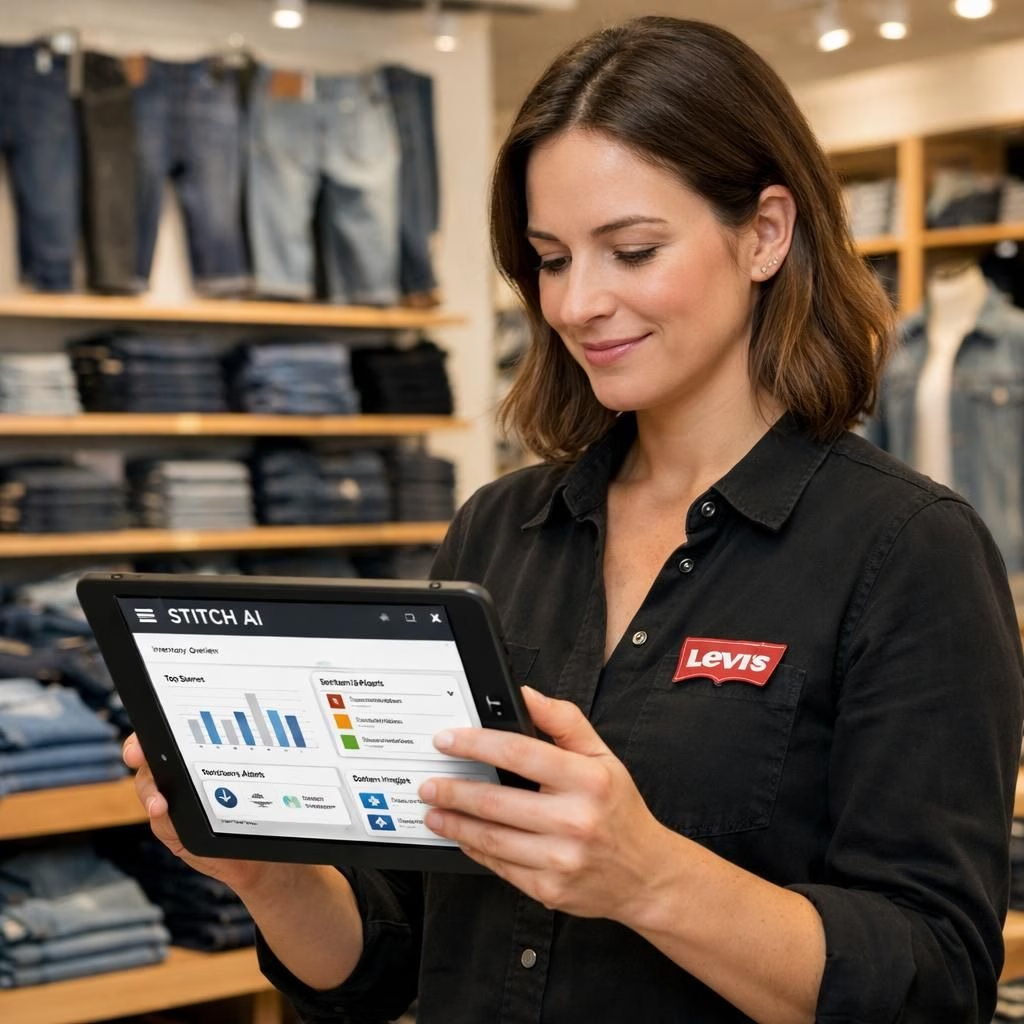
AI in retail is getting a friendly upgrade at Levi’s, where Google Cloud’s Gemini-based STITCH AI is quietly changing how clerks help customers. The idea sparked during an internal hackathon when a team member proposed a single AI-powered assistant that merged product data, store procedures, and training materials into one helpful module. In 2026, the project matured from concept to a controlled pilot and then expanded across many shops, showing that knowledge should flow as freely as denim in a dressing room.
AI in retail at Levi’s: STITCH AI in action
Store staff access STITCH AI via tablets or smartphones. It pulls data from multiple internal sources, enabling quick retrieval of product specifications, return policies, and order statuses. In practice, associates ask natural language questions like the differences between the 501 and 505 jeans, how to process a return without a receipt, or how to complete online orders fulfilled in-store, and the system returns concise, actionable answers. The system is built with Google Cloud integration and relies on Gemini’s large language models. The result is like having a patient, well-informed colleague in your pocket, available from the dressing room to the stockroom.
Early results show a noticeable bump in customer satisfaction at sites using STITCH AI. Levi’s reports an eight-point lift in satisfaction compared with stores that didn’t deploy the tool. This isn’t merely a numbers game; it translates to shorter lines, quicker checkouts, and shoppers who leave smiling with their favorite denim without hunting for a policy pamphlet in a back room.
STITCH AI expands AI in retail thinking across 70+ Levi’s stores in 2026
The pilot began in ten stores in late 2025 and grew to more than seventy stores in the US by 2026. The expansion included adding language support beyond English, aligning with Levi’s global ambitions. The concept originated at an internal hackathon, where a staffer suggested stitching together product data, operational guidelines, and training materials into a single assistant. The aim is straightforward: make it easier for staff to access information while helping customers. In practice, STITCH AI reduces time spent digging through manuals and policy documents, freeing up associates to connect with shoppers. This is the essence of AI in retail when done with care: speed without sacrificing accuracy and empathy without fluff.
Gowans, Levi’s Chief Digital and Technology Officer, explains that the project thrives on experimentation and learning. We’ve seeded this by training our employees, both corporate staff and store stylists, he notes. Levi’s does not force top-down adoption of AI; instead, it invites staff to explore tools like STITCH AI and Microsoft Copilot, gradually building new workflows. The result is a culture where AI in retail acts as a collaborative partner, not a bossy assistant. The human touch remains central; the machine serves as a well-organized librarian in a sea of data.
Beyond STITCH AI: Levi’s broader AI journey in 2026
Levi’s applies AI across product design, demand forecasting, and price optimization to determine pricing strategies and merchandise flow. The company has also made Microsoft Copilot widely available to internal teams, and employees have built hundreds of AI agents for a range of use cases. Levi’s argues that training and exposure are the first steps toward a future where AI in retail is a routine ally. The goal isn’t to replace humans but to amplify human judgment with reliable, fast access to information, so stylists and desk workers alike can focus on the customer experience. The pace remains human, and the aim is sustainable progress rather than a sudden leap into automation.
As the initiative grows, Levi’s plans to add more features, extend multilingual support, and refine the integration with store processes. The company says it will continue to measure customer satisfaction, speed, and accuracy to ensure AI in retail remains a tool for better service rather than a gimmick. The emphasis stays on practical value: better product knowledge, easier policy navigation, and more confident conversations with customers.
Another important dimension is governance and ethics. Levi’s designs workflows that check facts, flag missing data, and encourage human verification before acting on sensitive customer information. The company recognizes that AI in retail can misfire if data is outdated or if prompts steer responses without context. By tying STITCH AI to trained staff and clear guidelines, Levi’s keeps the human in the loop and preserves trust with customers who expect accuracy and courtesy in every interaction.
In addition to customer-facing benefits, Levi’s sees internal gains: faster onboarding for new associates, more consistent training, and the ability to field questions outside traditional training materials. The company notes that the staff, from clerks to store managers, gains a sense of empowerment when they can pull up a policy, a process, or a styling tip in seconds. That empowerment aligns with the broader mission of AI in retail: to free people from repetitive chores and give them more time for design, storytelling, and companionship with customers.
Finally, the broader AI picture at Levi’s includes design, demand, and pricing tools. The company has integrated AI into product development workflows to explore new denim textures and silhouettes more rapidly. Demand forecasting uses AI to anticipate demand shifts, reducing markdowns and optimizing inventory. Price optimization uses data analytics to set competitive prices while protecting margins. All of this sits alongside the STITCH AI experience in stores, a real-world demonstration that AI in retail can be practical and humane when guided by people who care about customers and their craft. Levi’s approach shows how to balance innovation with trust, speed with accuracy, and automation with a human touch.
Readers may wonder how such a tool would fit in smaller shops or in different retail sectors. The answer is that the core idea is scalable: centralize reliable information, empower staff with quick search and reasoning, and measure the impact on customer experience. If you try something like STITCH AI in your own workspace, you too can learn what works, what needs adjustment, and how human expertise and machine intelligence can coexist in harmony. Please share your thoughts in the comments below.
Original article: Fortune coverage of Levi’s STITCH AI — thank you for the thoughtful material that inspired this post.
Practical takeaways for retailers
- Centralize reliable information from product data, procedures, and training materials.
- Pilot with a small group of stores before wider rollout, and collect staff feedback.
- Maintain human oversight and governance to ensure accuracy and trust.
- Pair AI tools with humane customer service to preserve the in-store experience.
- Monitor key metrics like satisfaction, speed, and accuracy to guide improvements.
FAQ
- What is STITCH AI and how does it help store staff?
- Does Levi’s plan to expand STITCH AI to more languages?
- How does Levi’s handle governance and data privacy with AI tools?
Takeaway: Tools like STITCH AI illustrate how AI can support staff without eroding the human touch. When paired with clear guidelines and ongoing learning, these systems can speed service and deepen product knowledge for customers.