

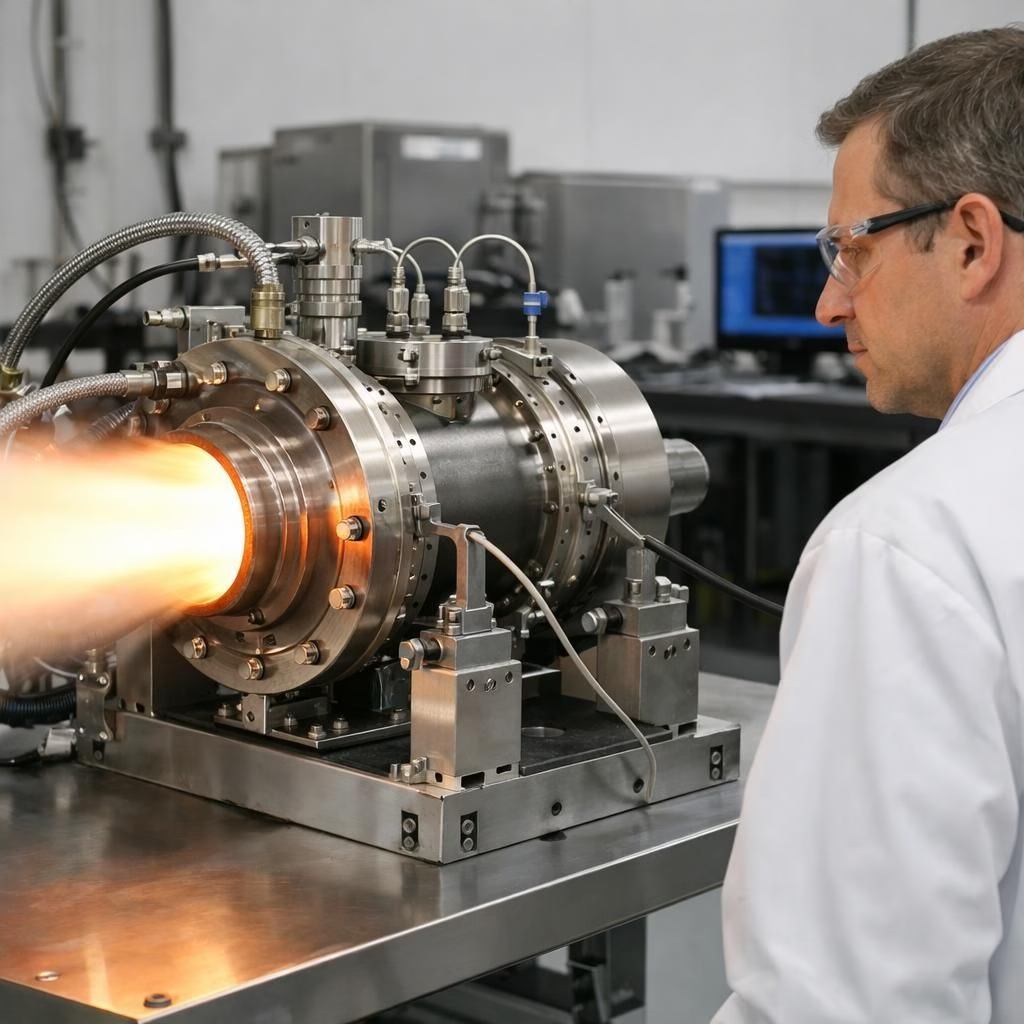
RDRE and Tag B headlines are buzzing as Astrobotic runs a 4,000-pound thrust test in 2026. The twist? A compact rotating Tag B setup that promises higher efficiency with shorter burns. This is not science fiction; it’s real hardware on a test stand, and the online chatter runs the gamut from curious to caffeinated. Astrobotic leads with the RDRE in the propulsion spotlight this year, and the Tag B angle is proving it can push ideas into orbit without a magic wand.
RDRE Detonation Engine deep dive into a wild test
The RDRE, short for rotating detonation rocket engine, uses detonation waves to sustain thrust. It aims for higher pressure and a tighter, more compact burn than many conventional gas generators. The Tag B approach excites engineers because it could unlock a better thrust-to-mass balance. In practice, the team treats the test as a serious step, not a stunt. Astrobotic repeats the core claim: the RDRE can deliver strong bursts with potentially fewer moving parts than older designs, if the Tag B rhythm stays in line. Coverage from Gizmodo, SpaceNews, autoevolution, TribLIVE, and SpaceWatch.GLOBAL shows how quickly tech chatter migrates from the lab to the lounge room. The RDRE label keeps popping up in briefs because it sits at the crossroads of chemistry, control theory, and materials science. This is 2026 tech with the messy charm of frontier science, where a bench test doubles as a rehearsal for future moon missions. The Tag B under test today could help power tomorrow’s explorers, if the waves stay stable and the hardware survives the heat of verification cycles.
RDRE Detonation Engine implications for lunar missions
What does this mean for a moon mission? If the RDRE can sustain detonation waves reliably, propulsion could push more mass with less hardware. The Tag B concept promises higher thrust-to-weight and snappier throttle response, which matters for landing sequences and ascent corridors. Engineers debate cycle timing, heat transfer, and material limits, yet the practical takeaway remains clear: the RDRE path challenges conventional engines and invites new design heuristics. For lunar logistics, the RDRE could shorten mission timelines and trim ground-support footprints. The RDRE could let landers carry more science gear or rely on smaller launchers. The team emphasizes validation steps, safety margins, and robust control loops. In short, RDRE is more than a lab curiosity; it hints at a credible route to affordable lunar operations if the Tag B rhythm proves repeatable. Reporters note that a successful hot-fire in 2026 builds confidence for subsequent milestones, even as engineers schedule follow-ups to tighten tolerances and refine the combustor geometry. The Tag B remains a bold bet, but one that draws attention from researchers and program managers who crave practical, field-ready outcomes.
- RDRE efficiency and Tag B stability
- Detonation Engine thermal management
- RDRE integration with lunar lander platforms
- Cost, risk, and scalability considerations
Beyond the buzz, the practical questions stay grounded: Can RDRE maintain detonation under real flight loads? Will the Tag B scale without shedding mass or reliability? The answers hinge on careful testing, data analytics, and a dash of luck. Still, the narrative is compelling: a 4,000-pound thrust demonstration on a lab bench that could, with future iterations, reframe how we think about propellant choice, engine cycle, and mission design. The RDRE and Tag B concepts drive the conversation about how to extend human reach to the Moon and beyond with smarter hardware decisions, tighter tolerances, and less wasted propellant energy.
Original article coverage and related reads are credited to Gizmodo and colleagues. Thank you to Gizmodo for the original reporting that sparked this discussion. Original article: Gizmodo.
Have thoughts about RDRE and Tag B breakthroughs? Share your notes in the comments below.
FAQ
- What is RDRE? It is a rotating detonation rocket engine that uses successive detonation waves to generate thrust with the goal of higher efficiency and compact packaging.
- What makes the Tag B approach different? It aims to rely on detonation waves rather than traditional deflagration, potentially offering a better thrust-to-weight ratio.
- When could RDRE become practical for lunar missions? Early bench tests are promising, but flight-ready versions will require extensive validation, safety margins, and scaling studies over multiple years.
In short, this test marks a step toward more capable and efficient propulsion for future Moon missions, with a path that favors smarter hardware choices and tighter tolerances.
References
- Original Gizmodo article: https://gizmodo.com/astrobotics-detonation-engine-fires-4000-pounds-of-thrust-in-wild-new-demonstration-2000750533