

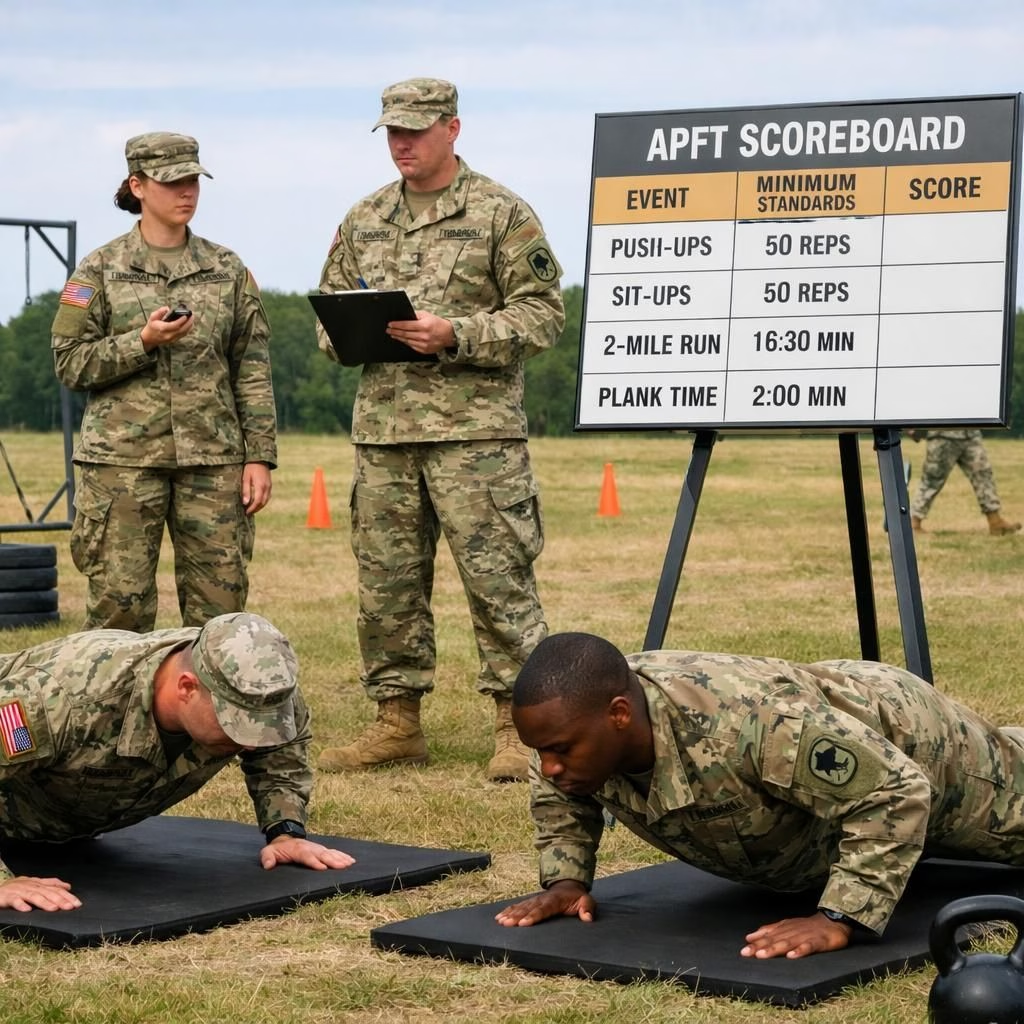
In 2026 the US Army rolls out a new Combat Field Test designed to boost military-readiness and combat-training as central pillars. The aim is to measure how soldiers perform under stress, how teams coordinate, and how fitness translates to battlefield practicality. This program isn’t a one-day spectacle; it blends simulated combat, real equipment, field procedures, and real-world logistics. Commanders expect improvements in readiness to translate into safer training, higher mission success, and fewer surprises in the field. The Army wants data, not drama, and soldiers deserve a process that treats readiness as a solvable problem.
military-readiness in practice: field tests you can’t fake
The new test blends fitness, marksmanship, navigation, and casualty evacuation into a single readiness metric. Units face timed runs, reload drills, and problem-solving under stress. Observers track pace, accuracy, decision speed, and teamwork. The goal is to quantify readiness in a way that stops guessing and starts data-driven planning. Soldiers get immediate feedback on where they stand, and leaders get a dashboard that translates into action. In practice, military-readiness becomes a daily conversation rather than a quarterly buzzword. The test also pushes units to synchronize medical, logistics, and command-and-control tasks—proof that readiness is a team sport, not a solo sprint.
combat-training reality check: drills, gear, and morale
The combat-training concept isn’t about theater; it’s about gritty reality. The field test emphasizes tactical drills that mirror frontline demands while acknowledging the equipment and environment. Soldiers move with gear, radios, and mock loads, learning to improvise when plans fail. The focus on gear reliability matters: radios that work, maps that load, med kits that open when needed. The morale factor matters too: confidence grows when comrades perform under pressure, not when the constant questions drown out the roar of the exercise. The test isn’t a lifetime contract; it’s a time-limited adjustment window with measurable milestones, designed to reduce risk and raise readiness. When troops see progress, the culture shifts toward proactive preparation rather than last-minute scramble.
readiness metrics and what this means for 2026
Leaders hope the numbers translate into practical improvements on the ground. Expect metrics on fatigue, heart rate, task completion, error rates, and response times. The field test aims to separate noise from signal: not every delay is a failure, but every error has a root cause. Data are collected through sensors, observations, and after-action reviews. The result should be a clearer picture of where to invest training hours, where to adjust equipment, and how to structure rotations to maintain stability. The plan positions readiness as a solvable problem, not a mystery to be solved in a briefing room or a gym. By tying fitness to mission success, the Army clarifies why every rep matters. The approach is intentionally iterative, letting units adapt training cycles to real-world feedback rather than chasing mythical perfection. military-readiness remains the north star guiding leadership decisions.
In addition, units are encouraged to view these metrics as real-world signals for improvement rather than bureaucratic paperwork. The focus stays on practical outcomes that keep soldiers safer and more capable in future operations.
Caveats and practical limits
As with any large-scale program, the caveats matter. A test is only as good as its execution. Units need consistent assessment criteria, trained evaluators, and timely feedback. The field test is designed to be scalable from small teams to battalion-wide exercises, so the usefulness of the data grows with participation. The intent is not to shame underperformers but to illuminate opportunities for improvement—an inclusive approach that keeps morale high and readiness rising. The aim is sustainable, incremental gains year after year—something that looks boring on slide decks but really helps a unit stay in the fight. Expect honest after-action reviews that translate into practical, repeatable steps for every team.
broader impact on the force
What does this mean for the broader force? It means a cleaner line between training and combat-readiness. It means leaders can forecast resource needs with greater confidence. It means soldiers benefit from a culture that rewards deliberate practice and minimizes guesswork. It also means civilians who fund the programs get tangible, trackable data instead of hopeful anecdotes. In short, this is not a flashy stunt; it’s a deliberate shift toward measurable preparedness that respects time, gear life cycles, and the human element behind each mission.
modernization context
For readers curious about how this compares to other modernization efforts, the trend is familiar: more data, smarter drills, and a constant push to turn complexity into actionable steps. The Army is betting that a well-designed field test can yield durable gains without turning training into a chore. It’s not about replacing experience with a spreadsheet; it’s about letting the numbers back up the experience with objective insights. If done well, the result is a cycle of improvement that compounds across units and years.
Original sources and thanks: We extend our gratitude to the original reporting from US Army, Task & Purpose, and DVIDS for the base material that informed this piece. If you found this analysis helpful, please consider sharing your perspective below.
What do you think about this 2026 field test approach? Share your thoughts in the comments below.
Practical steps for units
- Standardize evaluators and criteria to reduce variability and improve fairness in scoring.
- Integrate field-test metrics into daily training rhythms instead of treating them as a quarterly checkpoint.
- Use sensor data and After-Action Reviews to guide priorities for equipment, tactics, and drills.
- Align medical, logistics, and command-and-control tasks with field-test milestones for cohesive readiness.
Frequently asked questions
- What is the purpose of the Combat Field Test?
- To measure and improve soldier readiness under stress, improve teamwork, and provide data-driven insights for training and equipping units.
- Does the test replace experience with a spreadsheet?
- No. It complements hands-on experience with objective data to guide training decisions.
- How will readiness metrics be used in 2026?
- Leadership will translate sensor and observation data into targeted training plans and resource allocations.