

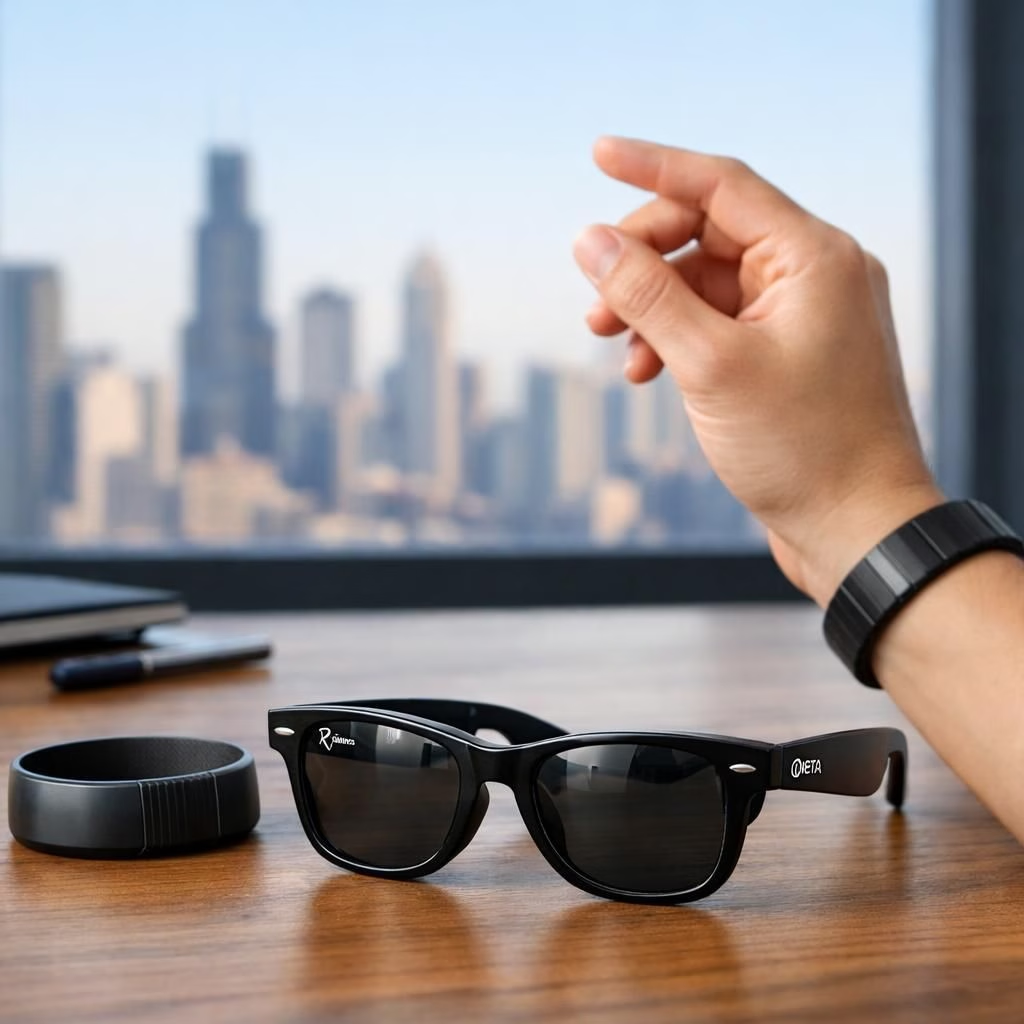
RayBan has long flirted with wearable tech, and the latest Tag B-forward features prove the joke isn’t dead yet. The Tag B controls are no longer sci-fi; they are practical tools bolted to Meta’s Ray-Ban Display, ready to spare your thumbs from fatigue. The combo of RayBan hardware and a neural wristband makes writing messages feel almost magical, provided you’re comfortable with a little futuristic flair. In practice, you can sketch letters in the air, and your words ghost into WhatsApp, Messenger, or Instagram threads.
RayBAN Gesture Messaging Gets Real in 2026
In this generation, Meta says you’ll be able to write messages just with Tag B across WhatsApp, Messenger, Instagram, and native Android and iOS messaging. The neural wristband, part of the Ray-Ban Display bundle, reads micro-movements and translates them into text or voice cues that your apps recognize. The aim is seamless communication without landing on the tiny keyboard. It sounds like magic, but it’s mostly clever engineering and thoughtful UX work, with a dash of product theater to keep us amused.
Developers and early buyers of the glasses have known this feature since its January early access for WhatsApp and Messenger, but Meta is expanding it to the broader user base. The Tag B system remains the star here, while the hardware keeps pace, showing how wearables can actually reduce friction rather than add it. The integration spans across major apps, keeping your social life in one stylish orbit rather than scattered across five separate apps.
RayBan’s practical appeal in wearables
RayBan’s approach blends style with usability, aiming to make technology feel natural rather than encroaching. The wearable ecosystem is designed to let you access messages and directions without reaching for a phone, while staying mindful of privacy and control. This section highlights how the combination of hardware and input methods can transform everyday interactions without turning a day into a tech overload.
RayBan Gesture Display: Live Captions, Recording, and Maps
Another highlight is display recording, which creates a merged video that pairs what you’re seeing through the lens with what’s happening in the world around you and the audio you’re hearing. It’s the sort of feature that sounds handy, until you consider the privacy and storage questions it raises, which we address below in a calm, constructive manner. Still, the idea of a mixed reality diary is intriguing for both professionals and casual explorers. Also included are live captions for messaging platforms and voice messages in Instagram DMs, which helps everyone stay in the loop, even when the glass is fogged up by rain or enthusiasm.
Direction fans will be pleased to hear walking directions are available across the United States and in major international cities like London, Paris, Rome, and beyond. Meta has also opened up app development for the Ray-Ban Display in a developer preview, letting developers deploy web apps to the glasses. This move mirrors the broader trend of wearable ecosystems inviting external creativity, which means third parties can craft mini-tools that live right on your face, not just on your phone.
On the practical side, the combination of AR display, Tag B input, and live media capture creates new workflows for travelers, couriers, designers, and curious bystanders. The wristband’s neural sensing provides a reliable input channel for those who prefer kinetic chatter over tapping tiny icons. Meta’s aim is to remove friction while keeping things safe and private enough for everyday use. The company emphasizes that apps can run natively in a lightweight environment, potentially reducing the need to switch between devices when you need information fast.
From a usability perspective, the experience hinges on reliability: Tag B recognition must feel natural, not fiddly. The team has tested latency, comfort, and edge cases, making it plausible that a reasonably non-technical person can Tag B a message that lands correctly in their chat. If this is your concern, you’re not alone; the best wearables win when they disappear into everyday life rather than demanding a manual on how to wave hello at your wrist.
Security and privacy are not afterthoughts here. Meta notes that user consent and on-device processing help minimize data leakage, and that developers in the preview must follow safety guidelines. The open app ecosystem could raise concerns about cross-app data flows, but the company claims that the experience remains under user control, with clear opt-ins and controls over what gets captured or shared. With transparency in mind, the look-and-feel is designed to reassure while still feeling futuristic.
As an observer of tech hype cycles, I appreciate the pragmatic approach: give people a reason to wear something more than a camera in a fashionable frame, and then hand them a few practical, well-integrated features. The RayBan Display continues to push the envelope, but it does so with attention to everyday use cases: messaging, navigation, transcription, and small but meaningful developer tools. It’s not just clever hardware; it’s a platform that tries to make your day simpler without asking you to become a cyborg overnight.
For official product details, see Ray-Ban tech eyewear and Meta Newsroom.
Original article: Thank you to the original author for the source material.
Practical use-cases and developer preview
The device aims to support travelers, couriers, designers, and curious bystanders with hands-free access to messaging and navigation. With Tag B input, you can compose quick replies and notes without pulling out a phone. Developers can prototype lightweight web apps that run directly on the glasses, expanding the toolset beyond a single app at a time. This ecosystem approach signals a shift toward wearables that complement, rather than replace, smartphones.
FAQ
-
How does on-device processing protect privacy?
Meta emphasizes on-device processing to keep sensitive inputs from leaving the glasses. User consent and clear opt-ins remain central to the experience.
-
Which apps support the gesture feature?
The feature is designed to work with major messaging apps and native Android/iOS messaging, with broader app support in preview.
-
Is the feature available in all regions?
Availability varies by market and device firmware; Meta plans gradual expansion as the developer preview progresses.
-
Can developers build apps for Ray-Ban Display?
Yes. Meta has opened a developer preview to deploy web apps and experiment with on-glass experiences.
-
What about latency and battery life?
Latency and comfort have been focal points in testing to ensure natural use; battery life varies with usage patterns and app load.
Conclusion: what it means for everyday life
Ray-Ban Display’s gesture features illustrate a practical, privacy-minded approach to wearable tech. They’re designed to reduce friction in daily communication while inviting developers to contribute thoughtful tools. If you’re curious, monitor official updates and try the features when they land in your region.