

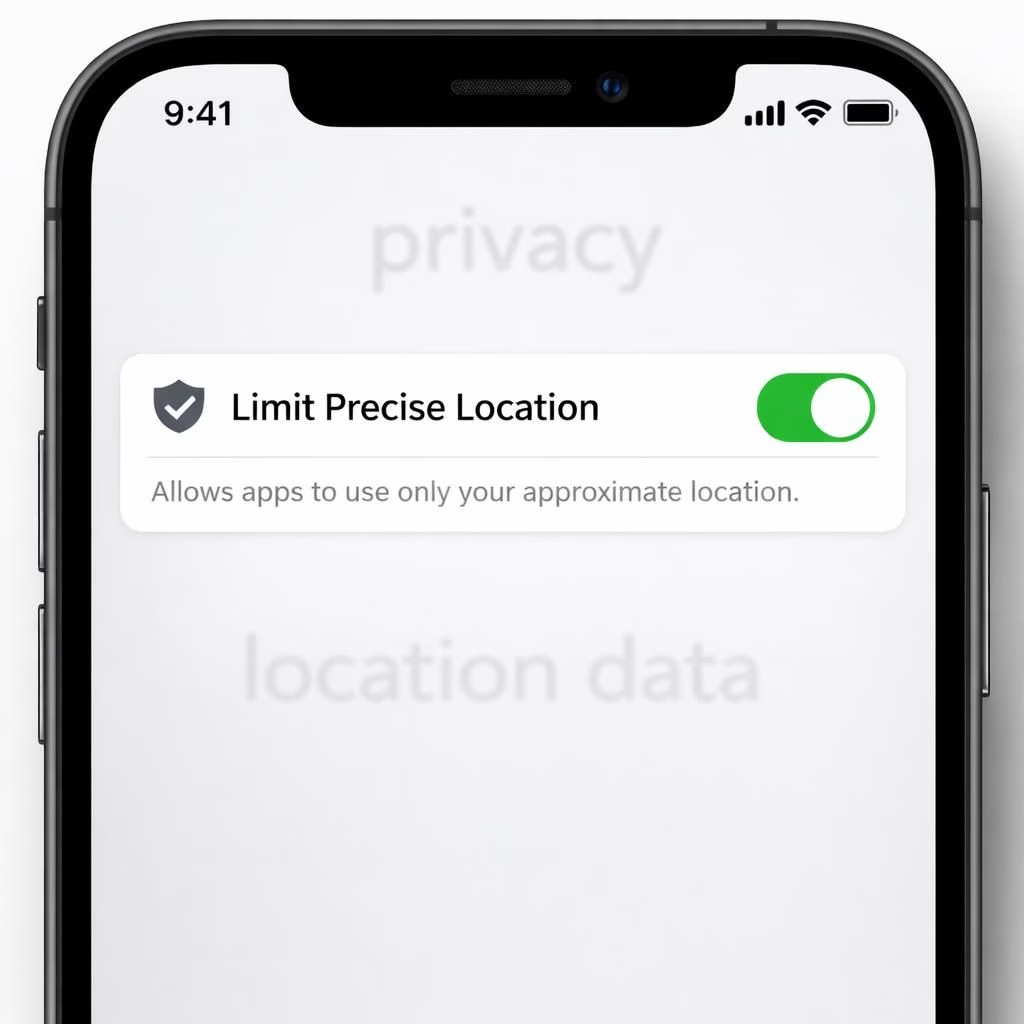
Rumors about Apple expanding Apple-designed modems across the iPhone 18 lineup have everyone buzzing. The move promises speed and efficiency gains while offering a privacy location data improvement that even your smart thermostat might applaud. The broader story is about data handling, especially how privacy and location data layer into device decisions.
privacy and location data tweaks in iOS 26.3
In iOS 26.3, Apple added a Limit Precise Location setting that trims the data shared with mobile networks. This privacy feature reduces the location data exposed to carriers, while keeping service quality intact.
Apple frames the change as a privacy tool, not a data-diet fad. Reducing accuracy does not affect signal strength or emergency call reliability, and it does not alter the data apps receive via Location Services. The intent is to limit what the carrier can infer, not to deprive you of location data convenience.
Carriers are slowly rolling this out. Boost Mobile in the United States has begun enabling the option, while EE, BT, and Sky support it in the UK. Carriers in Austria, Germany, Denmark, Ireland, and Thailand have also adopted the setting, with many EU and UK SIMs allowing manual activation. Apple provides a full carrier and region map on its site, helping privacy-aware users track where the feature is live. For privacy reasons, many regions also view this as reducing location data exposure.
Looking ahead, the rumored C2 modem could bring mmWave 5G and parity with the latest Qualcomm offerings. If C2 lands in more devices, the Limit Precise Location feature could become a standard across the lineup, expanding its reach and reinforcing privacy as a default. The broader trend is a shift toward data minimization by design, paired with hardware that preserves speed and reliability while earning user trust.
privacy and location data in future hardware choices
Beyond software tweaks, the hardware narrative is equally compelling. Apple’s plan to move all devices toward its own modems means the privacy and location data controls become more consistent across the board. When the iPhone lineup shifts to an Apple modem across the entire range, the Limit Precise Location option should feel like a built-in habit rather than a rare feature. That consistency matters for privacy-minded users who expect the same rules to apply whether they own a budget model or a flagship device.
Industry observers note that this is more than a tech trend; it’s a design philosophy. By integrating modem choice with privacy options at the core of the product, Apple signals a commitment to reducing unnecessary data exposure without sacrificing performance. The C2 modem rumor, with its mmWave capability and competitive performance, further hints at a future where privacy and speed coexist as standard expectations rather than exceptions. As the hardware stabilizes, developers and service providers will align their practices with data-minimizing defaults, simplifying user decisions and boosting trust.
In practical terms for everyday use, these shifts should translate to clearer privacy messaging, easier toggles in Settings, and more predictable behavior across networks. You’ll still get fast connections when you need them, but with greater control over what your carrier learns about your movements. The result: a devices-first privacy ethic that keeps pace with relentless speed improvements and the rising expectations of a privacy-conscious public.
As always, staying informed helps you navigate these updates with humor and patience. If you are curious about how this affects your daily use, keep an eye on Settings > Privacy and on your carrier’s guidance. The story isn’t just about faster modems; it’s about smarter privacy defaults and smarter data sharing through the chain from device to network to app.
What do you think about Apple’s modem shift and the Limit Precise Location option? Share your thoughts in the comments below—I’m keen to hear your take on privacy and location data in 2026.
Original article: https://www.example.com/original-article — Thank you to the author for the foundational material that inspired this rewrite.
For broader context on privacy and data sharing, see Apple’s Privacy page and resources from Electronic Frontier Foundation.
FAQ
- What is Limit Precise Location?
The setting reduces location data shared with carriers without harming emergency routing.
- Will every iPhone get the feature?
It is currently tied to Apple-designed modems. A future C2 could expand availability across more models.
- Does reducing precision affect emergency services?
No. Emergency routing remains reliable even with limited location data.
- How do I enable or disable?
Go to Settings > Privacy > Location Services and look for the Limit Precise Location option. You can toggle it where available and be mindful of location data exposure.
Conclusion
Bottom line: Apple’s modem strategy aims to balance speed with smarter privacy defaults. As hardware and software converge, expect clearer controls and more predictable privacy behavior across the iPhone lineup.