

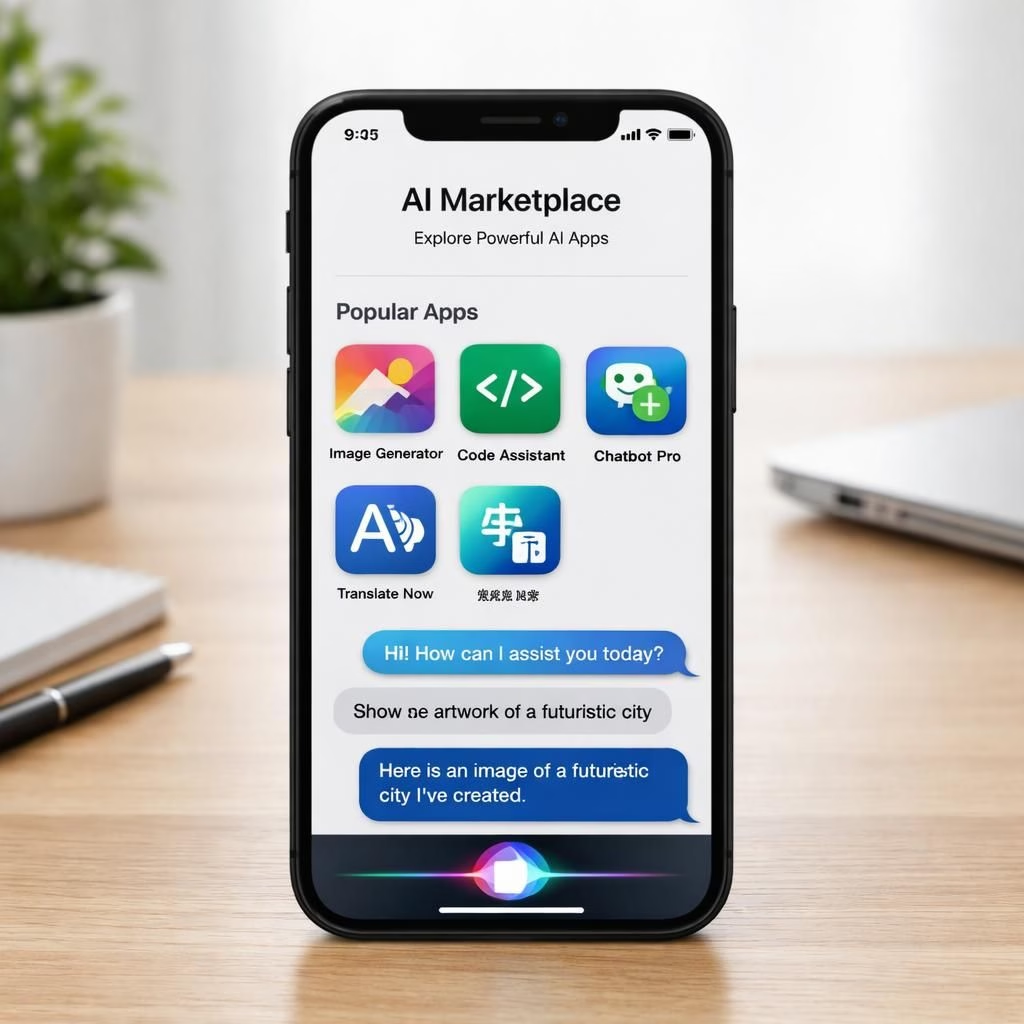
Welcome to a breezy tour of AppleAI and its pivot toward an AppStoreLike future. Instead of a single monolithic AI, AppleAI bets on an ecosystem where AI services slot into Siri like high-utility apps. The move channels the iPhone’s intelligence through a curated marketplace, inviting developers to craft specialized helpers while Apple keeps the reins on privacy, safety, and user experience. The year is 2026, and the stakes are less about a lone genius brain and more about a thriving bazaar of smart helpers.
This is a signal from AppleAI that safety and innovation can coexist with a user-friendly interface, and the AppStoreLike model envisions a marketplace of AI services that can be discovered and approved, with Apple enforcing privacy guardrails. When you enable a chatbot in Siri, it should come backed by clear standards and a consistent user experience. AppleAI takes the lead in balancing openness with safety, a partnership that rewards developers and users alike.
AppleAI and the AppStoreLike Ecosystem: What Changes for You
The promise of AppleAI is an elegant balance of control and creativity: Siri remains your primary interface, but the AppStoreLike catalog handles the rest — third‑party AI modules, extensions, and apps all mingle under a privacy-preserving canopy. This isn’t a solo sprint; it’s a relay where developers pass the baton to Apple’s guardrails, keeping the experience cohesive while expanding capabilities. AppleAI also emphasizes practical limits and thoughtful defaults, so you feel in control even as the ecosystem grows.
On the technical front, this AppleAI effort includes distilling Google’s Gemini into lean components that can run on-device or in privacy-respecting cloud settings within the AppStoreLike platform. That means snappy responses and less incidental data wandering off the device. The goal is to preserve the human-friendly feel of Siri while inviting a broader ecosystem to contribute smart, safe features.
- Better discovery: The AppStoreLike catalog helps users find AI services that fit their needs, from productivity to accessibility, under the AppleAI umbrella.
- Stronger guardrails: AppleAI emphasizes safety, privacy, and responsible AI, with AppStoreLike enforcing uniform standards for extensions and plugins.
- Developer opportunities: APIs, extensions, and clear policies make it easier for builders to integrate AI experiences into Siri and iPhone workflows, expanding the AppleAI reach and the AppStoreLike catalog.
Inspired by industry chatter from Bloomberg and peers, AppleAI aims to distill the best of other AI efforts into a familiar, trusted iPhone experience. The movement away from a single, giant model toward a modular, extensible system mirrors a broader trend in 2026: ecosystems win when they blend openness with a steady hand on privacy. Expect more live demos, developer conferences, and odd-but-delightful AI tricks that still respect your data footprint in the AppStoreLike approach.
From Siri Extensions to Third-Party AI: AppleAI, AppStoreLike, and the New Apps
In practice, AppleAI and the AppStoreLike shift could mean seeing new AI helpers appear as if they were app updates. Think extensions for Siri that can handle travel, health summaries, or language translation — all vetted and offered through a curated marketplace. It isn’t a sudden jailbreak; it’s a thoughtful evolution that lets developers tailor specialized assistants while Apple keeps a watchful eye on battery life, data usage, and user trust.
Of course the path isn’t entirely risk-free. Fragmentation is a real risk if the catalog grows too fast, and latency could creep in if third-party modules chase feature bloat. Yet the upside is a more diverse, capable, and user-friendly AI experience that feels native to iOS rather than tacked on. In short, AppleAI and the AppStoreLike aim to turn AI into a set of good tools instead of a single star performer.
Want to weigh in? Share your thoughts in the comments below. Do you see AppleAI reshaping your iPhone into a smarter helper, or do you prefer a tighter, Apple-curated experience? Your take matters.
Source attribution: Thanks to Bloomberg for the original reporting on Apple Pivots Its AI Strategy to App Store, Search-Like Platform Approach. Bloomberg.
Practical steps for users
- Open the AppStoreLike catalog in Settings or Siri settings and browse available AI extensions.
- Review safety notes and permissions before enabling any AppStoreLike extension.
- Start with a simple tool (for example, language translation) and monitor battery and data usage as you go.
- Customize privacy controls to strike the right balance between convenience and control.
Frequently asked questions
- What is AppStoreLike?
- The AppStoreLike concept is a curated marketplace of AI services that plug into Siri, with strict privacy and safety guardrails.
- How does AppleAI affect privacy?
- AppleAI emphasizes on-device processing where possible and enforces uniform standards for data handling across extensions, reducing unnecessary data leaving the device.
- How can developers participate?
- Developers can submit APIs and extensions under clear policies, enabling trusted AI experiences that feel native to iPhone workflows.
- Will there be latency with third-party AI?
- Latency is a concern, but the architecture aims to keep responses fast by balancing on-device and privacy-friendly cloud options within AppStoreLike.
In the end, the shift to AppleAI and AppStoreLike reflects a practical belief: useful AI thrives when it plays well with privacy, safety, and a cohesive user experience.
References
- Bloomberg — Original reporting on Apple Pivots Its AI Strategy to App Store, Search-Like Platform Approach.
External references
- The Verge — coverage on Siri extensions and third-party AI plug-ins.
- Bloomberg — broader coverage of Apple’s AI strategy and market context.