

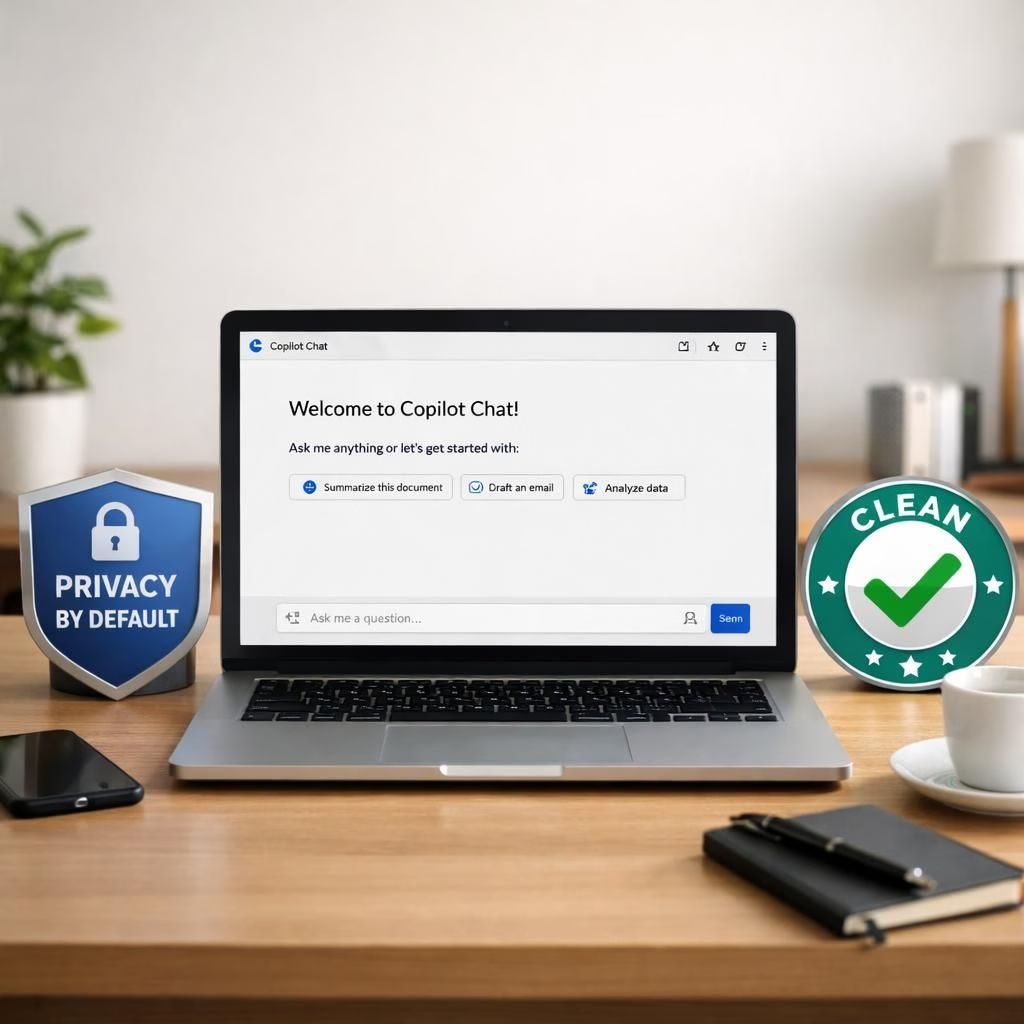
privacy-by-default Copilot Chat in enterprise settings promised a secure helpmate for emails and chats, but a bug briefly surfaced confidential emails in Draft and Sent folders. The incident is a reminder that when AI moves fast, privacy needs eyebrows ready to raise. The good news is Microsoft rolled out a fix worldwide and reassured users that no one saw unauthorized data. This story isn’t doom and gloom; it’s a practical nudge to keep privacy-by-default and Copilot Chat aware as enterprise AI tools evolve in 2026.
privacy-by-default safeguards in Copilot Chat for Enterprise AI tools
In January, Microsoft acknowledged an error where Copilot Chat could summarize content from emails labeled confidential stored in Draft and Sent Items. The tool’s aim is to be helpful, not to photocopy sensitive memos. The update was deployed globally to address the issue, and Microsoft asserted that access controls and data protection policies remained intact. The claim: no external access, just a mis-step in the Copilot experience that should have excluded protected content. The message is clear: enterprise AI tools need private-by-default defaults that are hard to override, even in a sprint to ship features.
Experts weigh in: with AI features proliferating, bugs will surface as the pace remains relentless. Gartner analysts note the risk arises from the sheer velocity of new capabilities and pressure to release. They suggest that yes, fumbles are likely, yet governance should not lag behind. The ideal is private-by-default, opt-in access only for sensitive data, and strong data loss prevention policies that actually block leakage. In practice, what does that look like for Copilot Chat and enterprise AI tools? It means users opt in to extra features, and protected data remains shielded unless consent is given.
Copilot Chat privacy-by-default mindshift: securing enterprise AI tools
Security experts remind us that even with strict controls, bugs will happen as enterprise AI tools push boundaries. The NHS dashboards showed the root cause as a code issue. The team responded by deploying a configuration update and reassuring users that confidential drafts and sent emails processed by Copilot Chat would stay with their creators. The tone of the discussion emphasizes that private-by-default should be a default, but not the only feature: clear opt-in paths, robust logging, and easy revocation of access. In other words, the enterprise AI tools need guardrails that keep innovation from becoming over-sharing.
In the broader landscape, enterprise AI tools such as Copilot Chat, Outlook, and Teams are designed to help with emails, summaries, and questions. The problem is not unique to Microsoft; many vendors face similar pressures. The key lesson is to design with privacy front and center, not as an afterthought. As one Gartner analyst, Nader Henein, puts it, such fumbles are almost inevitable given the rate of change. He notes that organizations often lack tooling to protect themselves as new features roll out. The remedy is simple in principle: switch off features until governance catches up; in practice, corporate pressure makes that difficult.
Cyber-security experts emphasize a privacy-by-default approach, encouraging opt-in controls and clear boundaries for data access. Professor Alan Woodward of the University of Surrey points out that there will be bugs as tools advance rapidly, and leakage can occur even if it isn’t intentional. The overarching message: the fastest way to reduce risk is to bake privacy into the design, not to bolt it on later. When in doubt, choose the safer path, even if it costs a few extra clicks for Copilot Chat users.
For teams relying on enterprise AI tools, the incident is a chance to improve: tighten DLP policies, expand privacy-by-default choices, and ensure that confidential content never slips into Copilot Chat unless a user explicitly agrees. The human factor remains crucial: training, awareness, and a culture that treats data like treasure rather than a rumor. The goal is not to halt progress but to steer it with better guardrails, so enterprise AI tools can function as trusted assistants rather than data leaks in disguise.
To close, the takeaway is practical and hopeful: we can enjoy the benefits of Copilot Chat while keeping privacy-by-default front and center. The line between productivity and privacy is not a zero-sum game; it is a design problem with measurable controls. If your team embraces opt-in features, strict data handling rules, and transparent auditing, Copilot Chat can remain a helpful companion in Outlook and Teams without turning into a privacy headache.
Readers, what’s your take on balancing speed and safety in enterprise AI tools? Share your thoughts in the comments. For those curious about the background, here’s the original reporting: thank you to BBC News for the material on the Copilot Chat bug. Original article: BBC News technology article.
Practical steps for privacy-by-default Copilot Chat deployments
- Review and tighten data loss prevention policies for email content labeled confidential or restricted.
- Make privacy-by-default the default setting: require opt-in for features that can access drafted or sent emails.
- Implement strict access controls and logging for Copilot Chat activity in Outlook and Teams.
- Provide easy opt-out and revocation of access to Copilot Chat for individual users or teams.
- Train users on data handling, labeling, and recognizing sensitive content.
- Test in controlled pilots before wide rollout; monitor for leakage incidents and fix quickly.
FAQ: privacy-by-default and Copilot Chat
- What does privacy-by-default mean for Copilot Chat? It means the system is designed to exclude sensitive content unless users explicitly opt in or authorize access.
- Was data leaked? Official notices say there was no unauthorized access to data beyond what users had already permitted; a bug surfaced content that should have been shielded.
- What should organizations do now? Review DLP policies, enforce opt-in, and monitor for data-sharing anomalies; keep staff educated about data labeling and privacy settings.
- How can I opt out of certain features? Use admin controls in Microsoft 365 to disable or restrict features that access drafts and sent items, and review Copilot settings.
- Where can I learn more? See the BBC reporting linked in References, and consult official Copilot privacy documentation and privacy guidelines from trusted sources.
The balance between speed and safety is achievable with thoughtful design, clear controls, and ongoing education. Enterprise Copilot Chat can save time and boost collaboration while respecting privacy-by-default principles.