

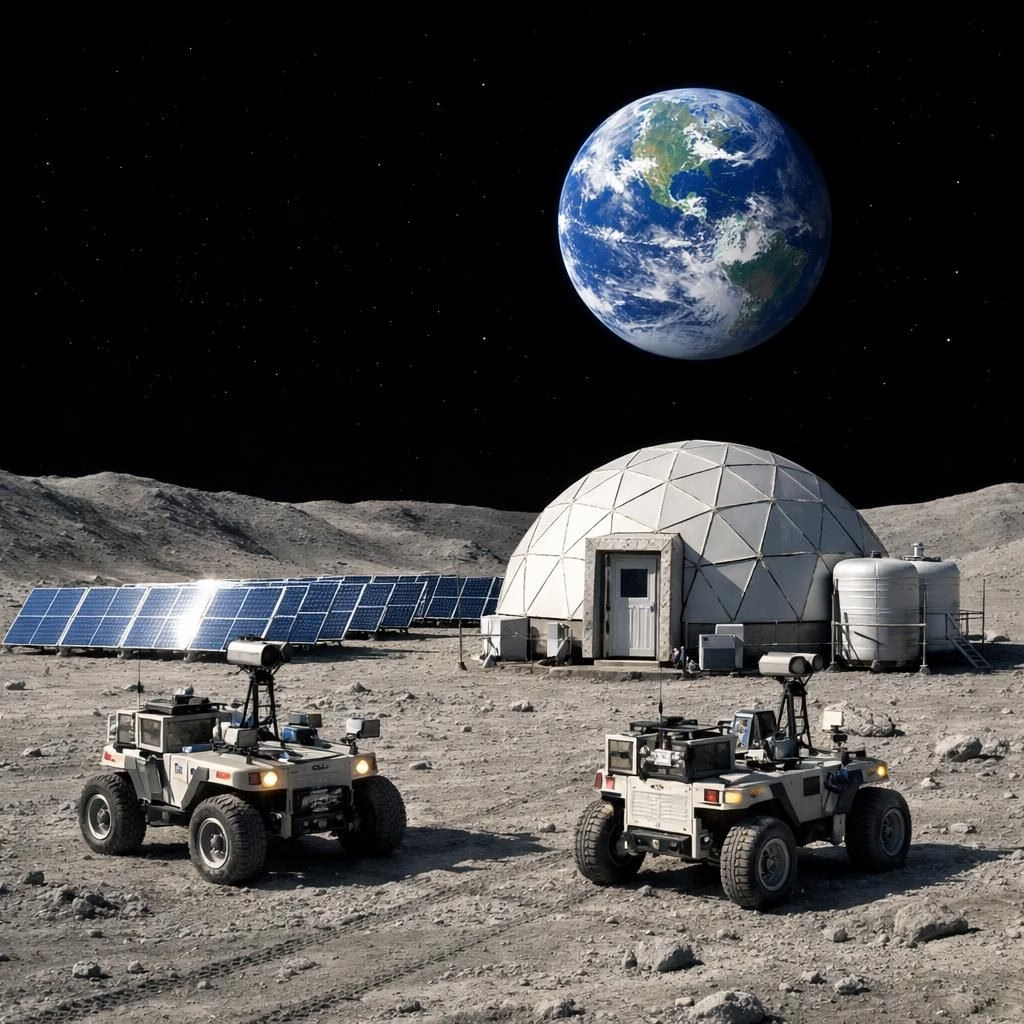
NASA and Moon headlines merge in a practical, upbeat briefing about a Moon base plan that adds two rovers to assist astronauts on the lunar surface. The update feels like a well-timed sequel to familiar space stories: big ambitions, careful budgets, and a wink to real engineering. In this version, the Moon is not a rumor but a working site where rovers will shuttle crew, run experiments, and perhaps borrow a snack from a lab fridge—if the gravity allows. The plan blends government backing with startup hustle, creating a mix of mission-control discipline and the nimble problem solving you get when teams actually ship space hardware. The result is a story with substance and a dash of humor about how to run a Moon mission without spilling coffee on a control panel. NASA and Moon are mapped to a practical leap forward, and the schedule looks doable rather than dramatic.
NASA Moon Rover Roadmap: Two Rovers, One Vision
Two rovers form the backbone of the plan, designed to work in concert across the lunar surface. The first is a sturdy workhorse with a robust solar power system, capable of sample collection, site prep, and data relay to a nearby habitat. The second rover is lighter and faster, a scout that maps routes, deploys beacons, and tests new tools before astronauts step outside. The duo shows NASA’s intent to build redundancy and flexibility early in the program. The Moon comes into clear view as a long term destination, guiding the mission choices. Pegasus, the name already in the news, hints at speed yet keeps the focus on reliability. Beyond the hardware, the project hinges on software that can manage autonomy, keep crew safe, and align with mission timelines. The recent press from major outlets underscores a practical path: demonstrators first, bigger ambitions later, with real world demos that anybody can watch on a screen.
Moon Base Battery and Mobility: Powering the Future
Behind the hardware, battery biology matters most. General Motors has clinched a NASA contract to build a battery for the Moon-bound vehicle, a leap that signals more than just a flashy charging port. The battery pack must survive the lunar day heat, the night chill, and the occasional dust storm that acts like a tiny wind tunnel. Detroit Free Press frames this as a practical bet: better batteries mean steadier missions and longer windows for experiments. Engineers are racing to maximize energy density, optimize thermal management, and design modules that can be swapped in a hurry. The result is a propulsion system that is unglamorous but indispensable. If the Moon base is to be real, power reliability will matter as much as a good map and clear comms. NASA wants to minimize risk by giving the vehicles a heartbeat that can outlast a long surface stay.
A parallel thread comes from a Colorado company that targets the Moon with new ideas and bold tests. After selection by NASA for future space missions, the firm pitches modular rovers, autonomous guidance, and rugged sensors that tolerate dust, radiation, and the occasional paperwork pileup. The CBS News feature frames this as proof that NASA wants more than single prototypes; it wants scalable demos partners can iterate with. The tone across outlets is practical, not pie‑in‑the‑sky. Moon-savvy teams are learning to talk in rapid demos, credible timelines, and simple, reliable interfaces. In short, the industry is moving toward a world where Moon exploration can be repeated, adjusted, and scaled with real partners at the table, not just rocket scientists in a data room.
Across the industry, startups win NASA contracts for lunar rover demos. These awards show NASA’s preference for rapid prototyping and field tests that prove concepts work outside the lab. Aviation Week notes the shift toward modular, cost‑effective demonstrations that can stay in orbit and on the surface. The result is a lively ecosystem where small firms test autonomy, resilience, and human‑machine interfaces in real Moon conditions. The Moon becomes a stage where ideas grow into products that can support crews, science, and exploration. The public gets a front row seat to an economy of exploration that feels less like a press conference and more like a startup fair on a rock.
All of this is good news for workers and dreamers alike. The plan emphasizes durable hardware, tested software, and practical partnerships. The tone is optimistic but grounded; it’s about building base life on the Moon, not just talking about it. The rovers will roam with purpose, the battery tech will keep systems humming, and the partnerships will keep budgets in check while blasting toward a credible schedule. If you enjoy tech humor, imagine two rovers huddled around a chalkboard, debating the best sun angle for a sample while a crew member sips tea in a pressurized habitat. The point is simple: space exploration thrives when curiosity meets discipline and when engineers remember to plan for coffee breaks in the light of the Moon.
Original article attribution: The New York Times – NASA Moon base plan — thank you for the original material.
Original sources cited by the article series include Detroit Free Press, CBS News, Space Startups, and Aviation Week, all of which helped shape this synthesis. Thank you to the reporters and editors who brought these plans to a broad audience.
Practical takeaways and what to watch
- Monitor updates on the two rovers’ roles: a robust workhorse rover and a nimble scout that maps routes and tests new tools.
- Track advances in the GM battery program, especially how thermal management handles the Moon’s temperature swings.
- Look for field demonstrations and modular demos with real partners that show scalable, repeatable results on the lunar surface.
- Follow NASA press briefings and partner announcements for timelines and risk management milestones.
Moon Mission Economics: NASA’s Pragmatic Roadmap
Understanding the plan helps readers see how exploration becomes an ongoing program rather than a one‑off stunt. The focus stays on durable hardware, reliable software, and steady progress toward a credible schedule. That means the rovers are designed for servicing, upgrades, and long life, while power systems are built to operate through many cycles of day and night on the Moon.
FAQ
- Q: How many rovers are planned and what are their primary roles?
A: Two rovers form the backbone: a sturdy workhorse for sample handling and a lighter scout for mapping, beacons, and tool testing. - Q: What powers the rovers and how is reliability ensured?
A: A high‑density battery system tested for lunar day and night cycles, plus thermal management and swappability for quick maintenance. - Q: When can the public expect demonstrations?
A: Demonstrations are framed as early, tangible demos with scalable partners, followed by larger mission concepts after initial validation. - Q: How should readers interpret this plan in the context of existing space programs?
A: It emphasizes practical demonstrations, modular hardware, and industry collaboration to de‑risk and accelerate progress toward sustained Moon activity.